The key facts
- Police in Lyon used tear gas against about 150 protesters, where demonstrations were banned
- Police in Lyon used tear gas against about 150 protesters; demonstrations there were banned
- 70,000 law enforcement officers mobilized; the Louvre and the Musée d'Orsay are closed
- About 2,700 people arrested after last weekend's riots, 217 sent to prison
- After last week's riots, about 2,700 people were arrested and 217 sent to prison
New demonstrations and police action
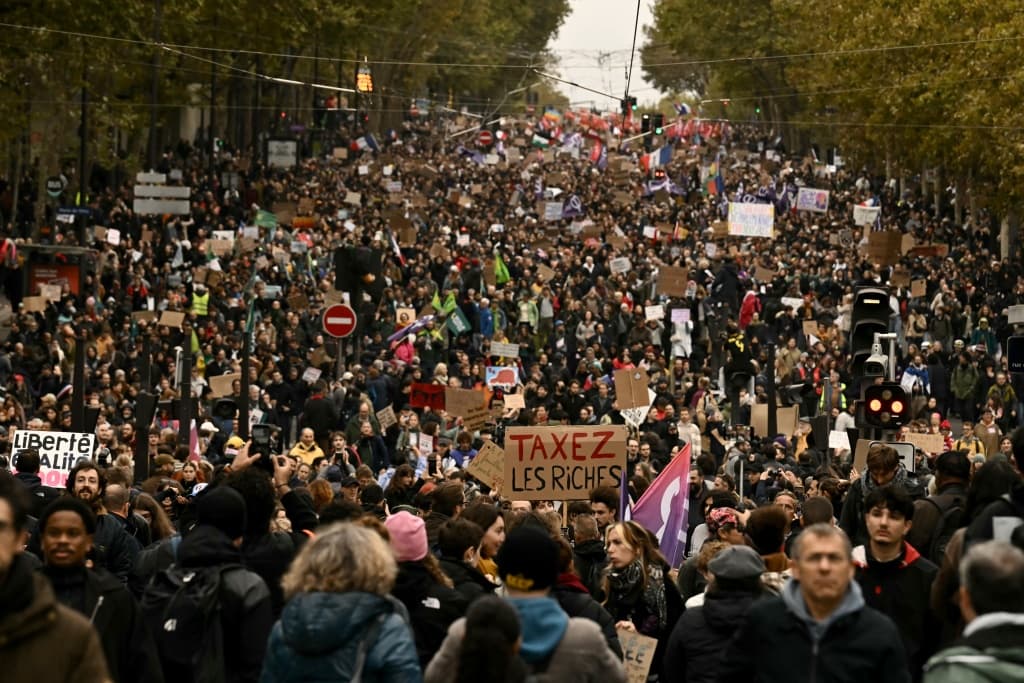
New nationwide demonstrations over the high cost of living took place in France on Saturday. Police began using tear gas: in Lyon, in the country's southeast, it was used to disperse about 150 protesters near the city center, where demonstrations were banned, when they tried to block a road — an AFP journalist witnessed this. Authorities and shopkeepers were preparing for a possible repeat of last weekend's street violence, AFP reports.
Closed museums and boarded-up shop windows
In Paris, near the Bastille square, a clothing store removed all merchandise from its shelves in advance, a neighboring restaurant was closed off with shields bearing signs reading 'still open,' and the windows of many other shops in the capital were boarded up with planks. The Louvre and the Musée d'Orsay were closed. Police were seen preparing for unrest in the areas that bore the brunt of last weekend's clashes and looting. In total, according to the interior ministry, 70,000 law enforcement officers have been mobilized due to a 'high' level of threat of violence. Interior Minister Laurent Nuñez said on Friday: 'We will not tolerate any disorder,' adding that calls for violence and looting are spreading on social media.
Political backdrop: Le Pen's congress and an anti-fascist march
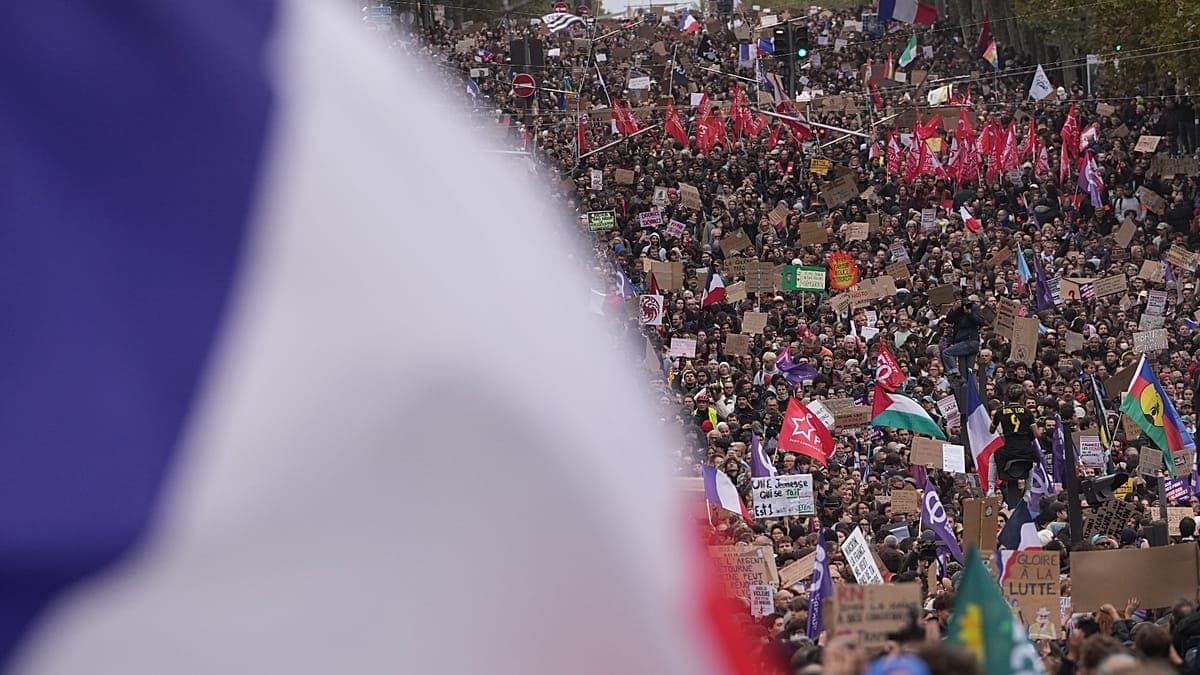
Tensions are heightened by the congress of Marine Le Pen's National Rally party in Orléans, which opens her campaign ahead of the election of Emmanuel Macron's successor in six months. On Saturday, thousands of people marched with anti-fascist slogans against Le Pen and against Macron, chanting 'Macron, resign. Le Pen to prison.' According to polls, Le Pen has the best chances of winning this election, AFP notes.
Last weekend's riots and the authorities' response
Last weekend, on the sidelines of the demonstrations, there were clashes with police, vandalism of public buildings, and looting of hundreds of shops. About 2,700 people were arrested, and the retail sector estimated damage and stolen goods at hundreds of millions of euros. Macron blamed the violence mainly on 'far-left' groups which, according to him, 'want to overthrow the republic.' Courts have already sent 217 people, half of them first-time offenders, to prison over the events of that Saturday. Macron said the authorities recognize only trade union demonstrations and will consider all others 'illegitimate.'
Organizers, restrictions and criticism
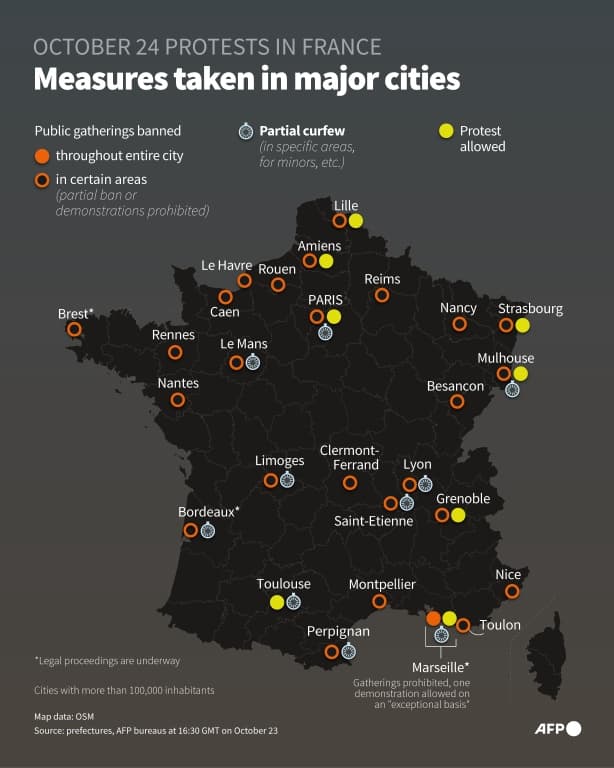
Organizers of Saturday's demonstrations accuse Macron and the government of ignoring public discontent over rising prices and conditions in school classrooms. The Paris police at the last moment ordered the union-organized march to be moved from the Bastille to the remote Place d'Italie on the southern outskirts of the capital; the unions reluctantly agreed, but the 'yellow vests' movement said it would not comply. In Marseille, all protests were banned, although on Friday a union demonstration was allowed 'as an exceptional measure.' These restrictions, including a complete ban on protests in a number of cities, drew criticism: Amnesty International condemned a 'slide toward authoritarian practices', saying the measures 'put the right to peaceful demonstration at risk,' while Human Rights Watch senior researcher Eva Cossé noted that the police have a responsibility both to ensure protests proceed peacefully and to protect the public from violent riots. Protests are also taking place in Italy, Belgium, Spain and Portugal over various issues, partly overlapping on inflation and education problems; Italy deployed 500 soldiers to suppress street violence in Milan.
Why it matters
The events directly affect residents of French cities: closed museums and shops, rerouted marches and mass arrests are changing everyday life, and hundreds of millions of euros in damage are hitting the retail sector. At the same time, according to AFP, polls put Le Pen in the lead for the election in six months, and harsh restrictions on protests have already become a subject of dispute between human rights organizations and the authorities. In practical terms, this means that the rules for holding street actions in France are being tightened: the authorities recognize only trade union demonstrations, while all others may be dispersed.