The key facts
- A local ceasefire regime in Oleshky is to begin on October 29 — according to the White House; Russia and Ukraine have not yet commented
- About 24,000 people lived in the city before the invasion; according to various estimates, between 1,700 and 2,000 remain, including 35–50 children
- The duration of the truce, security guarantees, and the monitoring mechanism have not been disclosed
Agreement on a humanitarian pause
US First Lady Melania Trump secured an agreement between Russia and Ukraine on a temporary suspension of military operations in Oleshky — a city in the Kherson region under Russian occupation — the White House reported on Friday, October 23. The purpose of the arrangements is to deliver humanitarian aid and evacuate civilians stranded near the front line. The local truce is to take effect on October 29; the parties agreed to organize a safe corridor for those wishing to leave the city. Ukraine and Russia had not commented on the statement as of the time of publication, as noted by the BBC.
The First Lady's role
According to the White House, Melania Trump initiated contacts with both sides, acting in the formal role of 'exclusive mediator,' and, together with her representative, worked with the Russian and Ukrainian leadership on the timing, technical procedures, and mechanisms for implementing the pause. 'The situation in Oleshky is extremely dire. Oleshky is a frontline city on the brink of catastrophe,' she said. According to her, the remaining population is mostly elderly people who urgently need medical care, food, and clean water, while limited electricity, mined roads, and ongoing shelling complicate humanitarian access. The initiative, the White House claims, arose during a private conversation at the Fostering the Future Together event in New York during the days of the 81st session of the UN General Assembly; afterward, both countries formed teams to coordinate details, including demining.
The planned operation
Under the proposed scheme, civilian representatives of Ukraine and Russia will go door to door to assess residents' needs and coordinate aid. Those wishing to leave will be offered transportation to a destination of their choice; the First Lady expects that some people will head to Ukrainian-controlled territory and others to Russia. She also stated that she secured the participation of a neutral American media organization to document the operation, but the White House did not name the outlet. The statement does not specify how long the ceasefire will last and does not provide detailed security guarantees for participants.
The humanitarian situation in the city
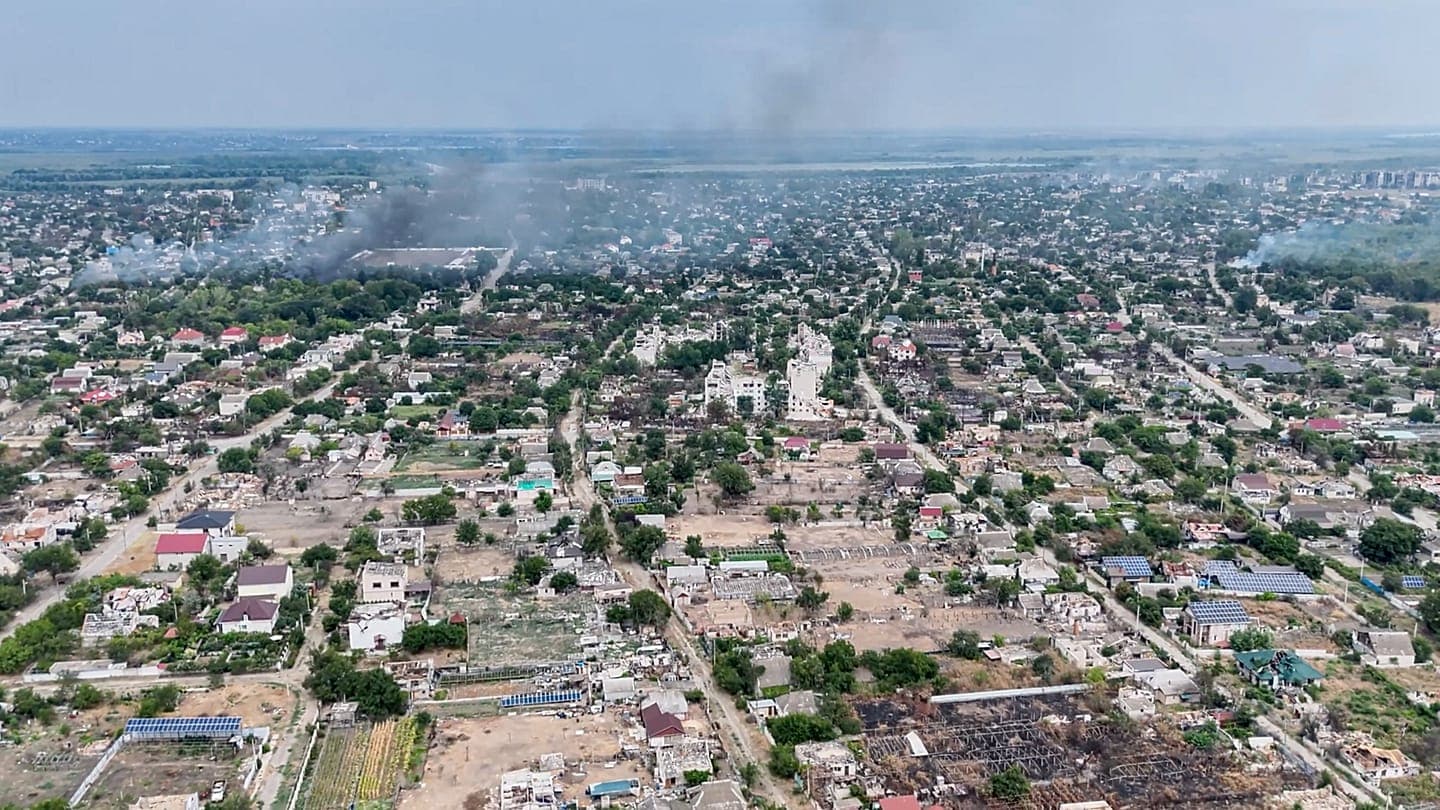
Oleshky is located on the occupied eastern bank of the Dnipro, opposite Kherson, which is controlled by Ukraine. Before the full-scale invasion in February 2022, about 24,000 people lived there; according to the White House's estimate, 1,700–2,000 residents remain, including about 50 children. The head of the city's military administration, Tetyana Hasanenko, in an exclusive interview with Euronews on October 13, estimated the number of those remaining at about 2,000, including 35 children who, according to her, were unable to leave. 'The city is practically destroyed. There is almost not a single building left that has not been damaged,' she said. According to her description, residents survive on one meal a day, sometimes consisting of a few spoonfuls of grain, and some eat weeds; the BBC also reported on this in September. The situation was worsened by the flooding after the destruction of the Kakhovka dam in June 2023.
'Road of death' and unresolved questions
Hasanenko said that those attempting to flee had to walk about 25 kilometers toward the village of Radianske through mined terrain exposed to drone strikes. 'This road has truly become a road of death,' she said, noting deaths from mines and that some bodies could not be recovered. She also accused Russian forces of shelling food supplies and punishing residents suspected of receiving aid from Ukrainian military personnel. Euronews was unable to independently verify the situation in Oleshky, which is closed to independent journalists. As long as the city remains under the control of Russian forces, questions remain open about how safe access will be ensured, who will monitor compliance with the ceasefire regime, and whether residents will be able to leave freely by their own choice.