The key facts
- Five diplomats who worked in Russia after the start of the full-scale invasion told the BBC about surveillance, FSB pressure and isolation
- Ambassadors describe everyday difficulties: a ban on hiring foreigners, disconnection from Swift, shortage of cash
- The diplomats believe that despite the rupture of contacts, their role as a channel of communication remains important
Surveillance and 'constant paranoia'
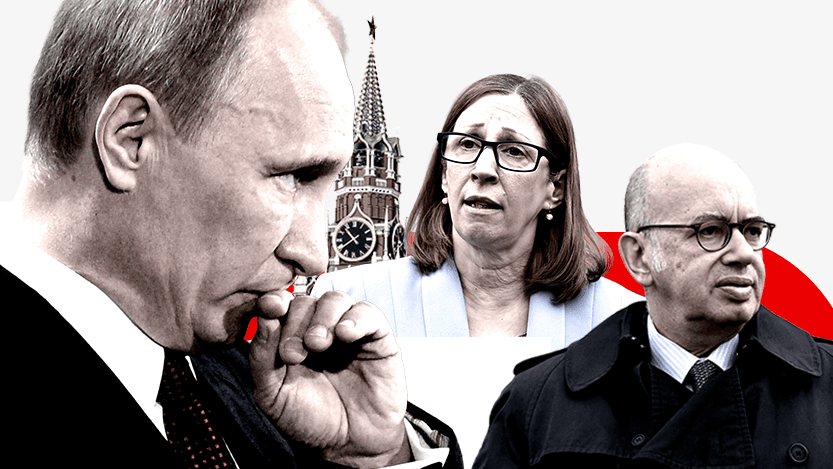
The BBC published a piece based on conversations with five Western diplomats who worked in Russia after the start of the full-scale invasion of Ukraine in 2022. Lynne Tracy, who headed the US embassy in Moscow from 2023 to 2025, called the post of ambassador to Russia probably the most difficult assignment of her 30-year career — according to her, even in Pakistan, where she survived an armed attack in 2008, it was 'easier', because there she felt in control of the situation, whereas in Moscow the main problem was the high uncertainty created by the constant pressure of counterintelligence. One former ambassador said he had to dismiss two Russian employees after the FSB tried to recruit them, demanding they report on everything happening in the embassy. According to him, the employees themselves reported this to the embassy and were let go, 'otherwise they would have faced some kind of criminal prosecution'. Another diplomat recalls a warning before departing for Moscow: 'Expect listening devices, expect cameras in every room of your home.' The diplomats compare the current pressure to the Cold War era, when Western embassies were monitored through physical surveillance, listening devices hidden in gifts, and 'spy dust' — an almost invisible chemical agent for tracking officials.
Pressure on Russian contacts
According to the BBC's sources, Russians who would normally build ties with diplomats — figures from academic and cultural circles — are intimidated and avoid contact with Western officials. One former ambassador said his guests were 'escorted' by the FSB all the way to the embassy doors. In June 2026, guests invited to the residence of the British ambassador in Moscow for the celebration of the King's birthday said they were followed by pro-government activists and state media journalists, and then questioned by police. One of the guests said that since then he has declined several invitations to events at Western embassies out of fear. The former ambassador noted that the 'constant paranoia' prompted a number of employees to resign, and that even after leaving Russia he spent months looking over his shoulder.
Everyday and financial difficulties
After the start of the war, hundreds of Russian diplomats were expelled from Europe and the US; Moscow responded in kind, declaring hundreds of Western diplomats personae non gratae, leaving many embassies understaffed. After Russia banned the hiring of foreign citizens in 2021, the US embassy's technical team was left significantly understaffed: even a minor plumbing problem like a leaking pipe could become serious. One diplomat recalls a conversation with a Russian official about the staffing shortage, who advised him not to be upset: 'At least you still have a cook.' Western sanctions created other difficulties: after Russian banks were cut off from Swift and Mastercard and Visa suspended operations, many embassies faced problems with basic expenses. One former ambassador said he ran out of cash and could not pay his employees until another diplomat, who was selling his car before being expelled, brought rubles to the embassy in a suitcase. 'It's complete madness,' the diplomat laughs, 'but you had to take it with a sense of humour.'
Diplomats as the last channel of communication
Former French ambassador Pierre Lévy recalls that immediately after the invasion, the question of recalling ambassadors or completely ceasing operations in Russia was discussed in Europe; he immediately called Paris and said that recalling the ambassadors would be a mistake, because the worse the relations became, the more important they were. Another former ambassador notes that the war made ordinary work on bilateral relations, trade and joint projects impossible. Russian officials openly accuse diplomats of 'unfriendly countries' of 'espionage' and, according to Russian journalist Alexei Venediktov, have in fact forbidden most Russian officials from communicating with Western embassies. Venediktov, according to him, told Russian officials: 'You are misunderstood precisely because of your own actions — because the ambassadors cannot do their job.' One of the former ambassadors says that today Moscow has almost no contacts with many Western governments: 'No phone calls, no meetings at ministerial level.' In his view, this makes diplomats even more important: 'Generals prove what they are capable of in war. The same is true for diplomats. When things get really hard, everything you do really matters.'
Results of the work
Lynne Tracy left Moscow in 2025, feeling that she had accomplished her main mission: the US embassy had held its ground. She is also proud of her team's work in maintaining ties between Americans and ordinary Russians. 'Because at some point relations between the governments will get a chance to improve — and the people-to-people ties will be there to accelerate that improvement,' she told the BBC.
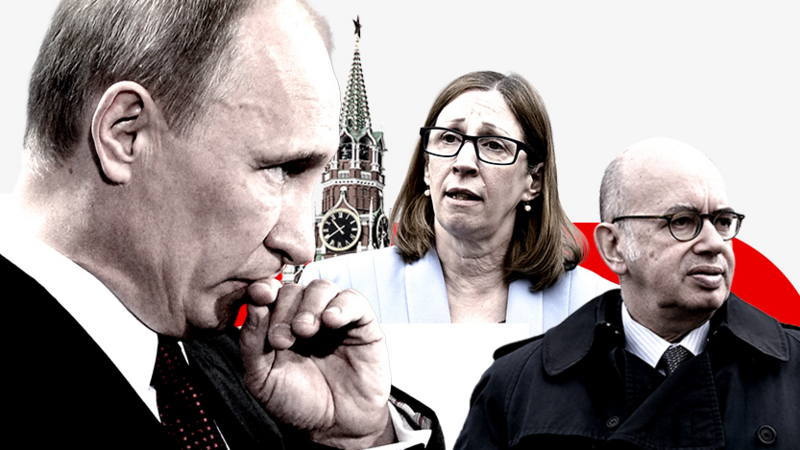 Image source, BBC/Getty Images
Ex-US and French ambassadors Lynne Tracy and Pierre Lévy were among those to speak to the BBC of their time in Moscow
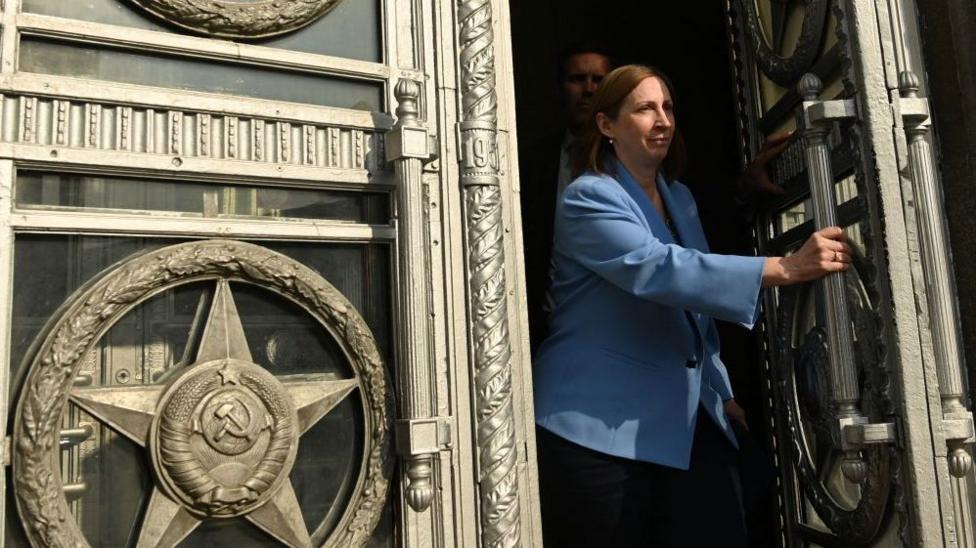 Image source, AFP via Getty Images
Tracy pictured leaving Russia's Foreign Ministry after being summoned by Moscow in 2023
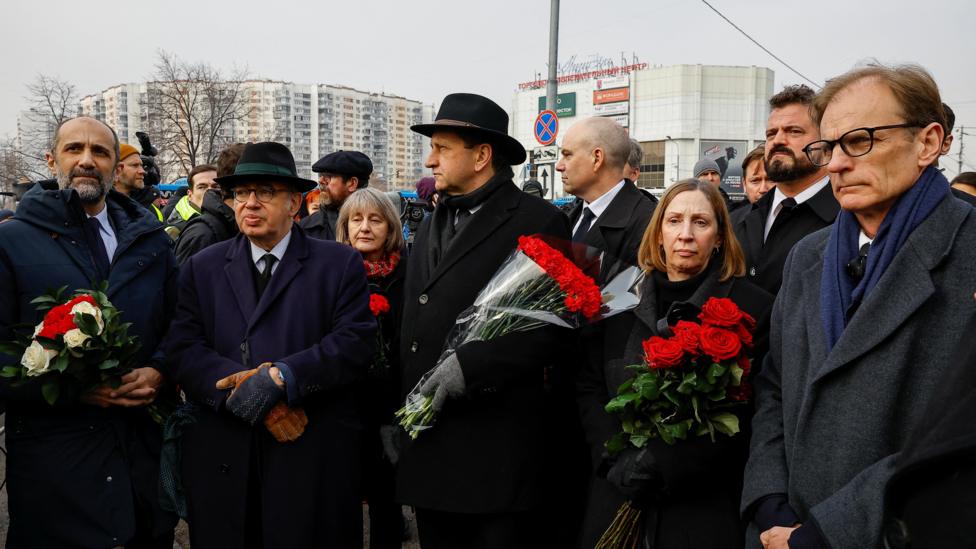 Image source, Reuters
Pierre Lévy (second from the left) and Lynne Tracy (second from the right) pictured at the funeral service for opposition leader Alexei Navalny in March 2024
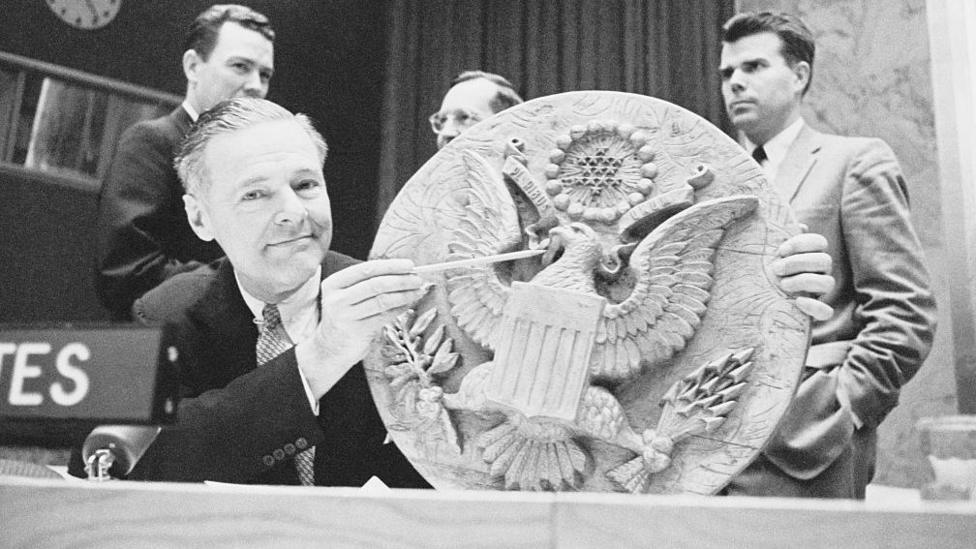 Image source, Getty Images
A wooden replica of the Great Seal of the US was given to the American ambassador to Russia as a gift in 1945 - it was later found to contain a listening device