The key facts
- The US denied AUAF a $25 million grant; in 2018 US funding covered nearly 90% of the university's expenses.
- The State Department cites a 'lack of accountability' over millions of taxpayer dollars; former USAID mission head Patrick Fine rejects the fraud explanation.
- About 1,000 students, three-quarters of them women, study online in secret; they fear the university's complete closure.
Students Learned of the Funding Cutoff
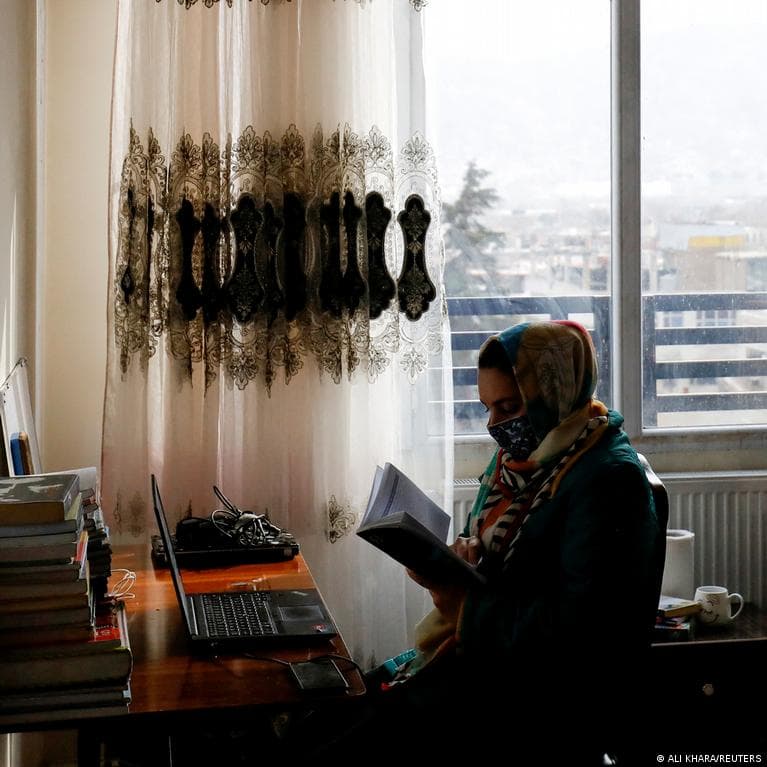
A student whom DW refers to by the pseudonym 'Layla' for security reasons learned at night from a letter that the US is ending funding for the American University of Afghanistan (AUAF) — one of the last places where women in the country can still study. She and her classmates fear the university will close entirely. Layla, a woman of about 25, studies political science and international relations; the university has about 1,000 students in total, three-quarters of whom are women.
Studying in Secret After the Taliban Ban
After the Taliban returned to power in August 2021 and the ban on women's education announced in December 2022, Layla's studies at another university in Kabul remained unfinished — two exams remained before the final. She received an AUAF scholarship and started over. The university campus is occupied by the Taliban, so she studies online: classmates use pseudonyms and turn off their cameras. 'I only know their voices,' she said. She has told few people outside her family about her studies; when leaving home, she fears the Taliban will check her phone, and, she says, authorities have searched their home several times.
History of the University
AUAF opened in 2006; before that, former US First Lady Laura Bush announced that the US would allocate millions of dollars to support it, stating that the university would train 'future leaders,' primarily women. Patrick Fine, former USAID mission director in Afghanistan, told DW that many at the agency considered the idea risky, but the Bush administration saw the university as a way to strengthen the US-backed interim government and to educate women and future politicians. According to Fine, the university 'has affected the lives of thousands of Afghan young people.'
Accountability Complaints and Dispute Over Causes
In 2016, American inspectors began an audit of the university's finances; by 2018, according to the investigation, poor record-keeping made it impossible to determine precisely how American funds were spent. Former federal inspector John Sopko, who oversaw the audit, told DW: 'I was surprised they were still funding AUAF.' The State Department, in a letter to DW, explained the funding cutoff as 'a history of repeated lack of accountability over millions of dollars of American taxpayer funds.' Fine rejected this explanation as 'slanderous tactics,' acknowledging that past audits had identified difficulties complying with USAID rules, 'but no major fraud was found.' He called the university 'a useful and worthy investment,' since it is one of the few organizations still working with Afghan women.
The University's and Students' Future in Question
The US is not the university's only sponsor, but according to an American report, by 2018 it covered nearly 90% of its expenses. The State Department told DW that the university 'is free to seek other sponsors and partners,' and that the end of American funding 'does not necessarily mean the end of its operations.' However, without the $25 million grant that the State Department recently declined, the university's future remains uncertain. Layla told DW that she has lost motivation and hope: 'Every time I prepare for a lecture, I wonder whether there will be a next one.' She said she should have long ago finished her studies and been pursuing a master's degree abroad.