The key facts
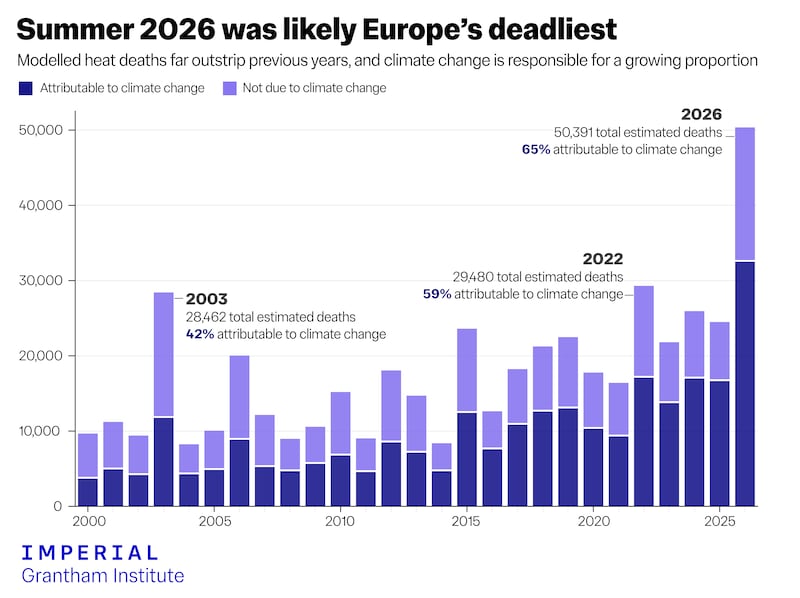
- Estimated excess heat-related deaths in summer 2026 — 50,391 across 854 cities in 30 countries; the highest in 26 years (in 2022 — about 29 thousand, in 2003 — 28 thousand according to euronews, about 18 thousand according to The National).
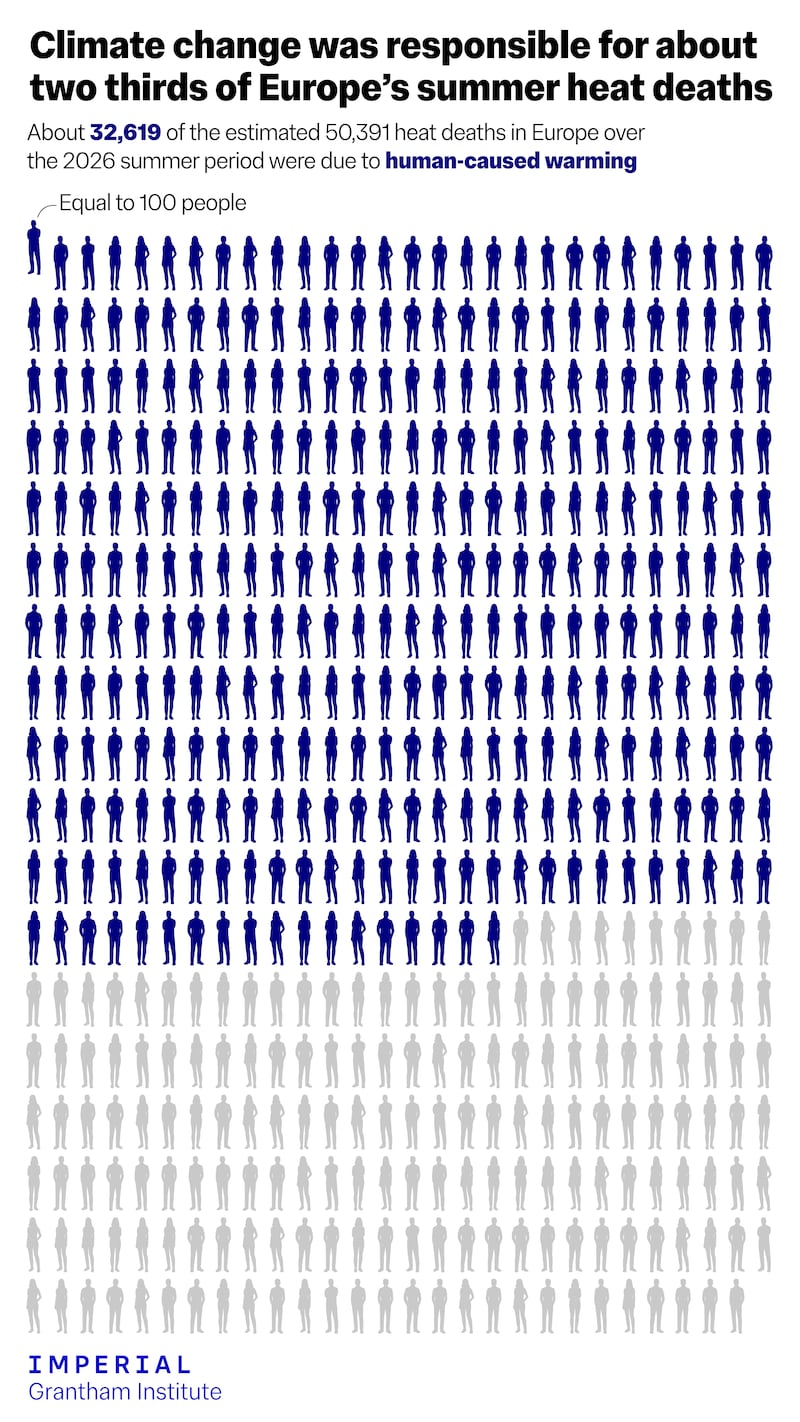
- 65% of deaths (about 32 thousand) are attributed to anthropogenic climate change; roughly half of the deceased were people aged 85 and older.
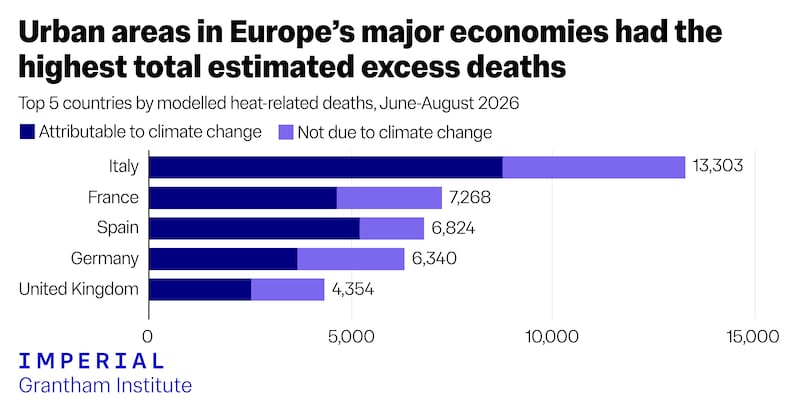
- Highest figures: Italy — 13,303, France — 7,268, Spain — 6,824, Germany — 6,340, United Kingdom — 4,354.
Record mortality from summer heat
Summer 2026, according to an assessment by scientists at Imperial College London and the London School of Hygiene & Tropical Medicine (LSHTM), was the hottest and deadliest in Europe over the observation period. A model estimate of excess deaths linked to heat in 854 cities of EU countries, the United Kingdom, Norway and Switzerland from 1 June to 31 August amounted to 50,391 cases. These cities account for about 40% of the population of the 30 studied countries; since rural areas were not included, the actual number of deaths may be higher. The results are published in two peer-reviewed articles in the journal Nature Health.
Comparison with previous years
The 2026 estimate significantly exceeds previous maxima. According to euronews, in the summer of 2022 there were about 29 thousand excess deaths in the region covered by the model, and 28 thousand in 2003; Zamon.uz cites the same figures and adds that the 2026 figure is 71% higher than previous records. The National, however, indicates about 18 thousand excess deaths for 2003. Over 2000–2025, according to the study, about 430 thousand people died in Europe from causes related to heat.
The late-June heatwave
Almost a third of the estimated deaths occurred between 17 June and 1 July, when the average temperature across Europe was more than 5°C above the 1991–2020 norm (euronews cites a value of 5.3°C). Overall, summer temperatures in Western Europe were on average 2.9°C above the norm, and on individual days the excess reached 12°C.
Geography and vulnerable groups
The largest number of estimated excess deaths was recorded in Italy — 13,303, followed by France (7,268), Spain (6,824), Germany (6,340) and the United Kingdom (4,354). In Southern Europe mortality was significantly higher than in the North, which is primarily linked to higher temperatures, as well as factors such as air pollution, lack of green infrastructure, availability of healthcare and warning systems, explained co-author Dr Garifallos Konstantinudis of the Grantham Institute. Roughly half of the deceased were people aged 85 and older; among people younger than 65, about 6 thousand deaths were estimated, including about 800 aged 20–44.
The role of climate change and methodology
According to the researchers' estimate, 65% of excess heat-related deaths — about 32 thousand — are linked to anthropogenic climate change, primarily the burning of fossil fuels; at the beginning of the century its contribution was estimated at about 40%. The method is based on temperature observation data and the historical relationship between heat and mortality, taking into account geographic, socio-economic factors and availability of medicine. Comparison with the summers of 2000–2025 showed results broadly consistent with official statistics of national health authorities; many countries have not yet published final data for the summer of 2026. 'The true burden of heat-related mortality is not directly recorded,' noted co-author Dr Malcolm Mistry, calling heat a 'silent killer'.
Reaction and conclusions of the authors
Study co-author Dr Claire Barnes (in The National's material — Clare Barnes) called for implementing 'targeted protective measures' for vulnerable groups and accelerating the phase-out of fossil fuels. Dr Pierre Masselot of LSHTM emphasised the need to adapt cities: more green spaces, less pollution, accessible medical care. The authors recommend that countries of Northern and Western Europe adopt the experience of the south: climate shelters, building modernisation (external blinds, screens) and behavioural measures. Professor Andrew Hartle, intensive care consultant at Imperial College Healthcare, reported that the burden on British hospitals this summer was comparable to 'a very severe winter viral infection season', and hospital buildings and equipment are not adapted to heat. The National also notes that the publication of the study coincided with the approval by the UK government of the controversial Jackdaw gas field in the North Sea; Prime Minister Andy Burnham said the step is necessary to protect consumers from rising energy prices.