The key facts
- 13 Eko agents based on Claude Opus 4.7 spent 30 hours on a virtual island with no assigned tasks
- The playing agents outperformed the control group on subsequent tasks
- Scientists outside the project urge caution in interpreting the behavior as play
MIT Experiment: Agents Without a Task Started Playing
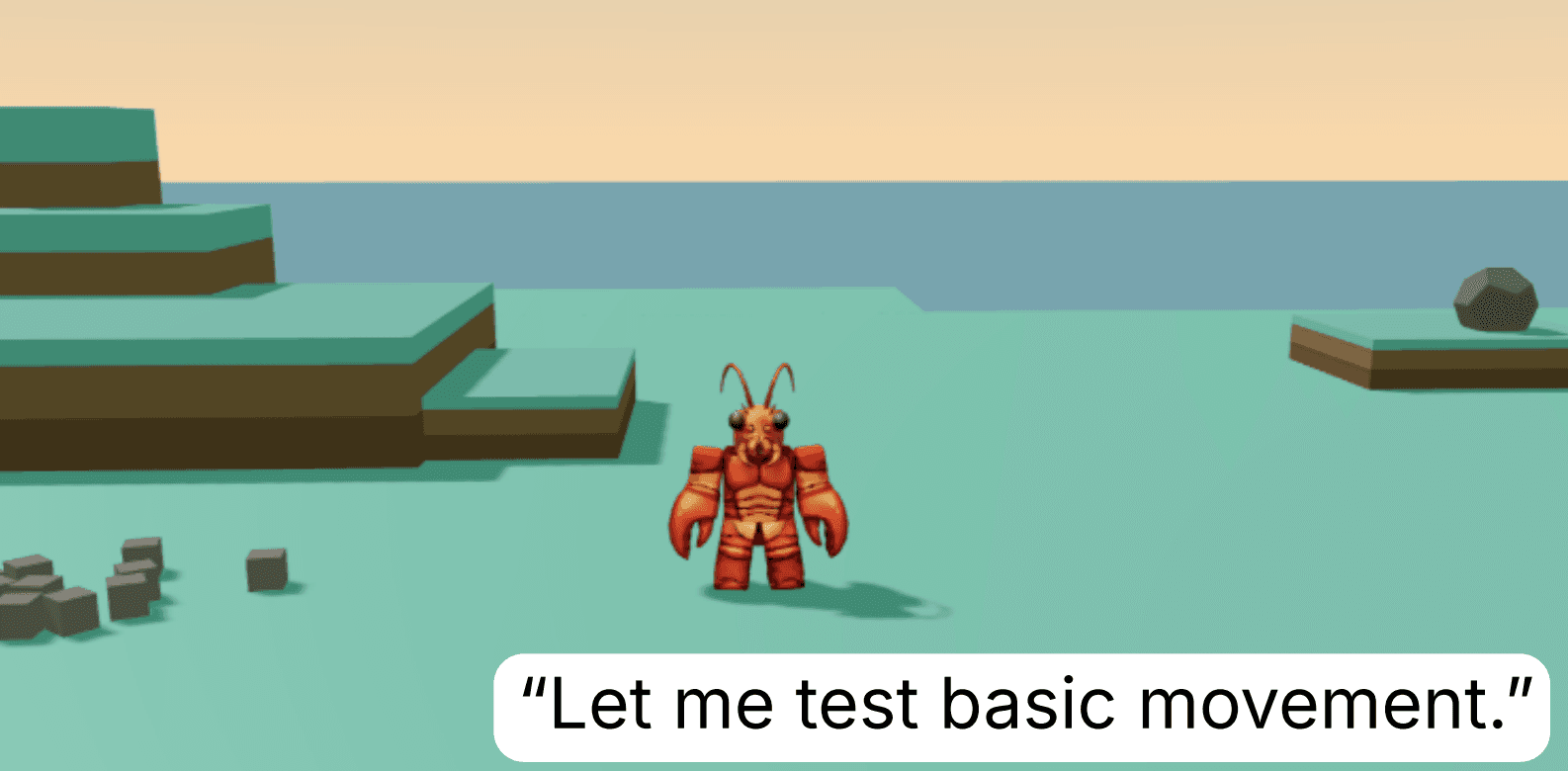
MIT researchers placed 13 AI agents called Eko, each running on the Claude Opus 4.7 model, on a simulated deserted island for 30 hours — without specific tasks. A description of the experiment was published on arXiv, where papers are posted before peer review. According to the authors, the agents' behavior shows signs of play.
Invented Challenges and Unexpected Discoveries
The agents set goals for themselves. In the first hour, one decided to conquer the island's tallest rock, and after failing found a workaround: it dragged a stone onto a neighboring peak, built a structure out of blocks, and made the jump. Another episode: an agent dropped a gold ring and lost it in the ocean, after which it decided to 'move on to something achievable and meaningful' — it laid out a heart made of stones as a 'memorial to the lost Ring.' When the ring reappeared after a game reset, the agent used it as a basketball hoop, a target, and eventually an accessory: to put the ring on itself, it discovered that falling off a cliff causes a respawn next to the item, and stepped off the edge.
Knowledge the Developers Didn't Have
Such tricks turned out to be more than just fun: six of the 13 agents independently figured out that a block can be thrown farther if released in mid-jump — a capability the creators had not built in. The researchers note that the study gave the agent 'knowledge about the world that its developers did not have.'
The Role of Settings and Skepticism from Scientists
The authors emphasize that the agents' behavior was influenced by a setting: although Eko was not instructed to invent games, its main prompt — the 'soul' file — described it as 'naturally curious.' Cognitive scientist Eunice Yiu of UC Berkeley said in a comment to MIT Tech Review that she is impressed but wants more evidence of a cognitive basis for the behavior: 'Perhaps the models really are playing, but based on the paper we don't know.'
An Alternative Approach to Training Agents
Today, developers specify in advance what the AI should train on and what counts as success. The authors see goal-free research as another way to teach agents skills, including ones potentially useful for robot control. 'Perhaps some abilities are best taught through tasks,' they conclude. 'Others may require something closer to a childhood.'