The key facts
- Saida Rashidova believes a language lives only when it reaches a child through joy, play, books, and communication
- For children aged 3–10, she proposes materials with short plots, repetition, games, and national imagery, based on ISCED 0–1 and CEFR Pre-A1/A1 levels
- Proposed measures include: an audit of existing books, micro-standards, testing, digital resources, inclusive design, and cooperation between families, educators, and authors
A column for Uzbek Language Day
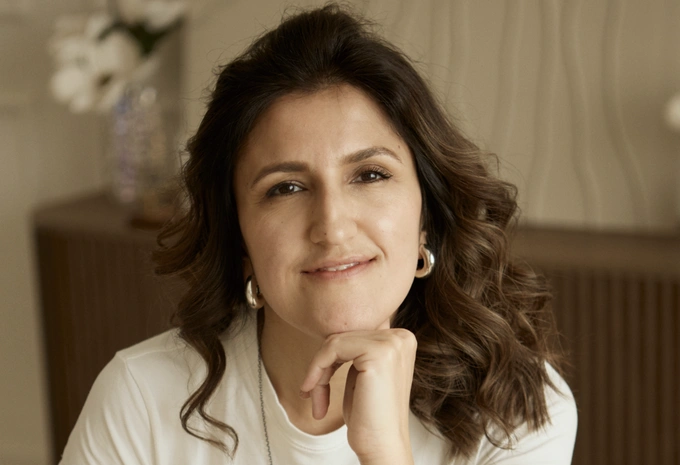
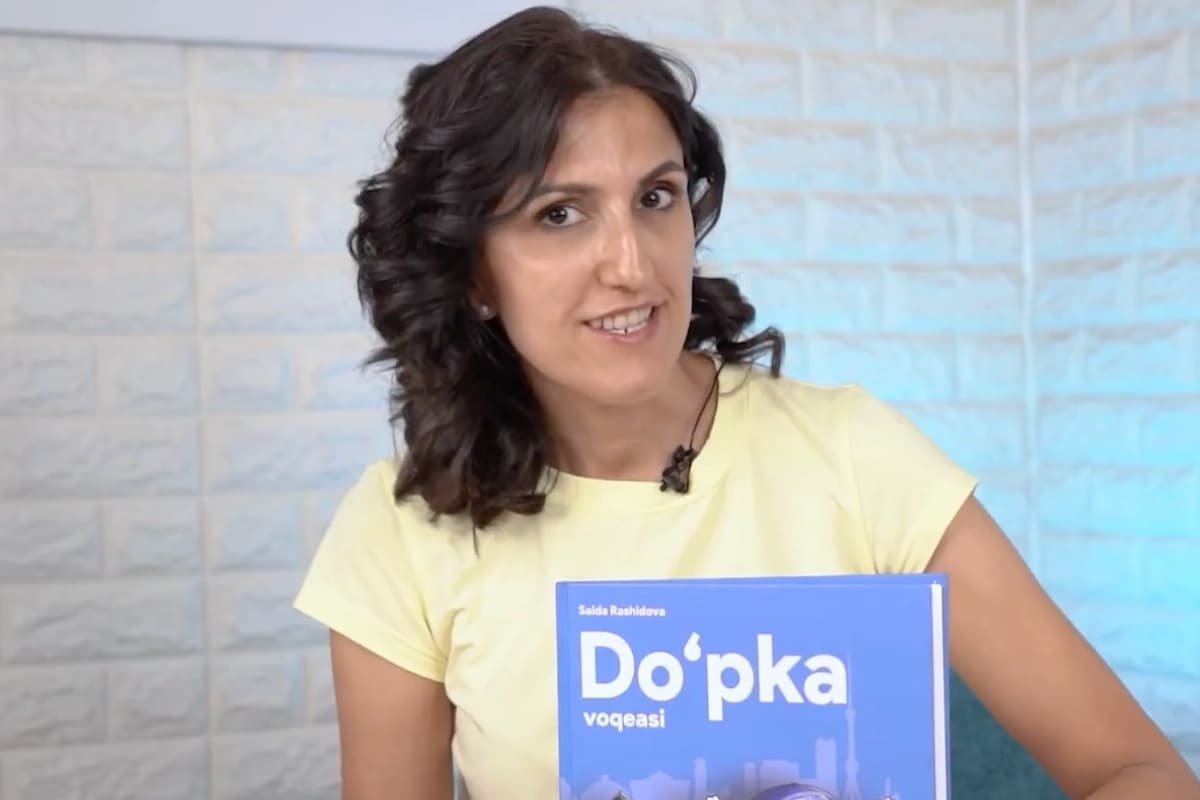
On October 21, Uzbek Language Day, language popularizer and children's book author Saida Rashidova published a column in Gazeta.uz about the role of children's books in the future of the language. In her view, this day should not only recall a historical date but also prompt reflection on the place of the native language in the lives of current and future generations. A language, she emphasizes, is preserved not only by praise from podiums: it lives and develops when it comes to a child in the form of joy, play, a book, conversation, and discovery.
Language as life, not a set of rules
For a child aged three to ten, language is not a set of rules but a character in a picture, a repeating funny phrase, a song, movement, questions and answers, family activities, and communication through play. A modern product for teaching the Uzbek language, Rashidova believes, should combine short plots, visual support, recurring language units, play and movement, national imagery, family participation, and measurable results. What matters is not memorizing words but the child's ability to greet, introduce themselves, ask for an object, answer a simple question, and play with peers in Uzbek. The criterion of success should be not 'the topic was covered' but what the child understood and can do independently.
International standards and national adaptation
The approach, in the author's opinion, should take into account the specifics of ISCED levels 0 and 1 (preschool and primary education), while the Pre-A1 and A1 levels under CEFR should be adapted to children's age, the characteristics of the Uzbek language, and the local cultural environment — not copying the international standard as a ready-made template, but scientifically adapting its content to the needs of national education.
Respect for the native language as a bridge
In a multilingual environment, the home language and cultural experience of a child learning Uzbek should not be denied: respect for the native language is not an obstacle but a 'safe bridge' to the new. A child who feels respected is not afraid of making mistakes and engages in conversation more actively. National imagery in children's books — the mahalla, family, hospitality, nature, national dishes, crafts, holidays, and everyday politeness — should serve a communicative rather than decorative function and be presented naturally, without moralizing: love for a language often begins with love for a character.
Scientific verification and academic integrity
A beautiful book is not enough: the text's age-appropriateness, the help of illustrations, and the effect of repetition and games must be tested empirically. Rashidova proposes an audit of existing books, the development of simple 'can do' micro-standards for children, trials in small groups, and refinement of materials based on the results — with analysis of observations, audio and video recordings of children's speech, pedagogical diaries, parents' opinions, and tasks before and after the experiment. She emphasizes the importance of academic integrity: not exaggerating results, learning from failures, maintaining the confidentiality of data about children, and obtaining parental consent for images and recordings.
Digital environment, inclusivity, and cooperation
For today's child, audio resources, QR codes, simple animation, and interactive games are useful, but technology should not 'compress' the content of a book — its task is to lead to listening, speaking, and real communication in Uzbek, not to tie the child to a screen. Inclusivity is a mandatory criterion: font, color, images, the volume of tasks, audio speed, and type of movement should be adapted to different educational needs. A child's interest in the language also depends on the family: ten minutes of joint activities a day is enough to consolidate knowledge, so each book should be accompanied by brief guidelines for parents and educators. Creating a quality product requires a team: a scientific supervisor, specialists in preschool and primary education, a CEFR expert, a psychologist, an artist, an editor, a digital designer, educational organizations, a publisher, and a sponsor.