The key facts
- The Uzbek language speaking club in Tashkent meets on Sundays in a café, meetings last an hour and a half to two hours
- The club is led by teacher Abdulaziz Uzakov, who has been teaching Uzbek for about ten years; participants' level is mostly A2–B1
- The idea for the meetings was proposed by student Diana Pchelintseva; among participants is also Zafar Kamilov, who grew up in a Russian-speaking environment
Club for Speaking Practice
A Uzbek language speaking club has been operating in Tashkent since this year. On Sundays its participants gather in local cafés and practice spoken language over tea and games; meetings last an hour and a half to two hours. The club is led by teacher Abdulaziz Uzakov, whom his students call «Aziz-ustoz» — «dear teacher».
The Teacher and His Method
Uzakov has been teaching Uzbek for about ten years. He has a law degree but never worked in his specialty. He noticed that demand for learning Uzbek is growing, while Russian-speaking students find it hard to find a teacher. «There is a shortage of teachers who are equally good at both Russian and Uzbek. Paradoxically, it is now easier to explain Uzbek in English,» he says. In 2016, Uzakov completed retraining courses at the Nizami Tashkent State Pedagogical University, compiled his own curriculum and continues to improve it. He used to work at training centers but decided that in large groups it is difficult to account for each student's pace, and switched to private teaching. His program aims to get a person speaking: grammar is given as a foundation but without going deep, and along with the literary norm, students get acquainted with live speech.
How the Meetings Are Structured
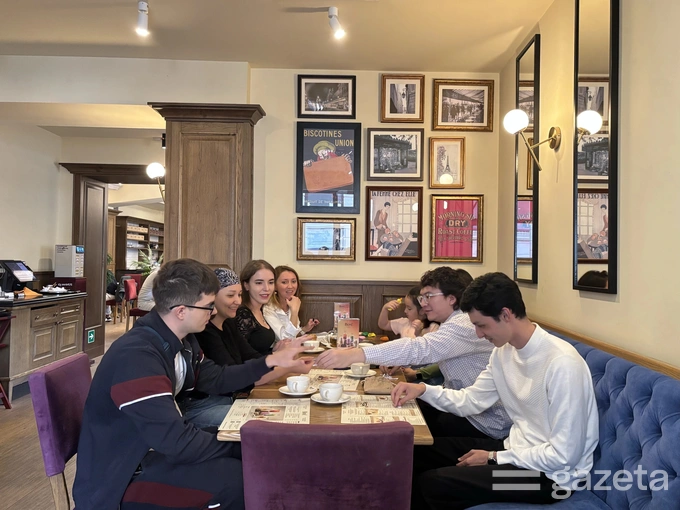
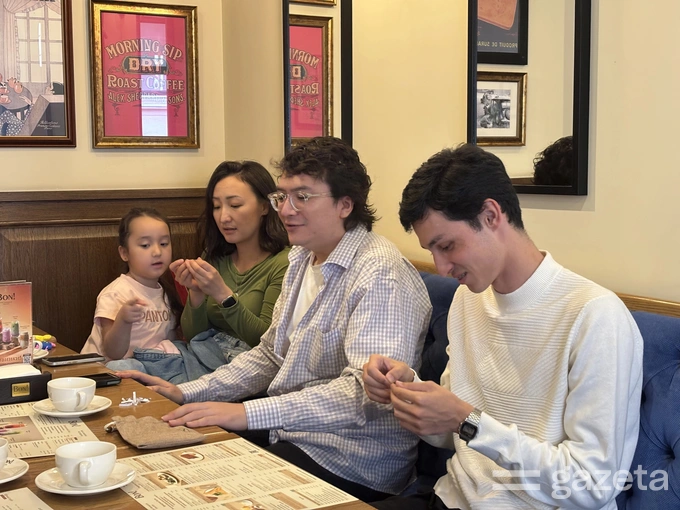
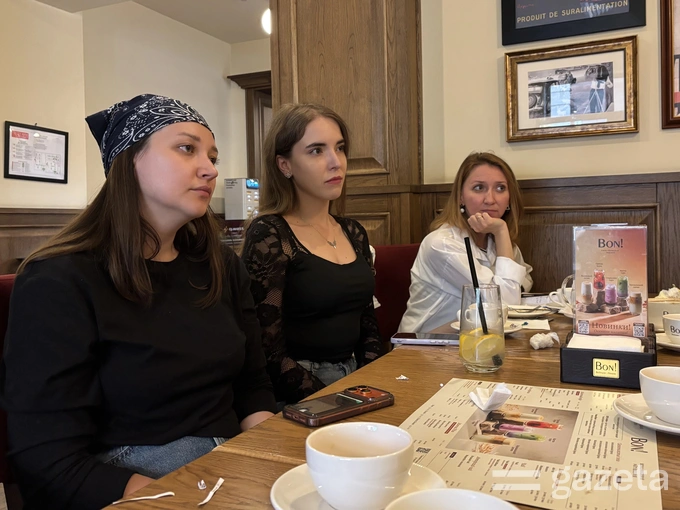
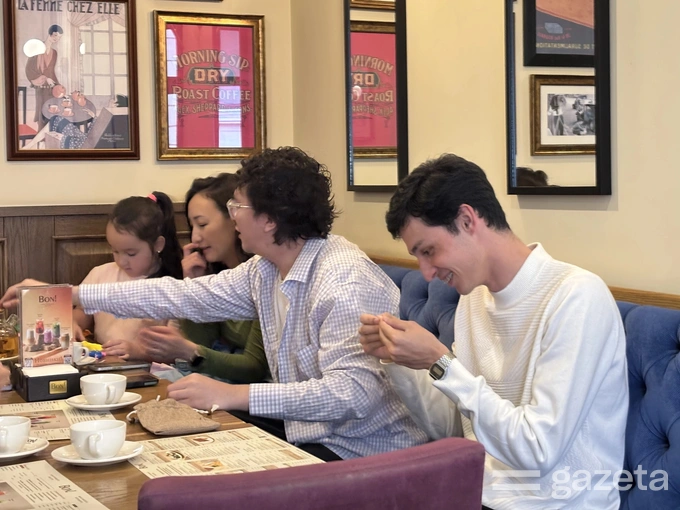
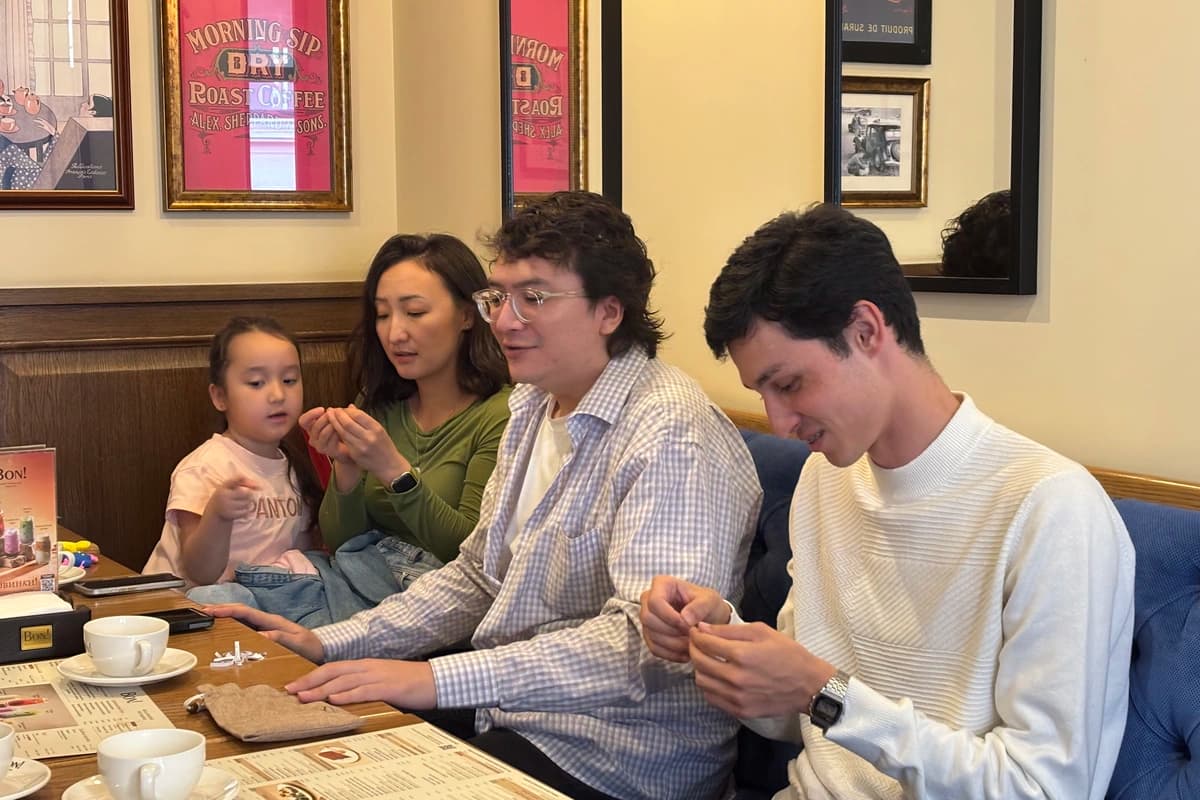
The idea for the club emerged after several students complained about a lack of speaking practice. Previously, meetings were irregular; this year they became permanent. Uzakov's students come with different experience, mostly with a level from A2 to B1. Topics are chosen by vote in a group chat, and games are suggested by the teacher. According to him, everyday questions help best to get people talking: what they bought, where they went, what they ate, whom they met. At one of the meetings at the Bon café on Shota Rustaveli Street, seven people gathered: first everyone told how their week went, then came a question game, a profession-guessing task, and a discussion of plans for the week. Uzakov supports those who are shy about speaking: in his view, mistakes are a natural part of learning, and «the one who tries is the one who makes mistakes».
Diana Pchelintseva's Story
Diana Pchelintseva lived in Russia for ten years and returned to Uzbekistan in 2024, after which she realized she needed the language in everyday life — in shops, taxis, and when communicating with couriers. She began learning Uzbek in 2025: attempts to enroll in training centers failed — somewhere they did not call back, somewhere a group was not formed. Now she studies with Uzakov three times a week. Speaking practice was hardest for her: for the first six months she was shy about speaking, although she read and wrote well. She began practicing with acquaintances and neighbors, and arranged a language exchange with a saleswoman from the shop near her home. A conversation with a taxi driver also encouraged her — he cheered her on and advised her not to be afraid of her accent. It was Pchelintseva who proposed the idea of the speaking club: not finding such meetings in the city, she asked the teacher to gather those interested. She is now studying remotely at the faculty of clinical psychology and after graduation plans a private practice, including consulting clients who speak only Uzbek.
Zafar Kamilov's Story
Zafar Kamilov is Uzbek by ethnicity but grew up in a Russian-speaking environment: at home they spoke Russian to him, his kindergarten and school were Russian-language, and at university instruction was in English. He understands Uzbek but almost never speaks it. Two years ago he was not hired by a training center that planned to launch a blog in Uzbek — because of his lack of language knowledge. This became the impetus for studying. At first he studied on his own — watched films and series, repeated phrases after actors, but realized this was not enough. Requests to relatives to speak Uzbek with him lasted a couple of days, and interlocutors on the street, noticing his difficulties, switched to Russian themselves. Less than a year ago, Kamilov began studying with Uzakov online twice a week and has been attending the club for a month. According to him, it helps that other participants face similar difficulties, and different topics allow words to be memorized faster. «My problem is that I translate in my head from Russian to Uzbek, but that doesn't work: you need to speak more,» he says.