The key facts
- AfD leader Alice Weidel presented the 'New Deal for Europe' in the European Parliament; a week earlier Marine Le Pen presented her plan in Brussels
- Both parties want to end funding for Ukraine, weaken the European Commission and turn the EU into a union of sovereign states
- The main disagreements are fiscal policy, energy and AfD's readiness to use opt-outs and a possible referendum on membership
Two plans to rebuild the EU
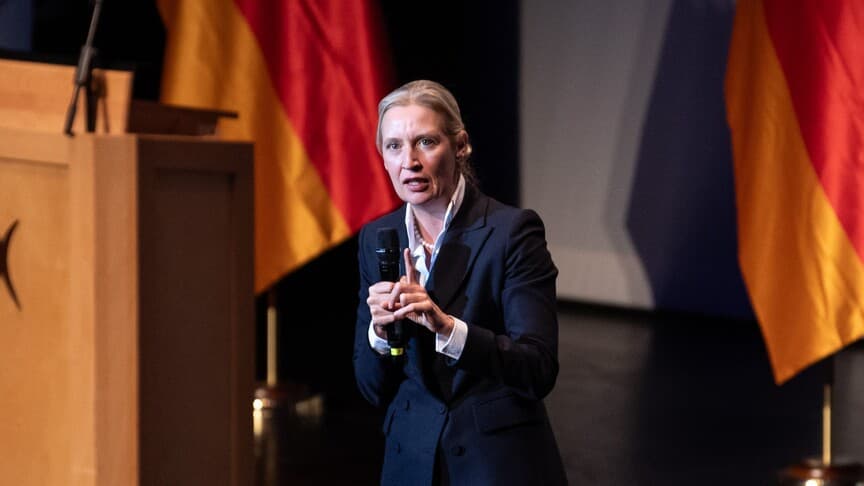
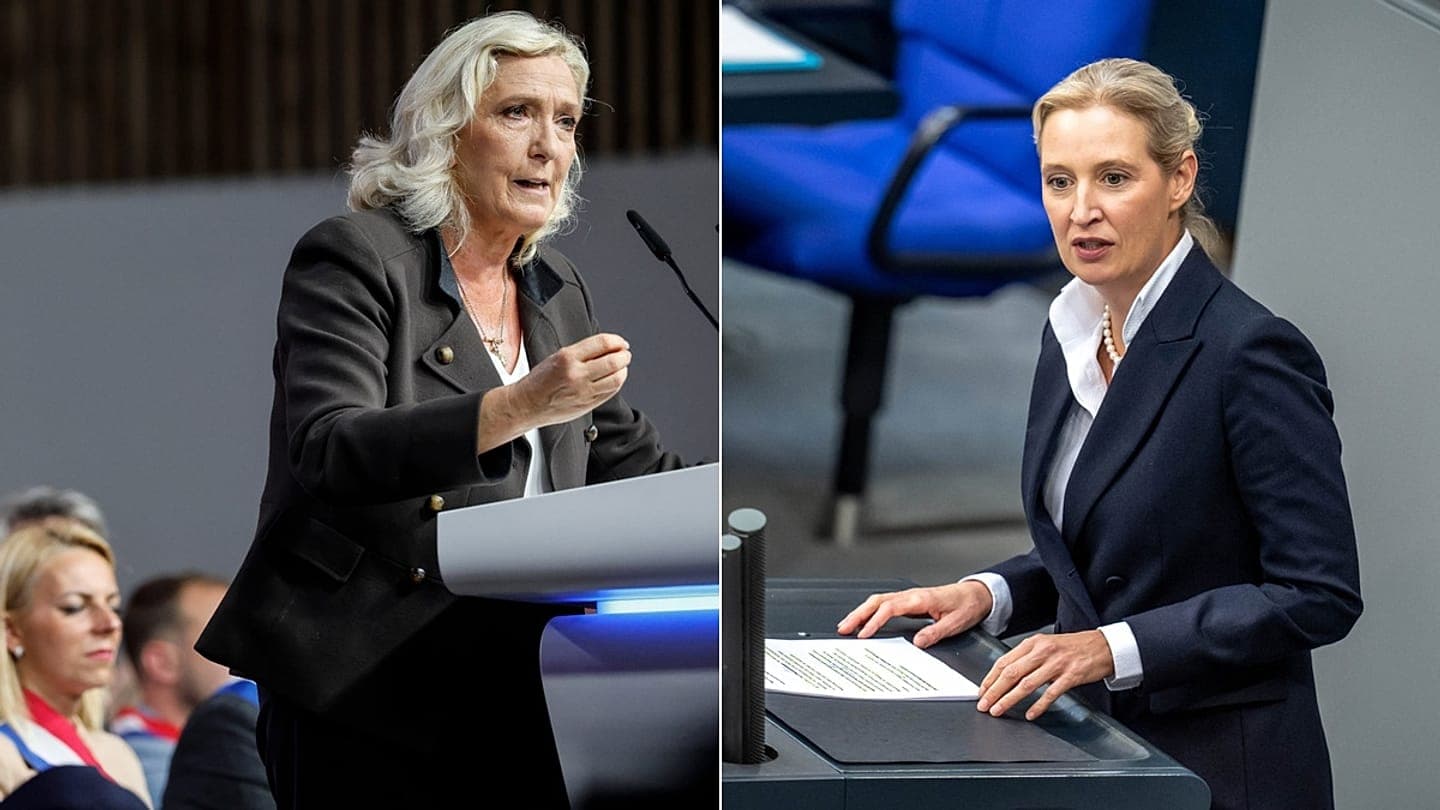
Leader of Alternative for Germany (AfD) Alice Weidel presented her 'New Deal for Europe' plan at a press conference in the European Parliament on Wednesday. This came a week after the leader of France's National Rally, Marine Le Pen, laid out her vision at The Hotel in Brussels. As Euronews notes, neither party any longer advocates leaving the EU: both want to turn the union into an alliance of sovereign states with weakened institutions and reduced powers. The outlet points out that implementing these plans could undermine the Franco-German partnership that has driven European integration for decades.
Strong electoral positions
Both leaders are in strong electoral positions. After a major victory in the regional elections in Saxony-Anhalt in September, AfD, according to Euronews, could for the first time in history lead a German state government and is leading in national polls. 'Our goal is to take responsibility for the government after the next federal elections,' Weidel said in Strasbourg. In France, a recent Ifop poll gives Le Pen 34–38% of the vote in the first round of the 2027 presidential election, despite a wave of protests in the country.
Ukraine: ending funding
Both parties agree on ending financial support for Ukraine. Le Pen said that France's strained public finances can no longer afford to help Kyiv and called for lifting EU sanctions against Russia. 'We did of course agree to maintain a whole range of mechanisms — training soldiers, training the army, supplies, including equipment assistance — but we can no longer finance Ukraine, this funding will stop,' Euronews quotes her as saying. Weidel called for a peace treaty and a 'sensible diplomatic approach' that takes into account 'the security interests of Ukraine and Russia.' In an interview with The Economist, she said Ukraine had already lost the war and pledged to end Germany's support for Kyiv.
Fiscal policy — the main disagreement
The most significant difference concerns fiscal policy. Le Pen proposes harmonising taxes on tobacco, alcohol and large companies at EU level to prevent fiscal dumping, as well as revising the ECB's mandate, shifting the focus from price stability to economic growth. 'The ECB must revise its course. It needs to take employment, growth and innovation into account, given that the monetary easing policy of 2010–2022 was not aimed at future investment,' she said. AfD, by contrast, opposes transferring fiscal sovereignty to supranational institutions and insists that the ECB should strictly adhere to its original price stability mandate. 'The ECB is forbidden from financing government debt. And what does the ECB do? It finances government debt,' Weidel said. At the same time, both parties oppose common EU debt and want to reduce contributions to the union's budget: Le Pen proposes capping France's net contribution at five billion euros a year, while AfD does not name a specific figure, demanding an 'end to Germany's role as the main paymaster.'
Energy: carbon tax versus freedom to choose the energy mix
In energy and climate policy, both parties criticise the EU's Green Deal and support nuclear power, but differ in their approaches. Le Pen rejected the label of 'climate sceptics,' backed the EU's carbon border tax and proposed tying countries' contributions to the union's budget to their carbon emissions: 'The further a country moves away from the goals [of the Paris Agreement], the more it must contribute.' AfD, meanwhile, demands complete freedom to choose the national energy mix — including nuclear, coal, gas and renewables. 'Right now we are relying entirely on an ideological energy transition to wind and solar. We see this across Europe through the Green Deal, the buildings energy law and above all the ban on internal combustion engines. This is a blatant violation of the free market economy,' Weidel said.
Institutional reform and different strategies
Both parties want to strip the European Commission of its powers and reduce it to a 'secretariat at the service of the states,' in Le Pen's words, who also proposes abolishing the Committee of the Regions and the Economic and Social Committee. AfD goes further, questioning the legitimacy of the European Parliament: its plan proposes that in future the EP be formed of delegates appointed by national parliaments rather than directly elected. The strategies for change also differ: Le Pen is counting on rebuilding the EU after elections in Spain, France, Italy and Poland, where right-wing parties, she expects, will win or significantly strengthen their position. AfD names 2029 as the turning point, when EP elections could produce a 'patriotic right-wing majority.' In case the reforms fail, AfD allows for the extensive use of opt-outs for Germany — on free movement, defence, taxation, social policy and migration. 'If Schengen doesn't work, we need to leave Schengen and protect our borders,' Weidel said, citing the mass arrival of irregular migrants in Ceuta in July. An opt-out on migration would mean Germany withdrawing from migrant distribution mechanisms and asylum quotas: Berlin currently holds the largest solidarity quota in the EU and is obliged to relocate 4,555 asylum seekers from 'frontline' countries in 2026.