The key facts
- Ursula von der Leyen offered Canada the status of the EU's first 'associated member'; the content of the status remains undefined and will be clarified by the EU–Canada summit in 2027.
- The summit in Montreal on 29–30 October is to give substance to the partnership ('Alliance of the Future'): trade based on CETA, LNG, supercomputers, AI, critical minerals, defence.
- Britain under Prime Minister Andy Burnham is seeking a 'reset' with the EU; talks on SAFE collapsed — Brussels asked London for €6.5 billion versus roughly €10 million for Canada.
The undefined status of 'associated membership'
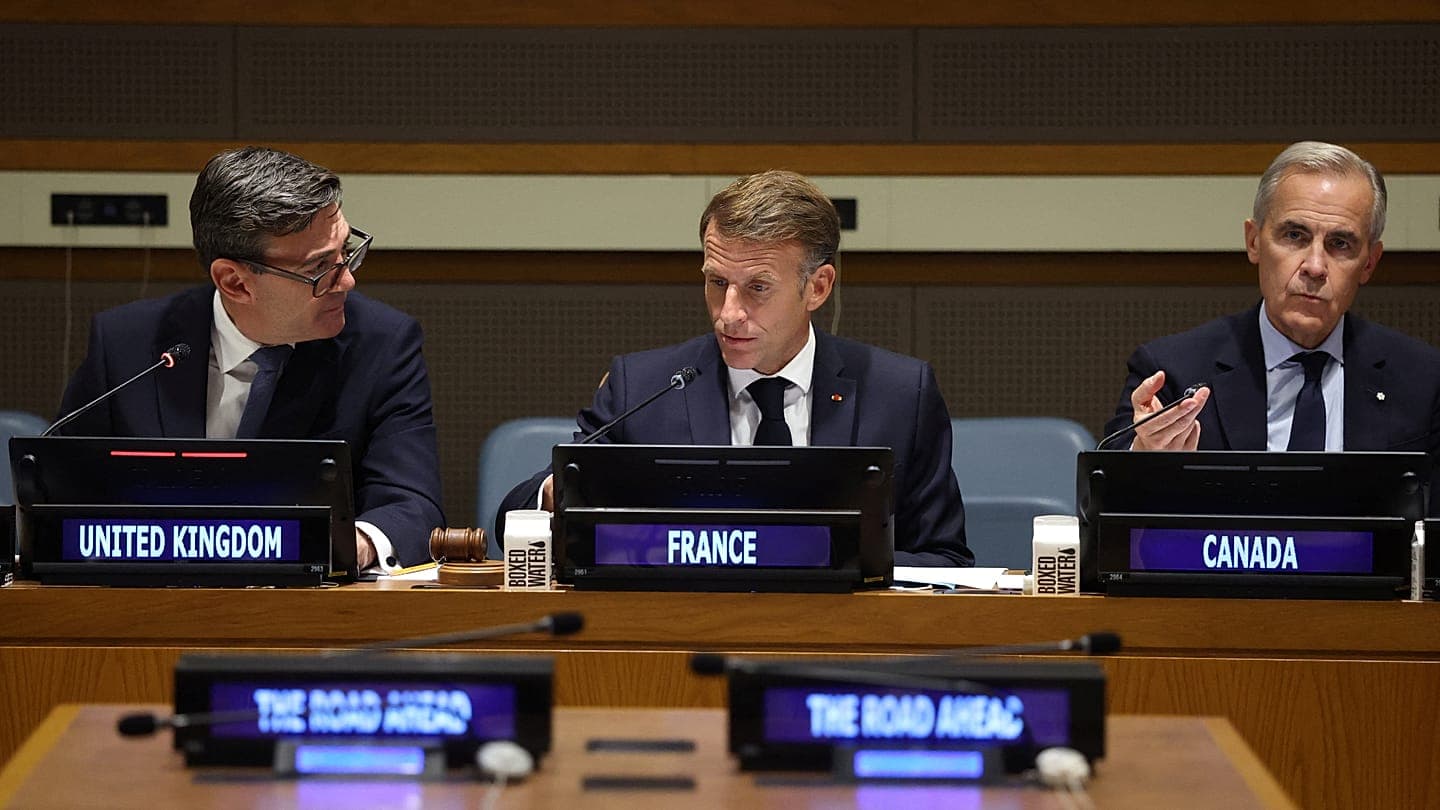
The European Commission, led by Ursula von der Leyen, offered Canada a month ago something no other country had received — the status of an EU 'associated member'. What exactly this status means remains unclear: it could be a new kind of partnership, an honorary title, or something in between. Canadian Prime Minister Mark Carney prefers to speak of an 'Alliance of the Future' and sidesteps questions about the 'associated membership' label, stressing that substance matters more than the name. In the draft joint statement the terms are used interchangeably. The summit in Montreal on 29–30 October will be the first opportunity to define the partnership in more detail; the conclusions state that 'the full scope of associated membership will be defined by the EU–Canada summit in 2027'.
What the draft statement proposes
The document, discussed by ambassadors on Wednesday, provides for Canada's more regular presence at the EU table — participation in summits, ministerial meetings and technical discussions, as well as 'early consultations on major political and regulatory initiatives'. The draft says: 'This is a moment to act with clarity and ambition. Closer alignment — economic, technological and strategic — allows Canada and the EU to build an Alliance of the Future based on trust and shared values.' The partnership builds on the 2016 CETA agreement, which not all 10 EU countries have ratified so far; the sides intend to remove remaining trade barriers and ensure mutual market access, including a 'mutually beneficial regime' in economic security measures.
Energy, technology, raw materials and defence
In energy, a path opens to 'exchanges of liquefied natural gas', including through a joint long-term study on the feasibility of LNG exports to Europe. In technology, Canada will join the EU's supercomputers initiative; a digital partnership on AI and digital identity is planned, as well as an agreement to facilitate cross-border data flows. On critical raw materials, the European Investment Bank will take part in projects — from mining and processing to manufacturing and mineral recycling. In defence, Canada already participates in PESCO and the Capability Coalition; the sides intend to deepen cooperation on maritime security, crisis management and industrial cooperation. Also under discussion are frameworks for protecting the information space and electoral integrity with an early-warning mechanism, cooperation with Frontex on borders, criminal justice, climate security, transport and the Arctic.
Britain seeks a reset
The EU–Canada rapprochement is taking place against the backdrop of London's attempts to reshape relations with Brussels ten years after the Brexit referendum. The contrast is striking: Ottawa is being offered a potentially far-reaching new status, while London is negotiating improvements 'sector by sector'. The next EU–UK summit, postponed from the summer after Keir Starmer's resignation and Andy Burnham's arrival in Downing Street, is expected to offer a chance for progress. The Canadian move, according to Euronews sources, finally destroyed the Brexiteers' hope of turning the 'Anglosphere' into a free trade zone. Former Conservative MEP Charles Tannock noted that 'it is hardly surprising that Brexit failed to deliver on this promise', and polls in the UK are gradually shifting in favour of returning. Burnham considers the status quo 'not good enough' and has said he is considering options ranging from the Canadian scenario to rejoining the bloc. MEP Tobias Kremer (Germany/S&D) said: 'In an ideal world with the UK we would have even closer ties — it is a European country, and if it so wishes, the ambition should be not associated membership but full membership.'
Models and disagreements
The chair of the European Parliament's trade committee, Bernd Lange, welcomed the 'new mood' in EU–UK relations and suggested that Britain could seek an arrangement modelled on Switzerland's relations with the bloc, as well as closer political cooperation and a customs union. However, Brussels already rejected the Swiss model during the Brexit negotiations, considering the web of bilateral agreements difficult to control and enforce. Negotiators are now focused on separate agreements — on agricultural trade, emissions trading and youth mobility. The Franco-German proposal to include the UK in the 'Made in Europe' rules removed one sore point, but London wants to extend it to other sectors. On defence, the sides failed to agree on including Britain in the SAFE procurement programme: according to Euronews, Brussels offered Canada a symbolic payment of about €10 million, while it asked the UK for €6.5 billion without guarantees of contracts for its industry, which led to the collapse of the talks. Tannock added that Burnham will have to get up to speed quickly on the subject: 'He was mayor of Manchester for years and did not deal with this issue.'