The key facts
- Blackstone calls itself the largest owner of computing capacity outside the hyperscalers; assets under management — $1.3 trillion
- CoreWeave's debt has reached about $50 billion; the company's shares fell more than 20%, and Firmus canceled an IPO with a valuation of about $30 billion
- Hyra: “This is not like 2008 with shaky bank loans” — the debt is mostly backed by contracts with reliable clients
Blackstone at the center of the AI boom
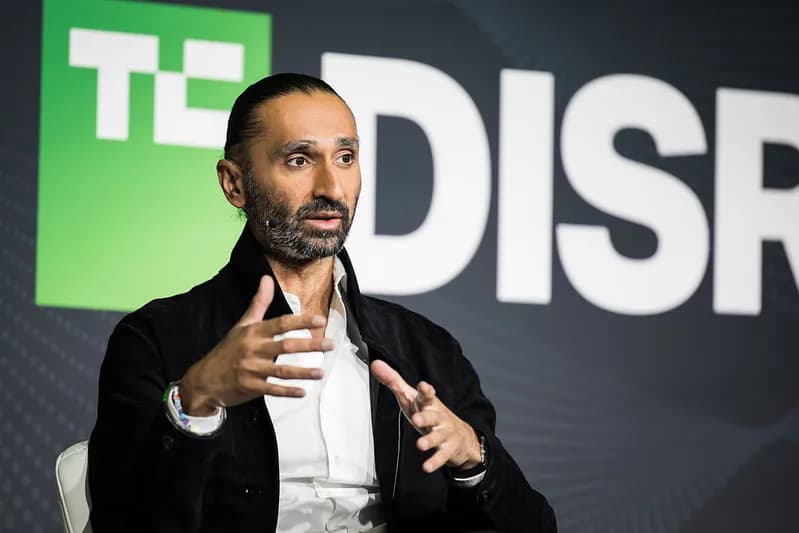
Blackstone veteran Jas Hyra spoke at the TechCrunch Disrupt conference, describing how the firm, with $1.3 trillion in assets under management, is participating in the AI transition through multiple strategies: from large loans to data centers to investments in cutting-edge AI models and applications. Earlier this year, the company launched Blackstone N1 (BXN1) — a hub for AI initiatives in San Francisco led by Hyra, who moved from New York for this purpose. According to him, unlike past cycles such as mobile technology or SaaS, the transition to AI requires enormous investment — which is why Blackstone's role is so significant.
The neocloud lending model
Hyra emphasized that Blackstone differs from venture investors in its focus on financing compute and flexible capital structures — from debt to equity. “We are the largest owner of computing capacity outside the hyperscalers today,” he said, mentioning investments in neoclouds and data centers. BXN1 participated in a number of deals, including Crux AI — a neocloud in partnership with Google to commercialize its custom TPUs, into which Blackstone invested $5 billion — and also backed the chip startup Etched. The firm was the first to propose a lending structure for venture-backed neoclouds, analyzing signed customer contracts and taking GPUs as collateral. The first such deal took place in 2023 with CoreWeave, which, after the launch of ChatGPT, sought a $2.3 billion loan with, according to Hyra, only “$30 million in revenue and minimal profitability.” The collateral was Nvidia GPUs — Nvidia was also an investor — and contracts with Microsoft reduced the risks. This deal became the model for subsequent multibillion-dollar loans to CoreWeave and competitors, including co-leading with Coatue a $10 billion credit line for Australian provider Firmus this year.
Market nervousness and rising cost of debt
Hyra acknowledged that in recent weeks the large debts of neoclouds have caused alarm: CoreWeave's debt has grown to roughly $50 billion, and Altimeter Capital founder Brad Gerstner noted in a CNBC interview that “the collateral CoreWeave provides — essentially just GPUs — is no longer good enough. They used to use it for cheap debt.” Among the reasons for nervousness in the credit market, Hyra cited the September rate hike, higher-than-expected inflation, and a flood of AI debt offerings. “We are also seeing wider credit spreads,” he said, adding that “the cost of borrowed capital for Meta or Microsoft has widened.” The anxieties were reflected in share prices: CoreWeave stock fell more than 20% in recent days, and Firmus canceled its planned IPO on the Australian exchange with a target valuation of about $30 billion. “Ultimately, there was no market at that valuation, and as a result the deal did not happen,” Hyra commented.
Denial of a credit crisis risk
Despite pressure on infrastructure providers, AI companies' demand for compute continues to fuel data center construction. Hyra rejected concerns that accumulated AI debt would lead to a credit crisis or an economic collapse: “This is not like 2008 with shaky bank loans.” He pointed out that most data centers are built for hyperscalers, so the debt is backed by “the most creditworthy companies in the world.” In addition to data centers, Blackstone this year created, together with Anthropic and Hellman & Friedman, a $1.5 billion joint venture, “Ode with Anthropic,” which supplies engineers for AI implementation, starting with 280 Blackstone portfolio companies. Asked about the real return on AI, Hyra admitted: “There is definitely ROI, but it is uneven,” describing the adoption of the technology as a “sawtooth” process, which skeptics may perceive as an excess of computing capacity before demand catches up with supply.