The key facts
- Radiocarbon dating placed the remains between 987 and 1052 AD; the man was 35–49 years old and about 175 cm tall
- The main contenders for the deceased's identity are Abbot Elfwig (died around 1020) and his successor Wulnoth (died in 1049)
- The skeleton was believed lost until 2016, when an almost complete skeleton was discovered during restoration of the sarcophagus
A sarcophagus mystery solved after a century and a half
The skeleton from a Roman sarcophagus found on the grounds of Westminster Abbey in London 150 years ago has finally been identified. The Abbey's archaeologist Warwick Rodwell established that the remains belong to a high-ranking medieval monk. The findings are published in the Journal of the British Archaeological Association.
History of the find
The limestone sarcophagus was discovered during excavations at the Abbey in 1869. The inscription on the stone mentions Valerius Amandinus, a wealthy Briton who lived around 300–400 AD. The lid, however, was crowned with a Latin cross, carved presumably in the 10th or 11th century, indicating that the tomb was reused several centuries later. Workers had stumbled upon the sarcophagus as early as 1820, breaking the top slab into six pieces; the find was restored and officially described only 49 years later.
Dating and anthropology
Radiocarbon dating of a bone sample, carried out at the Scottish Centre for Ecology and the Natural Environment, pointed to the period from 987 to 1052 AD. Bone specialist James Young Langthorn estimated the man's age at 35–49 years, with a height of about 175 centimeters. Experts of the 19th century, by contrast, saw in the skeleton a 'sturdy young man' no older than 30 and about 170 centimeters tall.
Who was buried
Rodwell names Elfwig, who headed the Abbey with the rank of abbot and died around 1020, as the leading candidate. The second option is his successor Wulnoth, who died in 1049 and was also, probably, buried in the monastery. In those years Westminster was a Benedictine monastery. 'We have two real contenders for the occupant of the sarcophagus,' Rodwell noted. 'Either would fit if we assume the abbot was appointed in his early twenties and died closer to fifty. The fact that Elfwig was already a monk of Westminster may speak in his favor.' The stone sarcophagus itself also testifies to the deceased's high status: the Roman tomb was adapted anew, with a wooden coffin placed inside.
Recovery of the lost bones
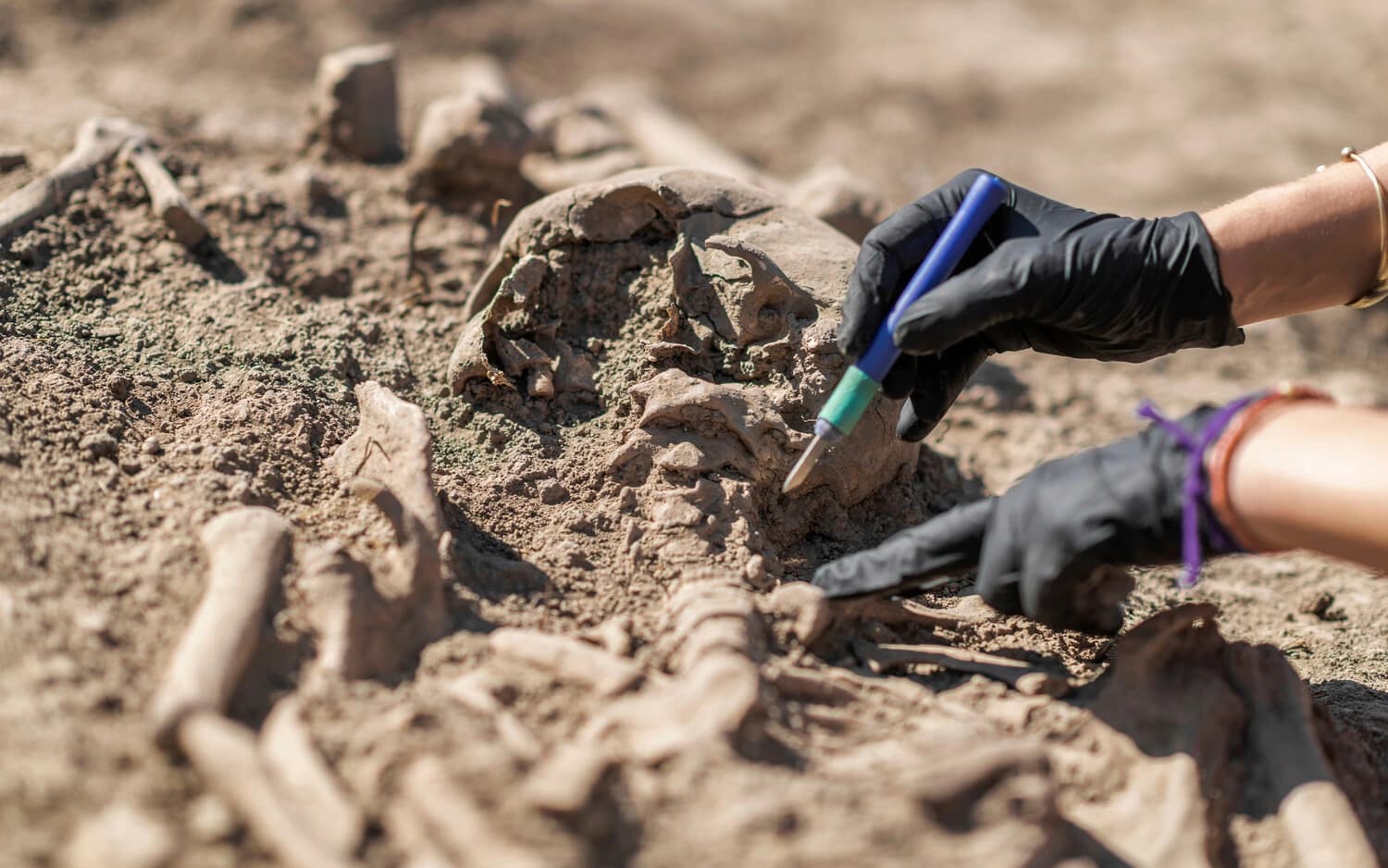
For a long time the bones from the coffin were considered lost, until in 2016 the sarcophagus was sent for restoration: upon lifting the lid, specialists unexpectedly found an almost complete skeleton inside. By the white traces of lime, archaeologists made out the outlines of a wooden coffin that had rotted away over seven centuries. Today the tomb can be seen in the Queen's Diamond Jubilee Galleries.