The key facts
- The WFP is cutting aid from 1.6 million to 1.1 million people; payments to 75,000 families have been reduced, and hot meals — from 250,000 to 150,000 per day.
- The reason is a lack of funds: in 2026 less than half of the previous funding has been received; $400 million is needed for six months.
- According to the WFP, 1.4 million people (67% of Gaza's population) face acute food shortages; 200,000 are at the emergency level.
The cuts will affect half a million people
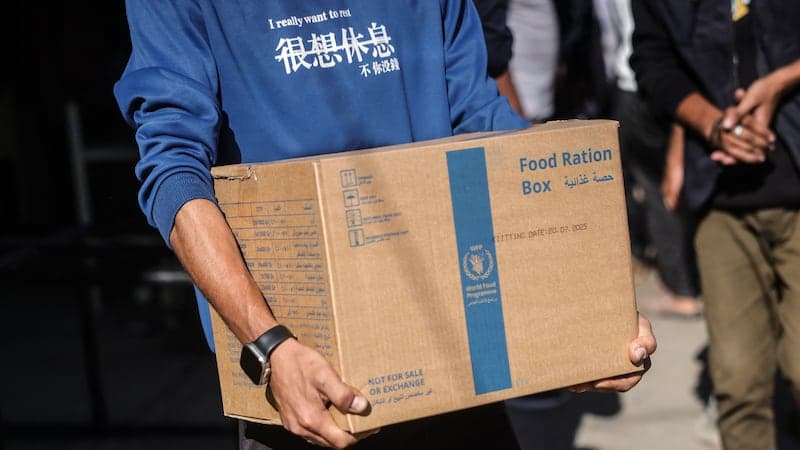
The UN World Food Programme (WFP) announced on Monday a reduction of food and cash assistance in Gaza that will affect about 500,000 people. The number of monthly aid recipients will decrease from 1.6 million to 1.1 million people. The organization's acting head, Carl Skau, emphasized: 'This is not because needs are decreasing, and not because we cannot deliver food. It is only because we have less funding.'
What exactly is being cut
The cuts concern not only the number of recipients. Families that previously received two food parcels will receive one, as well as a smaller bag of wheat flour. The number of hot meals distributed daily will drop from 250,000 to 150,000. Cash assistance to 75,000 families has been reduced: according to a WFP staff member in Gaza, more than 100,000 families previously received 1,250 shekels per payment cycle; now they will receive 750 shekels under certain criteria. The staff member also said that over the past month and a half the number of aid trucks has dropped sharply: whereas previously more than 25 trucks a day arrived on days when the crossing was operating, now there are no more than eight to ten, and sometimes only five. According to him, within the organization the cuts have repeatedly been explained by a lack of funding.
Residents fear losing their only source of income
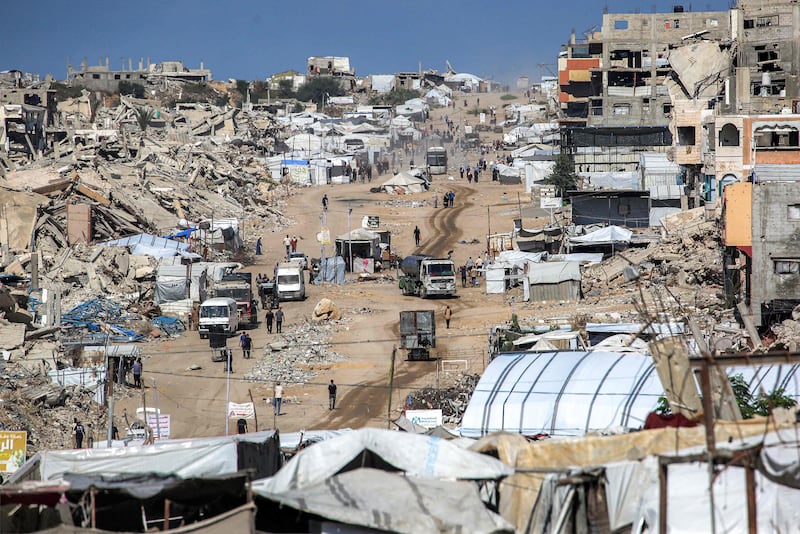
Ahmed Al Haj, 53, whose home in the Jabalia refugee camp was destroyed, lives with his family in a tent in the Al-Mawasi camp for displaced people in southern Gaza. He and his eldest son are wounded and continue treatment and cannot work. Every two to three months he receives 1,250 shekels (about $380) from the WFP — the family's main source of support. After the news of the cuts, he contacted the WFP office, but was told that the new list of recipients had not yet been approved. 'If the aid stops, my family and I will have nothing to rely on,' he told The National. Similar fears were expressed by Mohammed Abu Aylwa, 46, whose family of nine, including two disabled members, lives in a camp near the port of Gaza City. His grocery shop in the Al-Shati camp was destroyed by the war, and the family depends on monthly parcels of lentils, rice, oil, flour and canned goods. He noted that many community kitchens have already stopped operating: 'Parcels and aid need to be increased, not cut.'
The scale of the food crisis
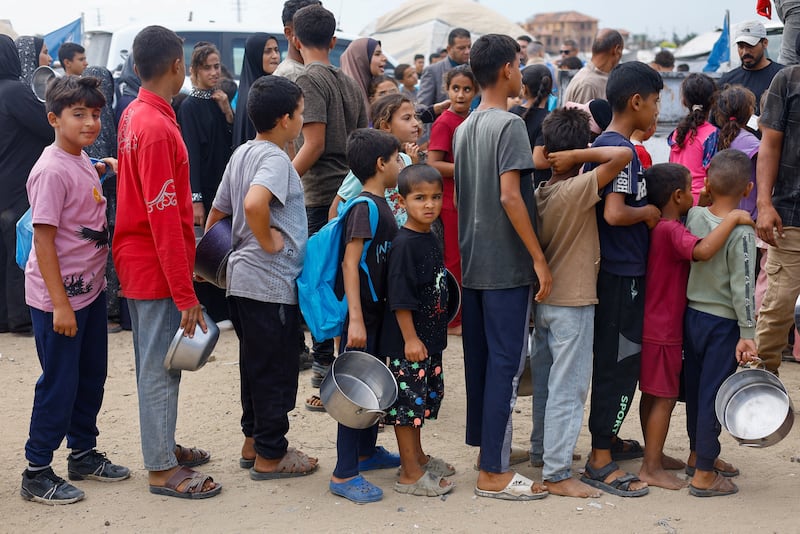
According to the WFP, about 1.4 million people in Gaza — 67% of the population — face acute food shortages at crisis level or worse, and roughly 200,000 are at the emergency level. Although food security has moderately improved since the ceasefire in October 2025, the organization warned that these gains are fragile and could be reversed with further reductions in aid. Only one in five children in Gaza has a sufficiently varied diet, and with unemployment above 80%, many families cannot afford fresh vegetables and protein-rich foods even when they are available.
Economic consequences
Economic analyst Ahmed Abu Kamar believes that the reduction of aid could further weaken the enclave's devastated economy: food and cash support not only helps families survive but also sustains the local economy by creating demand for basic goods. Its reduction will lower purchasing power and pressure on traders and the few operating businesses, which, in his words, threatens 'a vicious circle of growing poverty, falling consumption and weakening economic activity.' He also noted that the problem lies not only in the quantity of food but also in its quality and variety: flour and canned goods do not replace fresh and balanced products. Abu Kamar called for sustainable funding of humanitarian programmes, diversification of supplies and the restoration of UNRWA's full operational role. The WFP said it has received less than half of the funding for Palestinian operations in 2026 compared with previous years and urgently needs $400 million to sustain key programmes in Gaza and the occupied West Bank over the next six months. With winter approaching and hundreds of thousands of displaced residents still in temporary shelters, the reduction of aid threatens to worsen the situation of families struggling to meet their daily needs.