The key facts
- The average bus interval in Tashkent has been reduced from 13 to 8–10 minutes since 2022
- By the end of 2026, 200 electric buses from Toshshahartranskhizmat and 100 buses from private carriers are expected
- Night bus routes, promised by the end of 2025, have not yet been launched
Intervals reduced to 8–10 minutes
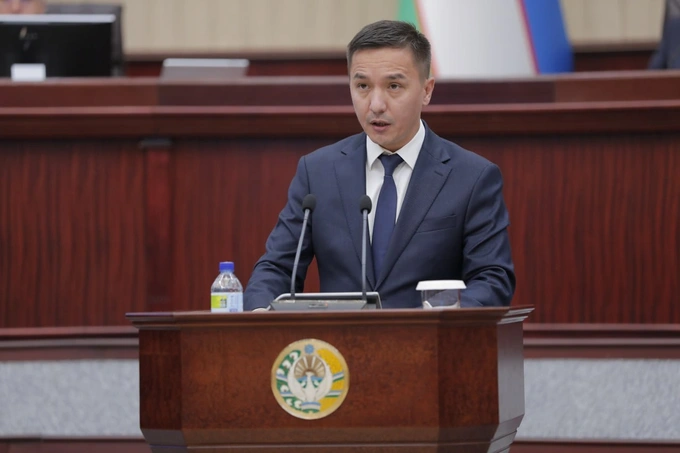
At a press conference on October 16 at the Content Preparation Center, with the participation of the leadership of the Ministry of Transport, representatives of the department spoke about the work of Tashkent's public transport. First Deputy Minister of Transport Mamanbiy Omarov said that after the introduction of the new system in 2022, the average interval between buses, which then stood at about 13 minutes, has now been reduced to 8–10 minutes. On some routes the interval is 12–14 minutes, on others 6–8 minutes; among the city's 170 routes there are also those where the interval reaches 15–16 minutes. According to Omarov, the former situations when passengers waited 20–30 minutes for a bus have been abandoned. The interval is determined based on the route length and the number of assigned buses, which depends on passenger flow.
Experiment with extending service after rush hour
Head of the Main Transport Directorate of Tashkent Mirakbar Ikromov noted that the schedules of some routes are being revised. The possibility is being considered of maintaining the 8–10 minute interval during morning rush hours and increasing it to 15 minutes after passenger flow declines, which would allow extending bus operating time by another half hour. According to him, such an experiment is already being conducted on three routes: by using daytime mileage more efficiently, bus operating time can be extended by 30–40 minutes.
Fleet age, traffic jams and GPS monitoring
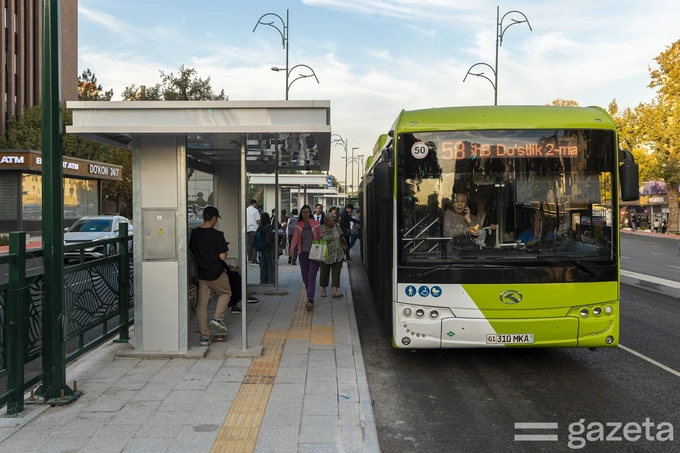
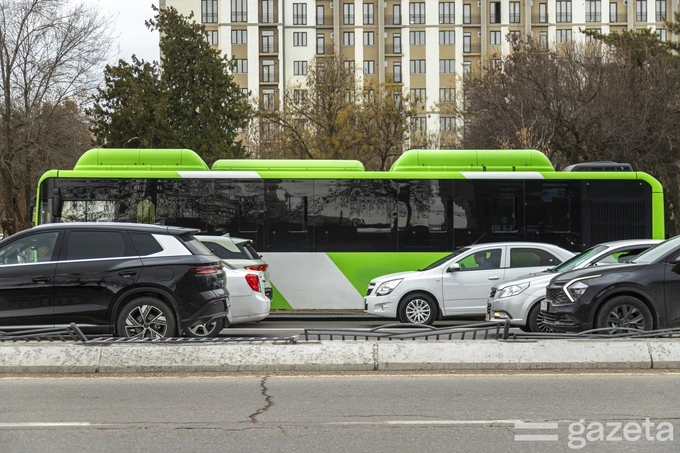
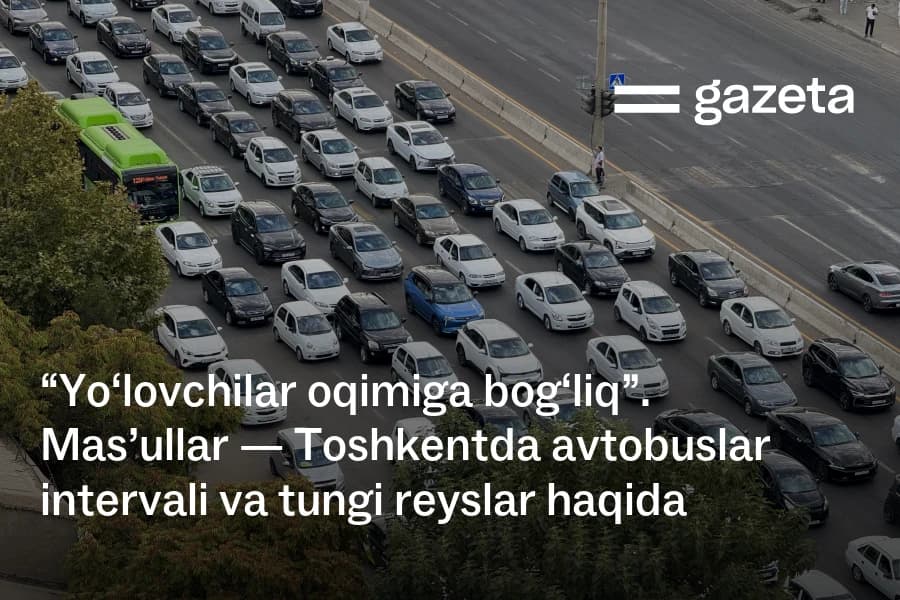
Omarov emphasized that intervals are affected by the age and technical condition of the vehicles. The Toshshahartranskhizmat fleet includes Mercedes-Benz, Isuzu and MAN buses of various years of manufacture, as well as recently purchased Yutong, King Long and Foton buses. Breakdowns of old buses can disrupt schedules. Daily passenger flow has reached 1.5 million people. Traffic jams and road accidents also cause delays, which is why two or three buses sometimes arrive at one stop at once: if the first one is late, the next one does not wait for it but continues on its own schedule — otherwise the delay would cascade to subsequent trips. Bus movement is tracked via GPS: the monitoring center contacts the carrier if a bus stops, and in case of a breakdown a reserve bus must leave the depot. The quality of carriers' work is assessed by timeliness of arrival, cleanliness and drivers' uniforms; violations may result in deductions from state payments.
Night routes still not launched
Despite the promise to launch the first night bus route in Tashkent by the end of 2025, this has still not been done. According to Ikromov, the organization of night transportation is planned, entrepreneurs' proposals are being studied and feasibility studies are being developed. Night routes are supposed to cover the airport, railway stations and streets being formed as round-the-clock ones. He did not name an exact launch date. Toshshahartranskhizmat serves 164 routes; one route was transferred to private carriers in 2022, now there are six. The gross-contract system plays an important role, under which the carrier is paid at a pre-set tariff for the volume of services provided — this makes routes more attractive to business.
New buses and potential competitors
According to Ikromov, to cover current demand Tashkent needs 500 buses, and another 500 are planned to be purchased additionally. A feasibility study has been developed for the purchase of 200 electric buses by early 2027; the proposal is being discussed at the Ministry of Transport's scientific council. Omarov also announced plans to deliver 200 new electric buses this year or in the first quarter of 2027. By the end of the year, private entrepreneurs are expected to bring another 100 buses — mainly for routes connecting Tashkent with Tashkent Region. Ikromov noted that about a million vehicles move in the city, and about 400 thousand enter and leave from the region daily. To reduce transport load and cover the agglomeration with public transport, 13 more routes are planned to be opened. In addition, companies from Russia, Kazakhstan and China have expressed interest in transportation in Tashkent; their proposals are being studied. According to Ikromov, in the future a large carrier competitive with Toshshahartranskhizmat may emerge.