The key facts
- Qatar redeployed its entire defense system in six hours in response to threats from Iran, intelligence chief Al-Nuaimi said.
- US Ambassador Tom Barrack: America wants a peaceful deal; the obstacle is 'distrust' between the US and the IRGC.
- Former MI6 chief John Sawers: the Houthis will 'remain' and keep control over a significant part of Yemen.
Six-hour defense overhaul
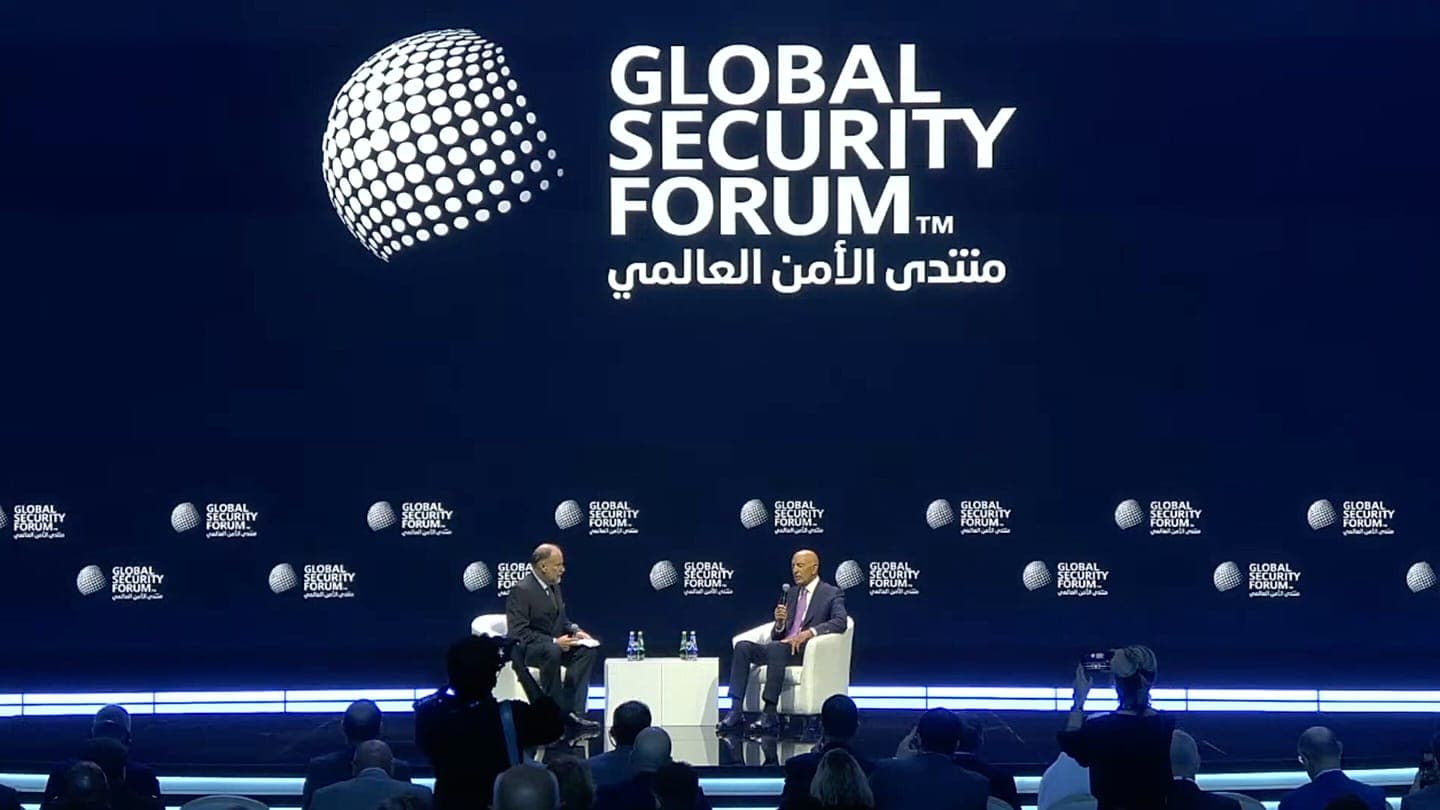
Brigadier General Khalid Mohammed Al-Nuaimi, head of Qatar's Security Intelligence Service, in a rare public appearance at the Doha Global Security Forum, said that amid military threats from Iran, Qatar decided to redeploy all of its defense systems in just six hours. According to him, the operation was 'unprecedented and successful' and relied on eight months of adapting forces, defense capabilities and military doctrine that had originally been built for an entirely different threat picture. 'We adapted, we redeployed, and we did it in six hours,' Al-Nuaimi said, adding: 'We were caught off guard, but we adapted quickly out of sheer necessity.' Asked about counter-drone efforts, he explained that the six-hour overhaul involved changes both at the conceptual level and in the distribution of defense resources.
Qatar's mediation between the US and Iran
Qatar's Foreign Ministry spokesman Dr. Majed Al-Ansari said at the forum that mediation talks between the US and Iran 'are ongoing, and we see engagement from both sides.' 'The fact that we don't hear about it is a good sign that we are doing our job right,' the diplomat added, amid rising tensions and fears that war with Iran could resume.
US position: 'America wants a peaceful deal'
US Ambassador to Turkey and the president's special envoy for Syria and Iraq Tom Barrack told the forum that 'America wants a peaceful deal,' based on a 'ceasefire in the straits' and 'easing the pain of the Iranian people.' 'Prosperity is the only answer,' he stressed, adding that a 'reset' of the previous US-Iran peace memorandum is not needed. He named 'distrust' as the main obstacle to a deal: 'The IRGC does not trust the US. And the US does not trust the IRGC.' Barrack said he does not know whether the war with Iran was a mistake, but acknowledged it had 'unintended consequences,' and called Donald Trump 'a president with no endless wars.'
'We are not leaving': envoy on the US role in the Middle East
Barrack said the US will not leave the Middle East, although the region says 'you cannot rely on America to solve all problems.' 'The deal is not about controlling, it's about not leaving. We are not leaving,' he said. According to him, 'America has been the guarantor of peace for the last 80 years, and it is no longer there,' and what is happening in the current administration is 'not abandonment, but a call to rebuild' relations. As Euronews observed, the envoy in effect contradicted one of the stated US goals in the war with Iran — regime change in Tehran: he noted that the US carried out 23 regime changes in the Middle East, and 'every time we intervened and changed a person or a regime, it seems to have been a mistake.' Instead, he said, the US goal is 'to gather everyone, put them in one tent, serve coffee, put the weapons and daggers on the table and come up with something else' through 'patience, presence and dialogue.' Touching on the escalation between Israel and Turkey, Barrack said: 'I think Israel is too smart to actually get into a fight with Turkey. I don't think Israel wants that, and I know Turkey doesn't.'
Yemen: 'The Houthis will remain,' former MI6 chief believes
Al-Ansari also confirmed Qatar's position on Yemen: along with other Gulf states, 'Qatar supports our brothers in Saudi Arabia in defending their sovereignty against this attack.' Former head of British intelligence MI6 Sir John Sawers said at the forum that 'the Houthis will remain': 'They will not be crushed, and for the foreseeable future they will retain control over a significant part of Yemen.' According to him, the Houthis have 'their own national Yemeni agenda,' and over the past 10 years they have 'demonstrated the limits of the options available to Saudi Arabia,' since Riyadh's attempts 'to sustain an alternative government (in Yemen) have not succeeded over the past 10 years.'