The key facts
- Up to 12,000 North Korean workers at the Yelabuga plant are, according to the CSIS and Bush Institute report, victims of forced labor and human trafficking; the DPRK retains up to 90% of wages.
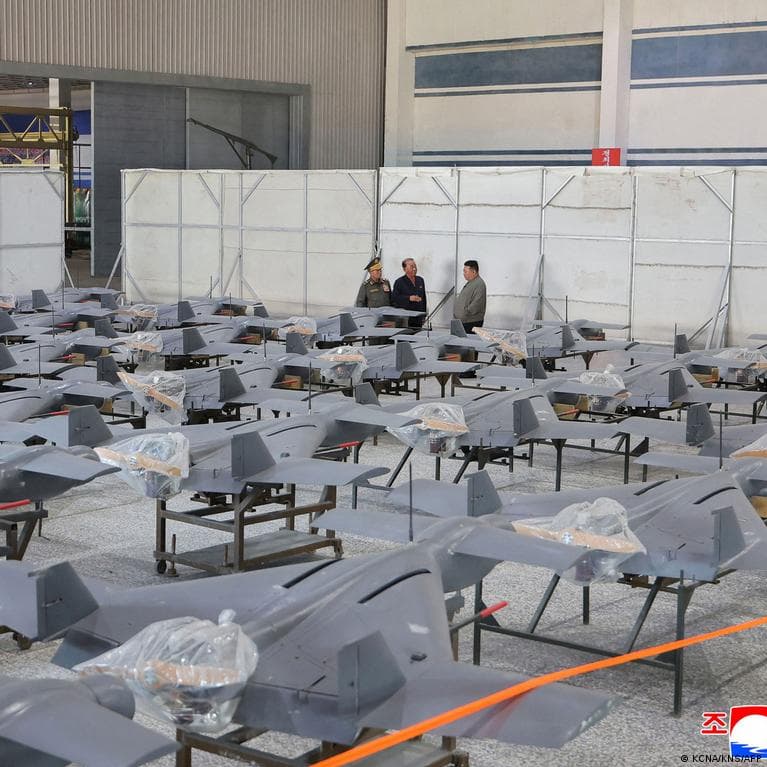
- Russia receives more than 5,500 drones per month, China is the main supplier of dual-use components, and Iran supplied Shahed drones.
- Russia and the DPRK, according to the report, violate UN Security Council Resolution 2397 (2017), which requires the repatriation of North Korean workers.
Report on Forced Labor in Yelabuga
A joint report published on October 14 by the Washington-based Center for Strategic and International Studies (CSIS) and the Dallas-based George W. Bush Institute claims that up to 12,000 North Korean workers at a Russian drone plant in Yelabuga (Tatarstan) are victims of 'gross human rights violations and human trafficking.' The report analyzes the involvement of Russia, the DPRK, China, and Iran in expanding drone production at the facility and the benefits each country derives.
Roles of the Four Countries
According to the report, Moscow gains access to more than 5,500 drones per month for the war against Ukraine. China benefits as the main supplier of dual-use components — batteries, internal electronics, engines, and navigation systems. Iran supplied Russia with Shahed drones, which helped Moscow establish production of modernized domestic versions known as Geran. The DPRK profits by retaining up to 90% of the workers' wages, the report says.
Violation of the UN Resolution
The report states that Russia and the DPRK ignore UN Security Council Resolution 2397 of December 2017, which requires member states to send North Korean workers home within two years. In the report's wording, the North Korean regime 'sells the labor of its citizens under a state-to-state arrangement, controlling whether they can leave and taking most of their earnings,' which the authors call the definition of forced labor.
Expert Opinions
Daniel Pinkston, professor of international relations at Troy University's Seoul campus, told DW that the geographic location of the four countries makes any international interdiction impossible. Seoul-based human rights activist Son Young-chai (Worldwide Coalition to Stop Genocide in North Korea) told DW that Pyongyang 'is effectively engaged in human trafficking of its own people for its own benefit,' and that this is happening not only in Yelabuga: North Koreans work on construction sites in the occupied territories of Ukraine, in logging camps, and tens of thousands of soldiers have been sent to fight on the front lines. According to him, the workers are given no freedom and keep only a small share of their earnings. Son acknowledges that stopping this 'human trafficking' is difficult, as the countries share a border, and Russia and China are permanent members of the UN Security Council that ignore its resolutions. Pinkston added that, in his view, the UN sanctions regime is 'practically dead,' and expressed concerns about the formation of a bloc that is 'tearing apart the postwar order' and its consequences for the South Korean army in light of the DPRK's developing drone capabilities.
Report Recommendations
The report calls on the US State Department to work with other countries to dismantle human trafficking networks and impose sanctions on those responsible, and on the UN to conduct a multilateral investigation into the situation at the Yelabuga complex, document the violations, ensure accountability for the perpetrators and protection for the victims. It also proposes pressuring foreign companies in the Yelabuga special economic zone — according to the report, 'several' European companies and at least one American firm are present there — to leave.