The key facts
- From 2027, 'Issiklikta'minoti' plans to switch to hybrid heating systems using different energy sources and fuels
- A heating development strategy until 2032 is being developed with World Bank experts; four to five scenarios are being considered
- Presidential decree PP-100 provides for the installation of 8,681 individual heating points and the conversion of about 9,000 facilities to closed systems
Switch to hybrid systems from 2027
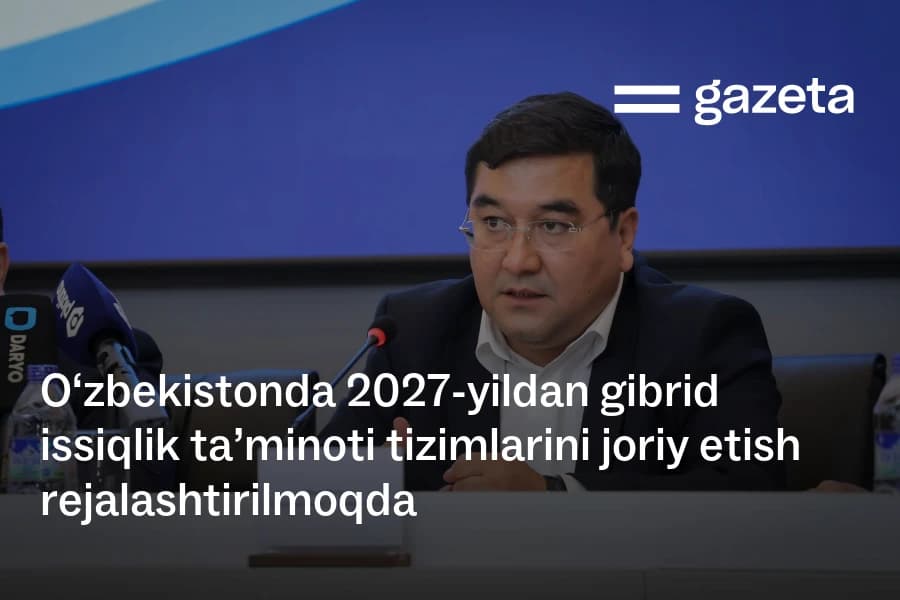
Uzbekistan plans to begin switching to hybrid heating systems from 2027, allowing the use of multiple energy sources and fuels. This was announced at a press conference on October 14 by the chairman of the board of 'Issiklikta'minoti', Ilkhom Turaev. The press conference discussed the readiness of the heating system for possible disruptions in natural gas supplies and alternative solutions in case of gas shortages or supply cuts. According to Turaev, a long-term heating development strategy is currently being developed with World Bank support and the involvement of international consultants. 'Together with them, we have identified four to five scenarios: electrification, hybrid solutions, the use of geothermal heat sources and solar panels. The consultants are now conducting comprehensive calculations,' he said. 'One thing I can say: from 2027, under our programs, we will be switching to hybrid systems,' the head of the company stated. Such solutions are being considered, among other things, for new residential buildings and the 'Yangi Uzbekiston' massifs. Possible energy sources and fuels named include natural gas, electricity, diesel units and alternative fuels, as well as solar energy, solar collectors and heat pumps.
Switch to closed heating systems
A separate direction of the reform is the conversion of centralized heating to closed systems, provided for by presidential decree No. PP-100 of March 11, 2025. Turaev explained that under the current open system, heating regulation capabilities are limited. After switching to a closed system, where the heat carrier circulates in a closed loop, heat supply can be regulated through individual heating points. 'When we switch to a closed system, the heat carrier will circulate through the pipes. Then, if residents are ready to pay for heating, it can be turned on through an individual heating point depending on their needs. Today, with the open system, such a possibility does not exist,' he explained.
Heating season timing
Answering a question about the possible extension of the heating season into March, Turaev noted that the season should begin after five consecutive days with an average daily temperature below +8 degrees and end after a similar period with temperatures above +8 degrees. The actual dates for turning heating on and off are determined based on weather forecasts. 'No one can say in advance whether heat supply in Tashkent will start after October 20 or after November 10. The decision is made only after receiving the forecast for the week. If snow is forecast, no one will stop heating in February. That has never happened in history,' he stated. According to him, heating usually continues into March, and its shutdown is generally considered after Navruz, taking weather conditions into account.
Development strategy until 2032
On September 24, the Ministry of Construction and Housing and Communal Services reported the development of a Strategy for Sustainable Development of Heat Supply in Uzbekistan until 2032 with the participation of World Bank experts. The first discussion covered the state of infrastructure, heat energy losses, resource use efficiency and modernization opportunities. Priority areas named include the development of centralized heating, diversification of fuel types, introduction of alternative and renewable energy sources, improving building energy efficiency and attracting private investment.
Heating reform and investment plans
Presidential decree PP-100 of March 11, 2025 provides for a program to install 8,681 individual heating points in apartment buildings and social facilities, converting centralized heating to a closed system. As part of the reform, JSC 'Issiklikta'minoti' was created, uniting regional heat supply enterprises. According to the presidential press service, 19 trillion soums are planned to be allocated over five years for the restoration and modernization of heating systems, and centralized heating coverage is to be increased from 37% to 58%. About 9,000 residential buildings and social facilities are planned to be converted to closed systems, which, as expected, will halve heat losses and reduce natural gas consumption by 20%. In January 2026, it was reported that during the year 400 individual heating points are planned to be installed and at least 100 km of heating networks updated.
Ban on independently disconnecting from heating
At the press conference at the Ministry of Construction and Housing and Communal Services of Uzbekistan, it was also stated that residents of apartment buildings cannot independently disconnect their apartments from central heating and switch to individual gas boilers. The ministry explained the ban by saying that interference in the common system may disrupt heat supply to neighboring apartments.