The key facts
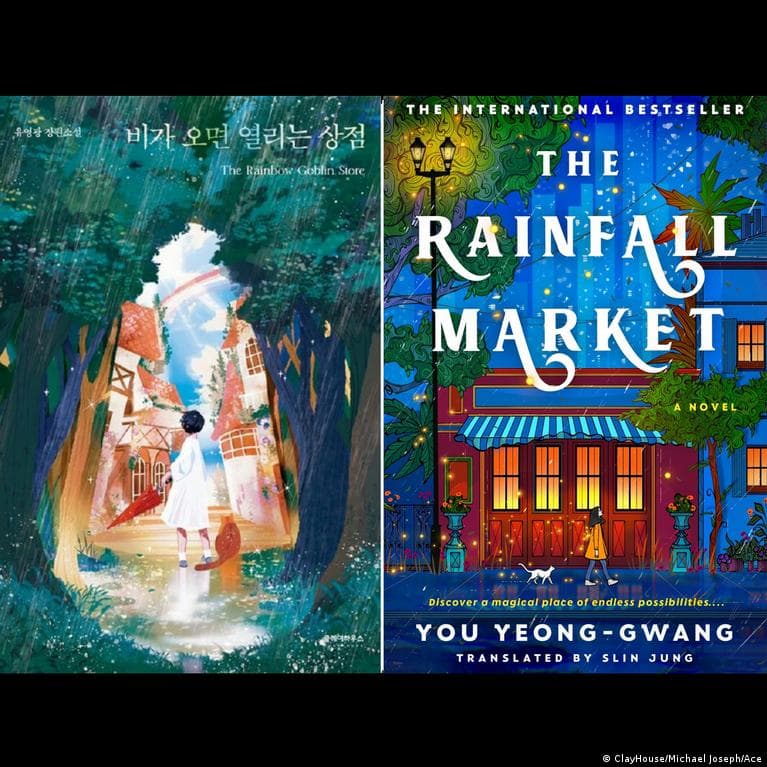
- The novel 'The Rainfall Market' has been published in more than 20 countries in 15 languages and made the Der Spiegel bestseller list.
- Yoo Yeong-gwang wrote the book on his phone while working as a courier and in a call center after a failed crowdfunding campaign.
- The book belongs to the K-comfort fiction genre — Korean 'healing' literature that is gaining popularity worldwide.
From ten rejections to international success
The debut novel by Korean writer Yoo Yeong-gwang, 'The Rainfall Market', was rejected by publishers for ten years, yet even before its print release in South Korea, translation rights were acquired by publishers from various countries. According to DW, the book has been published in more than 20 countries in 15 languages, including English, German, Spanish and traditional Chinese. At the 2026 Frankfurt Book Fair, the author told DW that the novel also made the bestseller list of Germany's Der Spiegel. 'It's hard for me to believe that all this has happened and that I am here at the Frankfurt Book Fair,' he said.
The plot and the author's personal story
'The Rainfall Market' tells of a mysterious hidden shop that opens only in the rain: visitors can exchange their deepest misfortune for a ticket to a new destiny. The heroine is a gloomy girl named Serin who finds herself at the market, which is run by whimsical spirits. 'Serin's story is my story,' Yoo admitted. While working on the book, he cared for his seriously ill mother and supported his family financially for many years. The idea of rain, he said, was inspired by his life: 'At that time, my circumstances seemed like an endless rain.' The novel draws on traditional Korean folklore, although the author claims he did not consciously set out to write 'healing' prose — at the time he did not even know such a label existed.
Years of struggle: call center, food delivery and crowdfunding
The path to publication was long. Yoo planned to publish the book himself and launched a crowdfunding campaign, but it failed. He spent all his savings and printed 200 copies, which bookstores refused to take: only five copies sold in a month. 'I thought: that's it, now I really have to give up,' he recalled. After eye surgery with complications, he temporarily lost his sight and took a job at a call center, where he could work with his voice; on weekends he studied at a computer academy and taught himself book layout software. During one of the crowdfunding campaigns he worked as a food delivery courier: the round trip took about four hours a day, and he wrote the text in a notes app on his phone while riding the subway. The final crowdfunding campaign, conceived as a last attempt, succeeded, and the book was commercially published for the first time. The rights were then acquired by the major South Korean publisher Clayhouse.
Commercial breakthrough and the K-comfort fiction genre
Even before the book's release, Yoo received offers from publishers in five countries. In the first month after publication, the novel sold 30,000 copies across all formats, becoming a bestseller among e-books and the third best-selling print edition. The book belongs to the growing genre of K-comfort fiction — Korean 'healing' literature. According to DW, Korean literature in translation sold about 1.2 million copies abroad in 2025 — the second year in a row. The genre, as described by DW, became a response to the need for escapism amid hypercompetitive education, a harsh job market and corporate pressure; it gained popularity through indie projects, online crowdfunding and the support of well-known K-pop artists. According to the Literature Translation Institute of Korea, last year's bestseller of Korean literature abroad was 'Welcome to the Hyunam-dong Bookshop,' of the same genre.
Criticism and the author's plans
The genre provokes literary skepticism from critics: they point to a predictable, repetitive formula built around a single magical space, simplified prose and low-stakes conflicts, where a cozy atmosphere matters more than deep character development. As literary critic Peter Julien noted in his review for the Korea Times, 'healing' prose consists of light, mood-lifting stories, and the boom reflects a deliberate desire to write 'global' novels for international markets. Yoo himself says he wanted readers, upon closing the book, to feel 'a little warmth in the heart.' His main hope is his mother's recovery — she underwent surgery a week before his arrival at the fair. 'If my story can help even a little, at least one person, I don't think anything could make me happier,' he concluded.