The key facts
- The law was passed by the Legislative Chamber on September 29 and approved by the Senate on October 2, signed on October 14
- A Constitutional Court information system is being introduced: online appeals, video hearings, broadcasts — from January 1, 2028
- Deadlines are set: 15 days for preliminary review, 20 days for case preparation, 3 months to bring unconstitutional acts into line with the Constitution
New version of the law signed
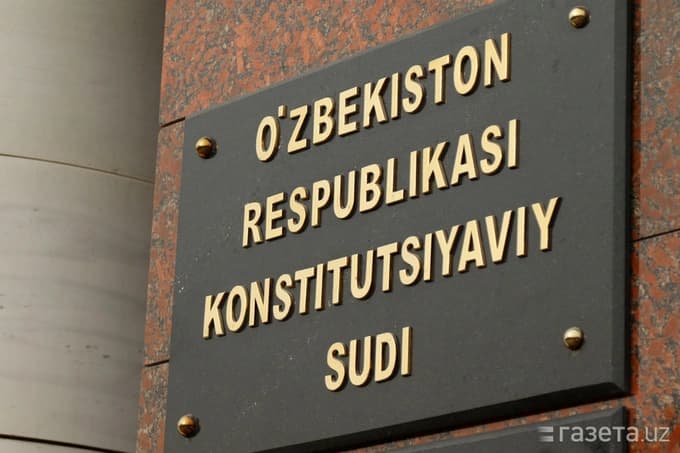
On October 14, President of Uzbekistan Shavkat Mirziyoyev signed the constitutional law “On the Constitutional Court of the Republic of Uzbekistan” in a new version. The document was published on the Lex.uz portal. It was passed by the Legislative Chamber of the Oliy Majlis in its final reading on September 29 and approved by the Senate on October 2. The new version replaces the 2021 law. As Spot.uz notes, legislation on the Constitutional Court is being updated for the third time in the last decade and for the fifth time since independence.
Digitalization of court proceedings
The law provides for the creation of a Constitutional Court information system. It will allow appeals to be filed online, participation in hearings via video link and through a mobile app, as well as broadcasting hearings over the internet. Case records may be kept in written or electronic form, with both types of documents having equal legal force. In electronic form, the court will have the right to request necessary information from participants in proceedings in digital form. The provisions on electronic court proceedings and participation in hearings via videoconference enter into force on January 1, 2028; the rest of the law takes effect from the moment of official publication.
Handling appeals and deadlines
The Constitutional Court will be able to redirect appeals that do not fall within its powers to the relevant bodies or refuse to accept them. If an appeal is filed by a person without the corresponding right — for example, when other means of rights protection have not been exhausted — the court may forward it to the authorized body. No more than 15 days are allotted for the preliminary review of incoming applications. Preparation of cases for review, including determining hearing participants, proposals for requesting data, and engaging experts and specialists, must take 20 days after the appeal is accepted. After preparation, the court’s apparatus issues a decision on scheduling the hearing within 10 days and sends it to participants at least 5 days before it is held; the date, time and place of the hearing are published on the court’s website.
Enforcement of decisions and reporting
The procedure for enforcing Constitutional Court decisions declaring legal acts unconstitutional has been clarified: the state body that adopted such an act must bring it into line with the Constitution within three months. If the Supreme Court applies to the Constitutional Court for clarification on whether an act applied by another court in a pending case conforms to the Constitution, proceedings in that case are suspended; one month from the date of the application is allotted for resolving such matters. Parties must be sent the Constitutional Court’s decisions within 5 days after adoption — by mail, to an email address, or in person against a receipt. In addition, the court will annually compile a report on the state of constitutional legality based on summarized court practice data and send it to the president and both chambers of the Oliy Majlis. Another innovation is a reserve of candidates for Constitutional Court judgeship positions, formed jointly with the Higher Judicial Council; the procedure for maintaining it will be approved by the court’s regulations.