The key facts
- 855 arrests, 557 held in police custody; interior minister Laurent Nuñez offered his resignation, Macron refused
- The 'yellow vests' announced a 'second act' — new demonstrations planned for next weekend
- 82% of respondents in an Ipsos-BVA poll rate Macron's performance negatively; Le Pen leads polls ahead of the 2027 elections
Crisis amid riots
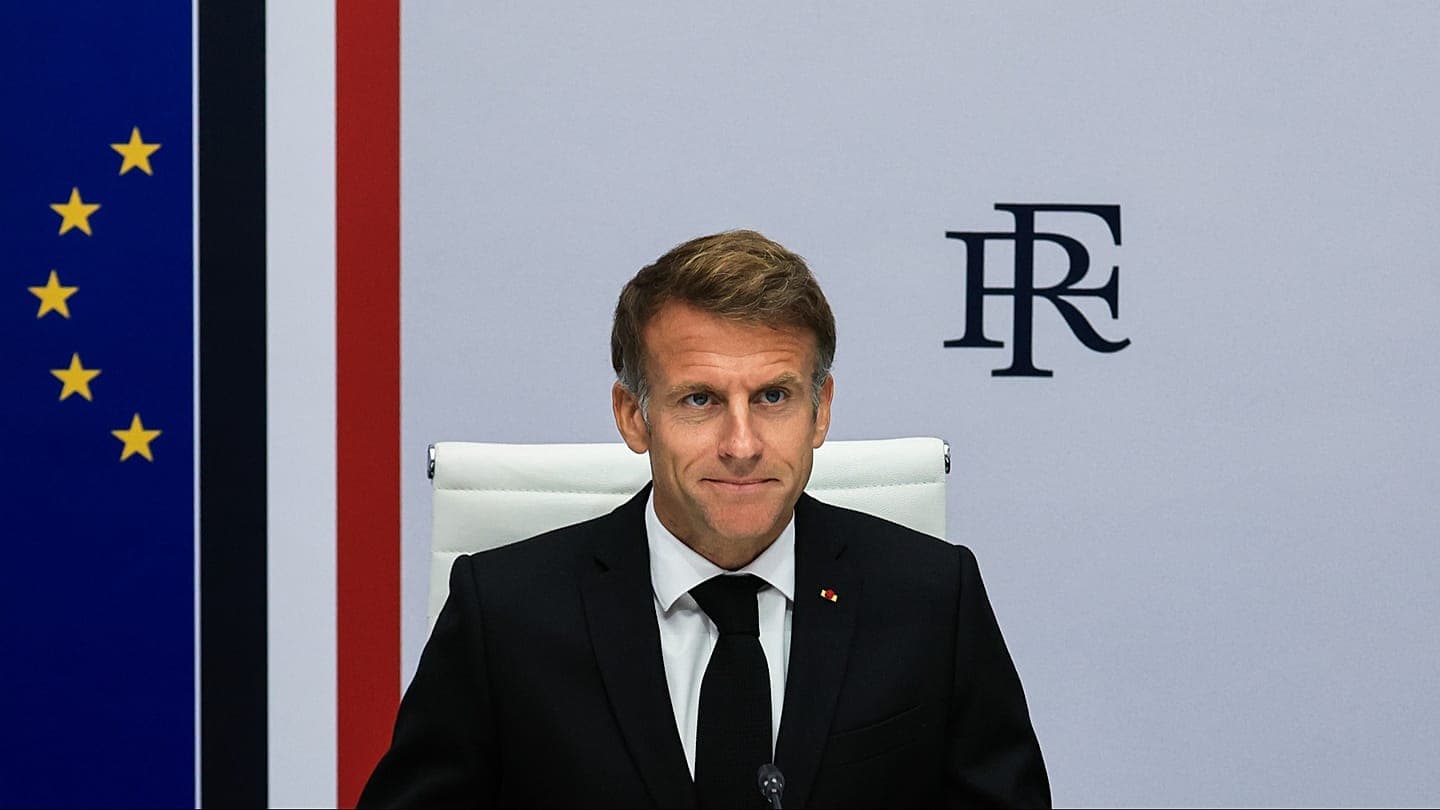
A few months before the end of his presidential term, Emmanuel Macron has faced mounting social unrest and criticism that could affect his political legacy. After student protests over living conditions turned violent last Saturday, the president has been criticised from across the political spectrum for his security measures and his response to discontent over education, the cost of living and inflation. The riots are unfolding against the backdrop of record public debt, rising fuel prices and intensifying international conflicts. The 'yellow vest' movement, which helps coordinate the protests, announced a 'second act' on Monday — new demonstrations are planned for next weekend.
The authorities' response and arrest figures
Addressing the nation, Macron condemned the violence and announced new operational procedures for the security forces. The Paris prosecutor's office reported 855 arrests linked to the demonstrations: 557 people were placed in police custody, of whom 433 were adults — 78% of those arrested. 'Looking at these images, we all asked ourselves: what is going on in their heads? How can the French treat France like this?' Macron said. 'Nothing justifies it, nothing explains it, nothing excuses it. Tonight we all feel anger and shame.' According to an Ipsos-BVA poll conducted in October, 82% of respondents rate the president's performance negatively. Macron is on a diplomatic trip to the Persian Gulf, which, according to the Élysée Palace, was undertaken to secure energy supplies amid rising prices, but the decision to leave Paris at the height of the crisis has drawn accusations of evading the situation.
Opponents exploit the crisis
Potential presidential candidates from all flanks claim that Macron has lost authority and that his response was belated. 'It feels as though the government is collapsing under its own weight, that it is completely failing to cope,' said Jordan Bardella, leader of the National Rally, whose party leads the polls ahead of the 2027 elections. At a press conference on Monday, he promised tough measures to restore order if his party comes to power: 'France is caught in a vice between powerlessness and violence.' Marine Le Pen, who leads the polls among potential rivals (she lost to Macron in the second round in 2017 and 2022), said France had been 'devastated by an alliance of suburban criminals and politicised professional rioters.' Her campaign is expected to focus on migration and law and order, pushing foreign policy issues, including the war in Ukraine, into the background.
Criticism from former allies
Macron is also criticised by his former prime ministers Édouard Philippe and Gabriel Attal, both running in the 2027 elections and distancing themselves from the president's legacy. 'Like millions of French people, I would have preferred to see decisions and initiatives aimed at restoring order,' Philippe wrote on X. Attal called on the state to use every means 'to see justice done,' including AI-based facial recognition and, 'if necessary,' the army; on Sunday Macron announced no additional security measures, tasking local authorities with coordinating work with the police. The left, riven by internal contradictions, criticised the government for failing to protect citizens. 'This is unprecedented in its severity,' MEP Raphaël Glucksmann told radio RTL. 'I had the feeling that France was dissolving, that the Republic was falling apart, that the state no longer existed.' Conservative Bruno Retailleau called Macron 'completely unequal to the situation, incapable of deploying the full force of the state against the chaos threatening the Republic,' citing the arson of the Limoges city hall and vandalism at the Marseille city hall.
Admitting mistakes and the political context
Senior members of the government have also admitted shortcomings in the response. On Monday, interior minister Laurent Nuñez acknowledged a 'lack of foresight' in the preparations and offered his resignation, 'because he felt responsible for everything that happened,' but Macron declined it. Justice minister Gérald Darmanin likewise admitted that the authorities 'undoubtedly failed,' pointing to 'shortcomings in intelligence gathering.' Macron has few defenders among former allies: some blame the political crisis on the dissolution of the National Assembly in June 2024, which plunged the country into uncertainty and left successive governments under the threat of no-confidence votes. Commentators note that Macron has alienated the young people who helped him come to power in 2017: some protesters criticise his 2018 lycée reform, which, in their view, made school days longer. Le Monde, in a recent column, called Macron's relationship with young people 'a major political failure' and drew parallels with the 'yellow vest' movement, which flared up in December 2018 amid discontent over purchasing power. 'Restoring public order is a necessary condition for starting the negotiations promised on Sunday with all stakeholders and for resuming the social dialogue that has been interrupted for far too long,' the article concluded.