The key facts
- Abiy Ahmed appointed an interim government for Tigray and gave it six months to prepare elections and stabilize
- The US and UK call on Ethiopia and Eritrea to exercise restraint and dialogue under the 2018 peace framework
- Reports of Eritrean troop movements near the border heighten fears of a new war; the scale of the deployment is disputed
Interim Administration in Tigray
Ethiopian Prime Minister Abiy Ahmed announced on Friday the formation of an interim government in the northern region of Tigray, giving it six months to prepare regional elections and restore stability. The announcement followed a military offensive launched in September by the Tigray People's Liberation Front (TPLF) together with six other armed groups; the advancing forces were ultimately forced to retreat and lost control of the region. 'In order to gain the peace they have long lacked, secure the right to self-governance, and finally enjoy the fruits of development, the people of Tigray must break out of this cycle of conflict,' Abiy said in a statement published on X.
Tasks of the New Authority
The new mayor of the regional capital Mekelle, Shishay Amare, told AFP that the administration's task is to create conditions for elections by ensuring peace and stability throughout Tigray. 'I am confident this will be done within six months, according to our plan,' he added. Among the priorities he named restoring peace, returning displaced residents to their homes, opening markets, and delivering humanitarian aid to those in need.
Shadow of the 2020–2022 War
The fighting has revived fears of a return to the devastating war in Tigray of 2020–2022, from which, according to DW, about a million people remain displaced. The African Union estimated the death toll in that war at roughly 600,000 — from combat, famine, and the collapse of healthcare. The new administration faces unresolved disputes over political power and territory, including western Tigray, which is claimed by both Tigray and the neighboring region of Amhara.
Tensions with Eritrea
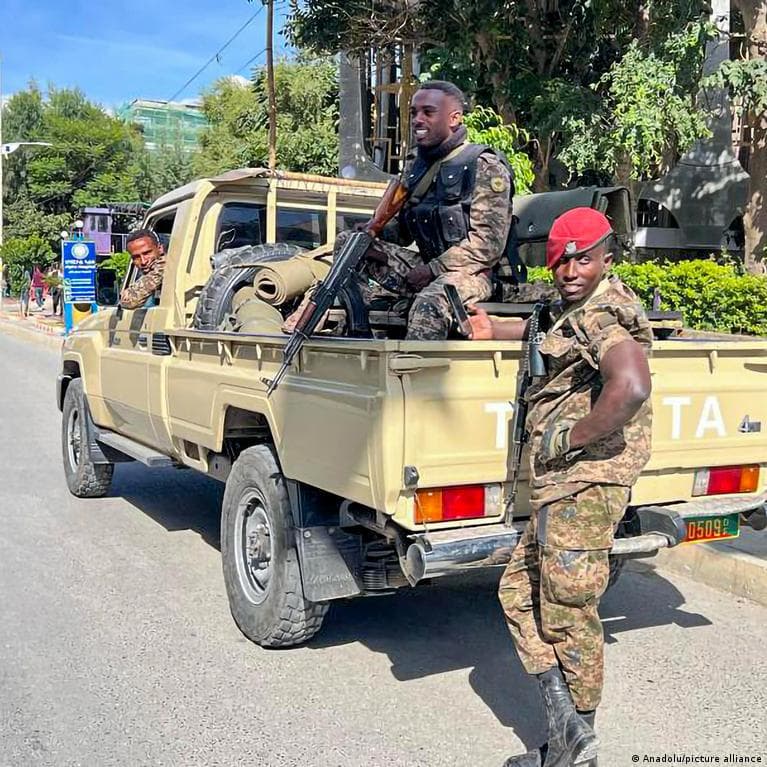
Ethiopia and Eritrea, former bitter enemies, signed a peace agreement in 2018, and Eritrean forces then fought alongside federal troops in the Tigray war. Since then, relations have deteriorated: Addis Ababa accuses Asmara of supporting Tigrayan forces and violating Ethiopian territory, which Eritrea denies. Reports of Eritrean troop movements near the border have heightened concern, although the scale of the current deployment remains disputed. Journalist and Addis Standard publisher Tsedale Lemma previously told DW that the danger reflects years of unresolved contradictions and non-implementation of the Pretoria agreement of November 2022, which ended the previous war. Asked whether the international community underestimates the threat, she replied: 'It certainly does,' noting that international players have failed to provide effective monitoring of the agreement and have not responded adequately to the weakening of the peace process.
Regional Context
The standoff is taking place against a backdrop of instability across the Horn of Africa, including the war in Sudan and tensions between Ethiopia and Egypt over the 'Renaissance' Dam (GERD), inaugurated with ceremony last year — to the displeasure of downstream Egypt and Sudan. An additional strategic dimension is the competition for access to the Red Sea: Ethiopia lost its outlet to the sea after Eritrea's independence in 1993. Journalist Martin Plaut, who specializes in the Horn of Africa, warned that the region stands at a crossroads and allowed for the possibility of Ethiopian troops entering Eritrea, though an invasion remains a scenario rather than a confirmed decision of the Ethiopian government. A broader conflict could threaten regional trade and maritime security: the Red Sea and the Bab el-Mandeb Strait connect shipping routes between Europe and Asia.
Diplomatic Efforts
The US and UK have called on Ethiopia and Eritrea to exercise restraint and return to dialogue under the 2018 peace framework. Speaking at Andrews base on Saturday, US Secretary of State Marco Rubio warned that the military buildup on the border could escalate into a broader conflict. He said Washington hopes that the lifting of some sanctions will improve communication with both sides, and stressed the need for a 'wise and measured' response to avoid a wider regional war. The UK government, in a statement on October 15, called for 'urgent de-escalation and a return to dialogue,' reaffirming its support for the role of the African Union. For now, the return of cities in Tigray to control has changed the military balance but has not resolved the tension around the region; the fate of international pressure depends on whether the governments involved choose dialogue or further escalation.