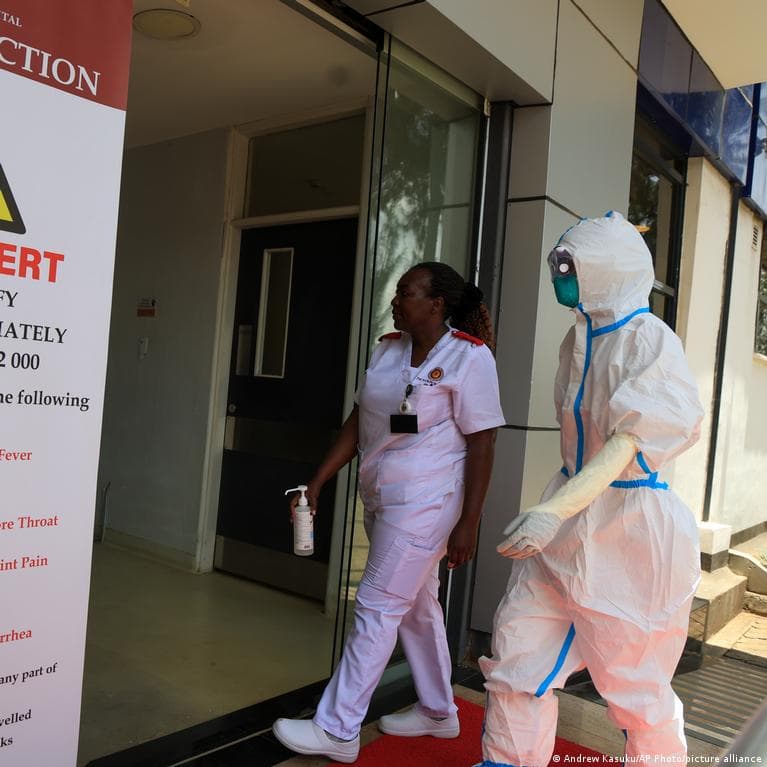
The key facts
- Kenya has confirmed an eighth Ebola case: a 49-year-old man, not a health worker, likely infected by the first patient
- The first patient in Kenya died on October 5; the remaining six patients are stable on supportive treatment
- In DR Congo the outbreak has reached an eighth province — Nord-Ubangi; at least 9,400 cases and more than 4,500 deaths
Eighth case in Kenya
Kenya's Ministry of Health on Sunday confirmed another case of Ebola, bringing the number of confirmed infections in the country to eight. As the ministry's chief administrative officer, Dr Patrick Amoth, told Citizen TV, 38 people were tested that day, and one result came back positive. The patient is a 49-year-old man who is not a health worker; he developed a fever, headache and muscle pain. According to Amoth, the patient worked as an assistant to the sick — washing dishes and laundry — and likely had contact with the first Ebola case detected in Kenya earlier this month.
Condition of patients
Amoth noted that people in quarantine are tested after symptoms appear, and the remaining six patients are stable and receiving supportive treatment. The first person infected in Kenya died on October 5. The country is on high alert amid a major outbreak of the highly contagious disease in DR Congo.
Spread in Congo
The same day, DR Congo authorities reported that the Ebola outbreak had reached an eighth province in the north of the country. According to Congo's health ministry, two cases, including one fatal, have been recorded in Nord-Ubangi province, which borders the Central African Republic. WHO's regional director for Africa, Mohamed Yakub Janabi, told the Associated Press in Beni, in eastern Congo, on Friday: 'We are seeing that Ebola hotspots are generally shrinking, but unfortunately it is spreading geographically.'
Scale of the outbreak
The current outbreak, declared in mid-May, is the deadliest in Congo's history: at least 9,400 cases have been recorded, including more than 4,500 deaths. The epidemic is caused by the Bundibugyo virus — a rare type of Ebola for which there is no approved vaccine or treatment. Ebola spreads between people through direct contact with bodily fluids; it can cause fever, fatigue and muscle pain, then vomiting and diarrhoea, and in some patients internal or external bleeding.