The key facts
- Nearly 2,400 detained and about 1,000 police officers and gendarmes injured (seven seriously) in Saturday's riots, according to the French Interior Ministry.
- Macron allowed local authorities to ban individual rallies if necessary, but did not declare a state of emergency or curfew.
- On Sunday in Paris, police used tear gas and stun grenades, 42 detentions, at least five shops near Place de la République looted.
Macron's address to the nation
French President Emmanuel Macron on Sunday condemned the 'unbridled' violence that erupted during protests against the cost of living, as police in Paris once again clashed with protesters and looters. In an address to the nation, he said he felt 'anger and shame' over the destruction, including burned town halls and hundreds of looted or damaged shops. Macron called for distinguishing between protesters with 'legitimate demands' and those who 'destroyed, smashed and looted', and promised to be 'ruthless' toward 'instigators from far-left groups, joined by numerous offenders'. He said local authorities would be able to ban individual rallies if necessary in the coming days, but did not declare a state of emergency or a curfew. Macron also promised support to affected businesses and 'full transparency' in assessing the actions of law enforcement.
The scale of Saturday's riots
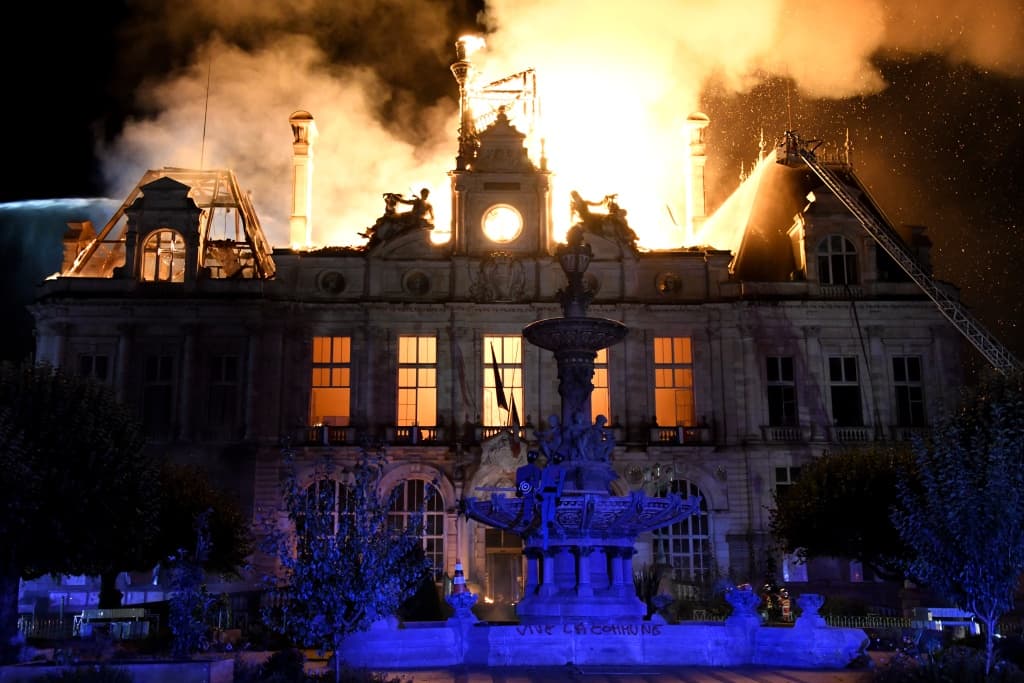
According to the French Interior Ministry, nearly 2,400 people were detained on Saturday — the riots became one of the most serious episodes of urban violence in France in recent years. About 1,000 police officers and gendarmes were injured, seven of them seriously. The protests united trade unions, the 'yellow vests' movement and schoolchildren dissatisfied with the cost of living and the prospects for young people. In Limoges, a 19th-century town hall burned down — prefect Maurice Barat told the LCI channel that the fire had been deliberately set by a 'wild horde'. In Lyon, during clashes and looting, the tourist office in the city centre was set on fire. Teenagers were also among the victims: in Saint-Étienne, a 17-year-old youth lost his right hand due to a police grenade, and in Mulhouse a 17-year-old girl lost an eye, according to the prosecutor's office.
New clashes on Sunday
On Sunday, according to AFP journalists, police used tear gas and stun grenades against hundreds of people who gathered at a square in Paris after calls on social media; authorities said the gathering had not been authorised. Bottles and stones were thrown at police, and 42 people were detained. At least five shops near Place de la République were looted, shop windows were smashed in other shops in central Paris, and the city hall advised many to close. In Lyon, police stopped an attempted robbery of a luxury clothing store. 'It was as if there had been a war,' 78-year-old Paris resident Mehmet Ozden told AFP amid burned barricades.
Political context and reactions
The riots occurred a few months before the presidential election, in which centrist Macron cannot participate, while National Rally leader Marine Le Pen, according to polls, holds high positions. Le Pen said the events show that Macron's administration is 'running on fumes, exhausted and disoriented'. Leader of the radical-left La France Insoumise Jean-Luc Mélenchon, also a presidential candidate, warned that the country could be moving toward 'events that ultimately become uncontrollable'. Macron said that 'the country deserves decent presidential elections' with debates 'between parties, not on the streets with violence'. US President Donald Trump blamed the riots on immigration on social media: 'France is burning! Immigration of people from a completely different world, people with hatred in their hearts, has destroyed this once great country'.
Accountability of the authorities
Some opposition politicians have already demanded the resignation of Interior Minister Laurent Nuñez. Macron said he had tasked Nuñez with 'drawing all the necessary conclusions', especially regarding intelligence gathering and anticipating events, and expects 'clear answers'. He also promised that senior officials would 'make decisions in coordination with mayors to protect our cities, public buildings and businesses'.