The key facts
- US overdose deaths fell from ~110,000 in 2022 to ~70,000 last year, but the drug mix has become more dangerous
- Xylazine and medetomidine ('tranq') are not blocked by naloxone and cause necrotic ulcers; in Franklin County 78% of fatal overdoses involve stimulants
- In Cook County jail drugs are soaked into the paper of letters and books; in 2023 eight inmates died from seizures caused by synthetic cannabinoids
A new wave of synthetics
BBC correspondent Quentin Sommerville visited Columbus (Ohio) and Chicago, where he observes the US drug market changing under the influence of fully synthetic substances. Fentanyl, produced artificially, is 50–100 times stronger than heroin and is often mixed with synthetic tranquilizers, making resuscitation during an overdose more difficult. Such 'cocktails', according to interviewees, are made in American basements and bathrooms. In Columbus, 48-year-old army veteran Mike, who has used opioids for 20 years, demonstrated smoking fentanyl for three or four dollars and suggested his dose contained xylazine and medetomidine — synthetic 'tranquilizers for large animals'. They prolong intoxication, slow breathing, and naloxone does not work against them; xylazine also causes necrotic ulcers reaching down to the bone.
Deaths are falling, but the crisis is transforming
At the peak in 2022, 110,000 people died of overdoses in the US, mostly from opioids; since then the number has fallen to roughly 70,000 last year. The wide availability of naloxone (Narcan) has saved tens of thousands of lives, but against mixtures with tranquilizers it may not work. Scott Sanders, 65, who leads the Hope Dealer Community recovery group in Columbus, reported that over the past 12 months in Franklin County 78% of fatal overdoses were linked to stimulants: buyers of crack receive it with fentanyl or opioid cocktails and die without suspecting it. According to him, overdose deaths among Black men in Ohio are rising. The organization participates in a CDC program for drug sample testing; one of Mike's kits tested positive for medetomidine.
Chicago: a dealer and a jail
In Chicago, Sommerville spoke with a dealer working for Mexican cartels and selling fentanyl (identity concealed). He admitted he knows about his role in the deaths of about 50,000 people a year, but said the end justifies the means. According to him, declaring cartels terrorist organizations, designating fentanyl a weapon of mass destruction, and the Trump administration's strikes on boats with suspected smugglers have not affected supplies: 'If not through the wall — under the wall. This game is about adaptability.' He added that synthetics are only 'not the tip of the iceberg'. Cook County Sheriff Tom Dart, who heads one of the largest jails in the US, described a new delivery method: in 2023, in a facility that usually saw one or two fatal poisonings a year, eight inmates died from seizures. Cameras recorded inmates heating paper in microwaves: drugs — synthetic cannabinoids (K2) and other substances — were soaked into the pages of books and letters and then set alight and inhaled. Now all mail is scanned for moisture; between a quarter and a fifth of packages and letters test positive and are rejected.
The work of recovery groups
At the weekly meeting of the Hope Dealer Community group at Glenwood Church, participants share stories: one recounted an overdose in July 2022, when three naloxone administrations did not help and only the paramedics' fourth attempt saved his life; Tonya told how her nephew died of an overdose while she herself was passing out from crack laced with fentanyl. In Chicago, Karen Bell, a 40-year-old worker with the organization Liv4Lali who has not used hard drugs for 17 years, cares for a man with wounds on his legs, probably from xylazine. According to her, in the past 'it was heroin, you knew what you were buying', but now the composition of mixed substances is unpredictable and 'far more dangerous'. Both organizations distribute test strips for fentanyl, medetomidine, xylazine and other adulterants.
'The war on drugs is not a success'
Tom Dart, Cook County sheriff for 20 years, said that 'no one involved would say the war on drugs is a resounding success. It is not.' Previously, law enforcement could intercept potent substances at the border — from Colombia, Mexico, China, Afghanistan — but now synthetics can be produced at home, 'in a sink, in a bathtub'. In his view, victory cannot be achieved by fighting supply alone: large-scale addiction treatment is necessary, with programs operating in his jail. Karen Bell said that on the day she learned of her pregnancy she was on her way to take her own life; her parents refused to post bail so that she could go through detox in Cook County jail, where her daughter Abby, now 17, was born. Abby said she does not try drugs because she saw how they destroyed her family, and added that rising food prices and the unavailability of expensive psychiatric care push people toward drugs. The author notes that the crisis has changed its face — from heroin to prescription opioids, then to fentanyl and now to a whole spectrum of synthetics, while US administrations have consistently lost the 'war on drugs': dealers, suppliers, cartels and consumers adapt one step ahead.
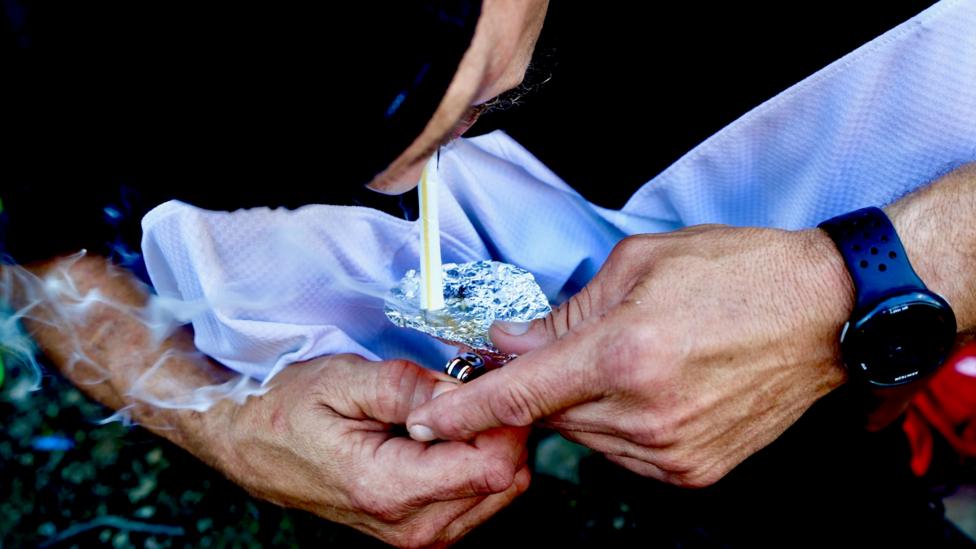 Image source, Darren Conway/BBC
"This drug will damn near make you do anything, unfortunately," says Mike as he lights up a few grains of fentanyl
 Image source, Darren Conway/BBC
Mike, a former army veteran, acts as our guide through the neighbourhood's back streets
 Image source, Darren Conway/BBC
Members of the Hope Dealer Community, a recovery group, gather for a weekly meeting at Glenwood Church
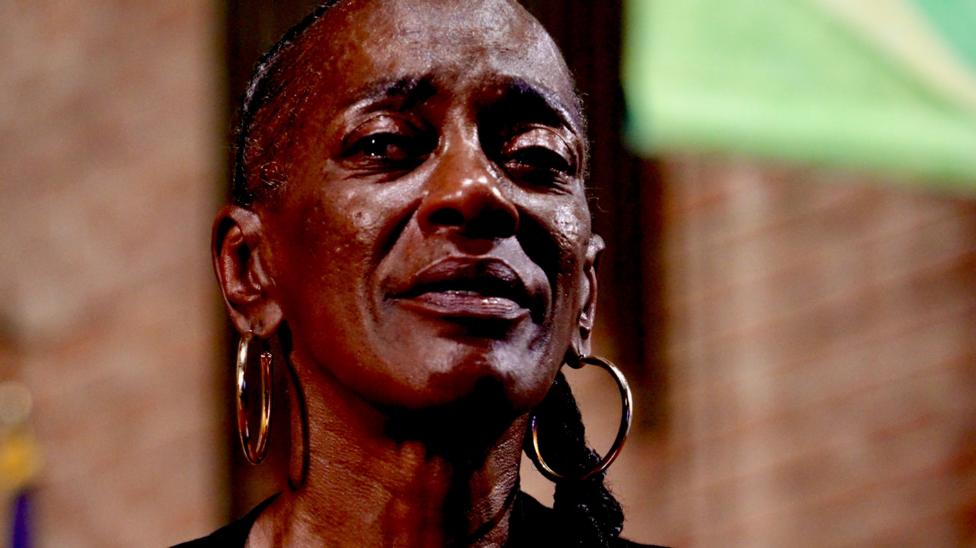 Image source, Darren Conway/BBC
One of those gathered at the church, Tonya, recounts how her nephew died of an overdose while she was overdosing at the same time
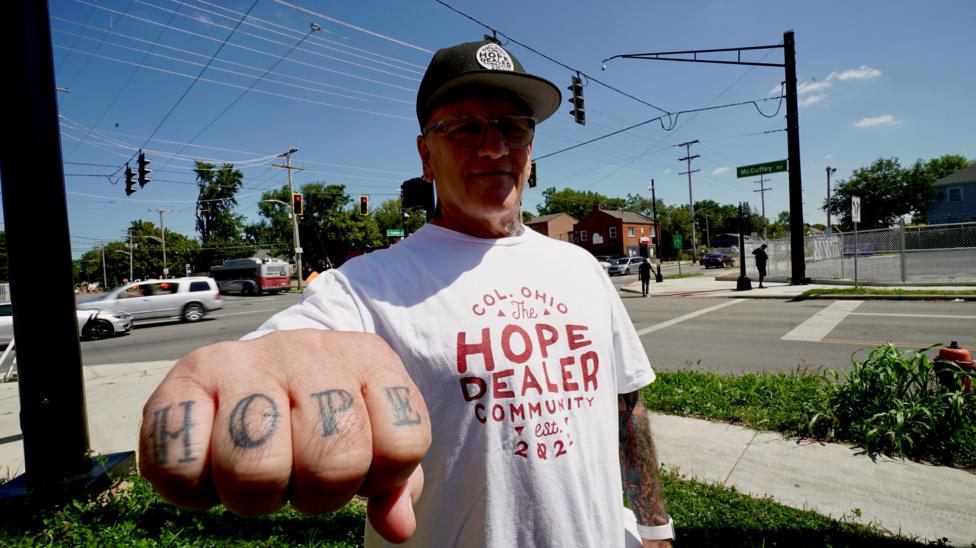 Image source, Darren Conway/BBC
Scott Sanders, 65, is almost 10 years sober and runs Hope Dealers
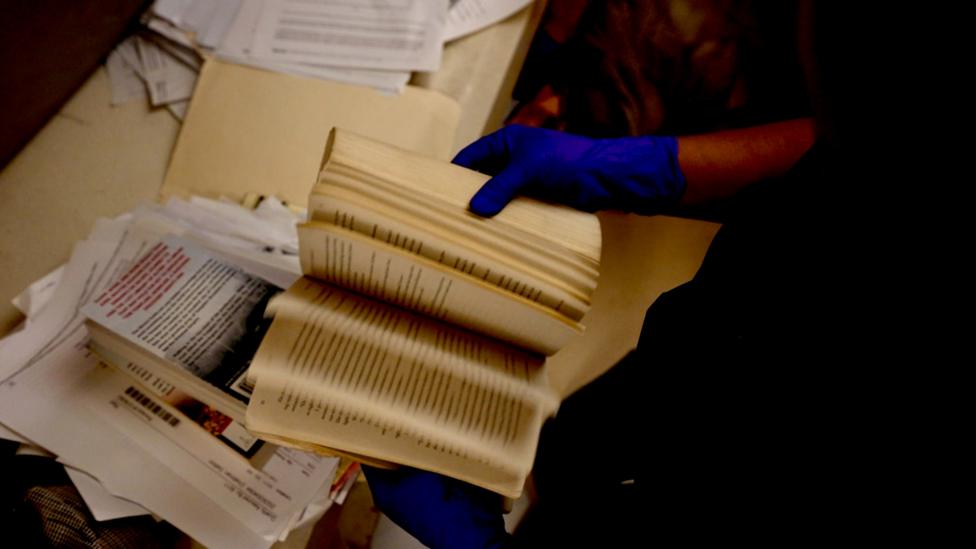 Image source, Darren Conway/BBC
In Chicago's largest jail, drugs were soaked in the pages of books and in letters
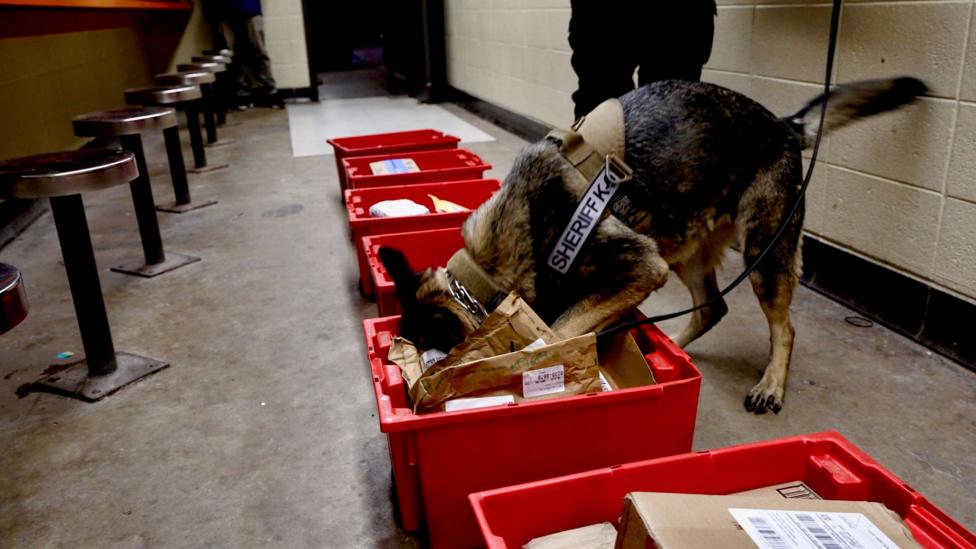 Image source, Darren Conway/BBC
Between a quarter and a fifth of all packages and letters that enter the jail test positive for moisture
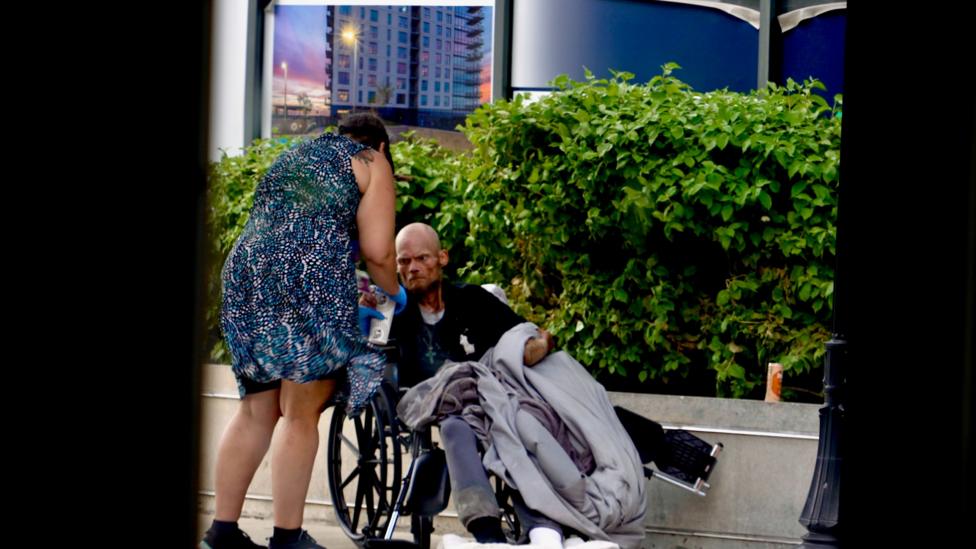 Image source, Darren Conway/BBC
Karen, a recovery worker, tends to a gaunt-looking man in a wheelchair in an upscale part of town
 Image source, Darren Conway/BBC
Karen says her pregnancy was an opportunity to get clean. She's 17 years free from hard drugs