The key facts
- About 1,800 detained, including 855 in Paris — a 'record,' according to police
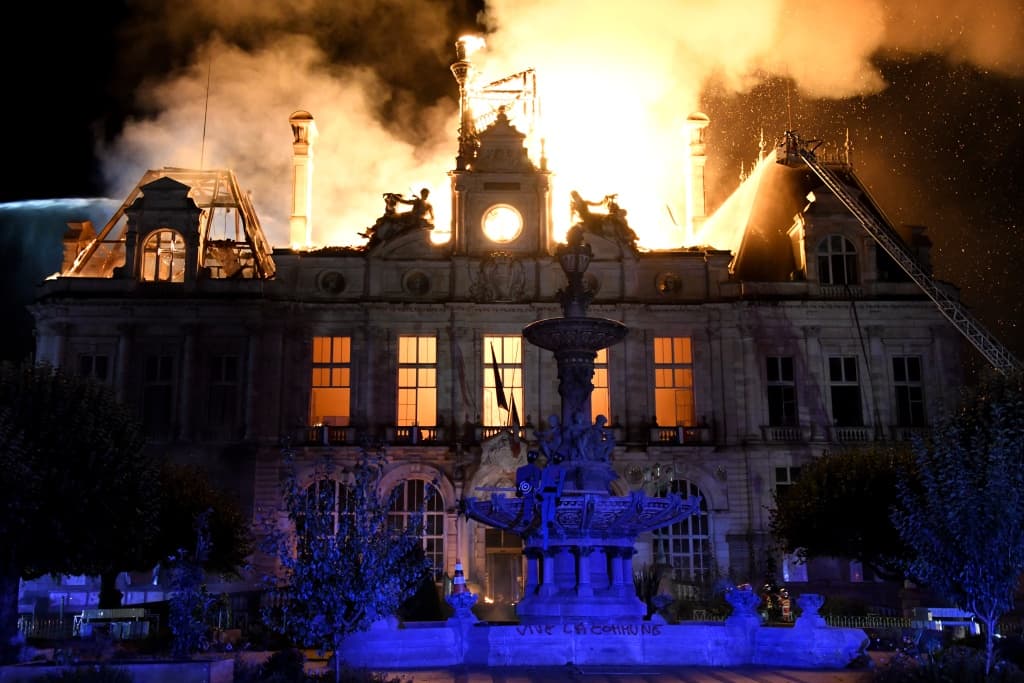
- The 19th-century town hall in Limoges was burned; looting in Paris, Marseille, Bordeaux, Nice and Strasbourg
- Estimates of protest turnout differ: Interior Ministry — 550,000, CGT union — 800,000
Scale of riots and detentions
France on Sunday was assessing the aftermath of Saturday's violent protests, during which about 1,800 people were detained. Interior Minister Laurent Nunez said on X that investigations were aimed at identifying and holding accountable those responsible. In Paris, police called the 855 detentions a 'record'; the prosecutor's office said more than 500 people were in custody, most on suspicion of handling stolen goods, organizing violence and vandalism. In Lyon, 160 people were in custody. The streets of the capital were littered with the remains of burned barricades made of bicycles, garbage bins and other materials, with shattered shop windows and burned-out cars. Paris deputy mayor Lamia El Araji said the city had experienced 'a level of violence that, I believe, has never been seen before.'
Damage and casualties
In Limoges, the 19th-century town hall burned down; prefect Maurice Barat told the LCI channel that the fire, which was only brought under control by Sunday morning, had been deliberately set by a 'wild horde.' Looting by masked youths affected dozens of stores in Paris, Marseille, Bordeaux, Nice and Strasbourg. According to the Interior Ministry, about 500 police officers, firefighters and paramedics were injured; the figure is preliminary. Police used tear gas and water cannons against protesters who threw objects and fireworks. In Saint-Etienne, a 17-year-old teenager lost his right hand due to a crowd-dispersal grenade.
Protests and their causes
The riots took place on the sidelines of nationwide protests against the cost of living. The Interior Ministry estimated turnout at 550,000, the CGT union at 800,000. The 'yellow and youth' actions were organized by the 'yellow vests' movement, which had previously campaigned against a fuel tax increase. The main reason cited was the rising cost of living, including that spurred by the war in the Middle East, which accelerated inflation in Europe and worldwide. A week earlier, student protests had continued, also at times escalating into violence. Eurasia Group analyst Mujtaba Rahman noted that the actual demonstrations against high fuel prices and school problems were peaceful, while the violence came from the far-left wing and 'looter gangs from poor suburbs' — which, in his words, is 'good news for Marine Le Pen.'
Political accusations
The government of centrist Emmanuel Macron and far-right presidential candidate Marine Le Pen blamed 'far-left' groups for the violence. Far-left candidate Jean-Luc Melenchon, who had supported the demonstrations, on Saturday urged participants not to take part in looting, calling it 'contrary to our methods.' Socialist El Araji accused Le Pen's party of stoking tensions for presidential ambitions, saying the 'National Rally' was behaving 'like an arsonist-firefighter.' US Vice President JD Vance also weighed in, suggesting on X that the riots were linked to immigration: 'Western liberals imported the third world into France and other countries in the name of diversity and compassion, ignoring questions of assimilation and compatibility.'
Political context
The events are taking place in the final months of Macron's time in power: the election of his successor will be held in six months. Officials described the scale of the riots as extraordinary.