The key facts
- Hundreds of people protested in Bangkok against IMF and World Bank policies during their annual meetings.
- Oxfam and human rights advocates called the IMF's calls for spending cuts dangerous: according to UNDP estimates, a full removal of subsidies could push 130 million people into poverty.
- The IMF raised its global economic forecast but warned of vulnerable countries falling behind; its position was backed by the former head of Pakistan's central bank, while the Rockefeller Foundation proposed a 'relaunch of growth and investment'.
Protest in Bangkok
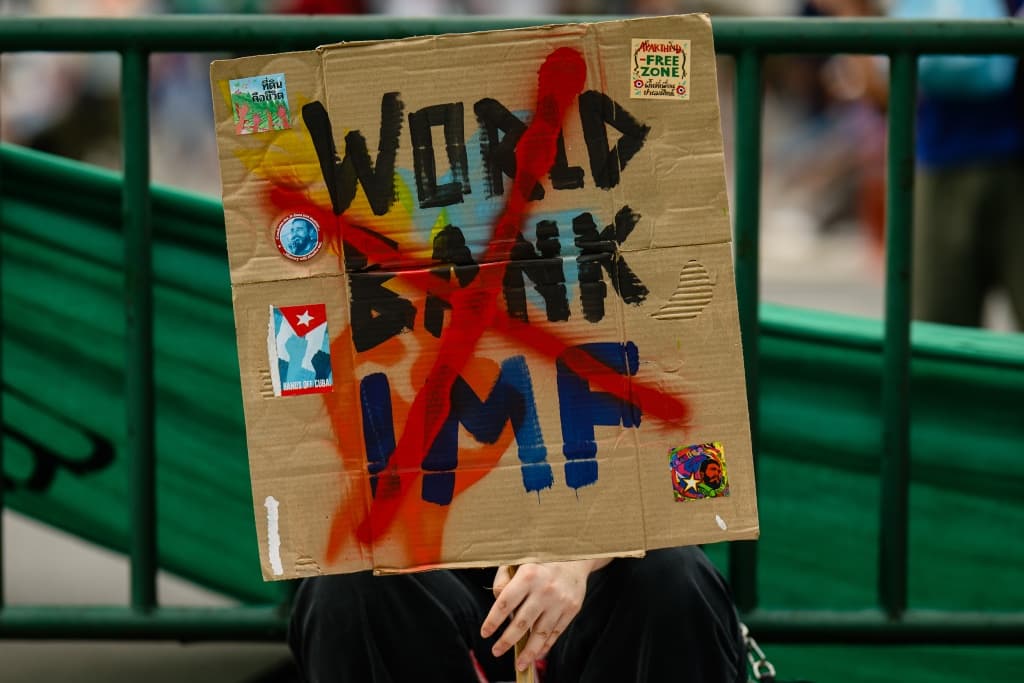
On Friday, hundreds of people took to the streets of Bangkok demanding a change in the IMF and World Bank's approach to developing countries. Among the participants was 51-year-old coconut farmer Sombat Chuekrod, who traveled more than 200 kilometers to join the rally. 'We want the IMF and World Bank to reconsider their role. Thais are already poor. Please do not make them any poorer,' he said. The protesters intend to spend the night under an overpass. Activist Supaporn Malayiloy stated: 'This is not just a question of borrowing money; it is about shaping the very structure and direction of the country's development.'
Context of the meetings and the IMF's position
Finance ministers, central bank governors and other senior policymakers gathered in Bangkok this week for the annual meetings of the IMF and World Bank. According to AFP, the inflation crisis has been exacerbated by the US war against Iran and other economic shocks. The IMF's message: after the pandemic and the wars in Ukraine and the Middle East, global debt is too high, and governments need to cut spending. The fund raised its global economic forecast this week, citing unexpected 'resilience' of growth, but warned that prosperity is fragmented and vulnerable countries are falling further behind. It named poor oil-importing countries as the most vulnerable, as they are not covered by the artificial intelligence investment boom. IMF deputy director of the research department, Petia Koeva Brooks, told AFP that the situation of such countries is 'more difficult,' but they have 'no other choice' other than cutting spending or raising revenue. The IMF proposed making energy and food subsidies introduced after the war with Iran more targeted.
Criticism from human rights advocates
The protest organizers, including Lidy Nacpil, called on the IMF to focus on climate finance and tax reforms favoring the poor instead of demanding cuts to subsidies and social spending. 'Governments of Global South countries are forced to slash vital spending on health, education and social protection just to service illegitimate debts owed to rich countries and private creditors,' Nacpil said in a statement. Oxfam executive director Amitabh Behar told AFP that the world is experiencing an 'inequality emergency,' and the IMF's calls for fiscal consolidation are code for cutting social support. 'This will lead to (further) price increases. It could lead to hunger,' he warned. The UNDP warned this week that a full removal of subsidies could push 130 million people into poverty. Nacpil questioned where the line of targeting should be drawn: 'How poor do you have to be for them to decide that you need support?'
Expert opinions
Reza Baqir of Sovereign Advisory Services at Alvarez & Marsal, who previously headed Pakistan's central bank, told AFP about the difficulty of balancing citizens' needs with IMF program conditions, but stressed the importance of addressing domestic governance problems so that countries build their own resources and fiscal buffers and reduce dependence on the fund. Christina Segal-Knowles of the Rockefeller Foundation said that developing countries are 'effectively being offered two bad options' — taking on debt at record-high rates or making emergency spending cuts and possibly abandoning development goals. She proposed a 'relaunch of growth and investment' with increased financing for needy countries on concessional terms.


