The key facts
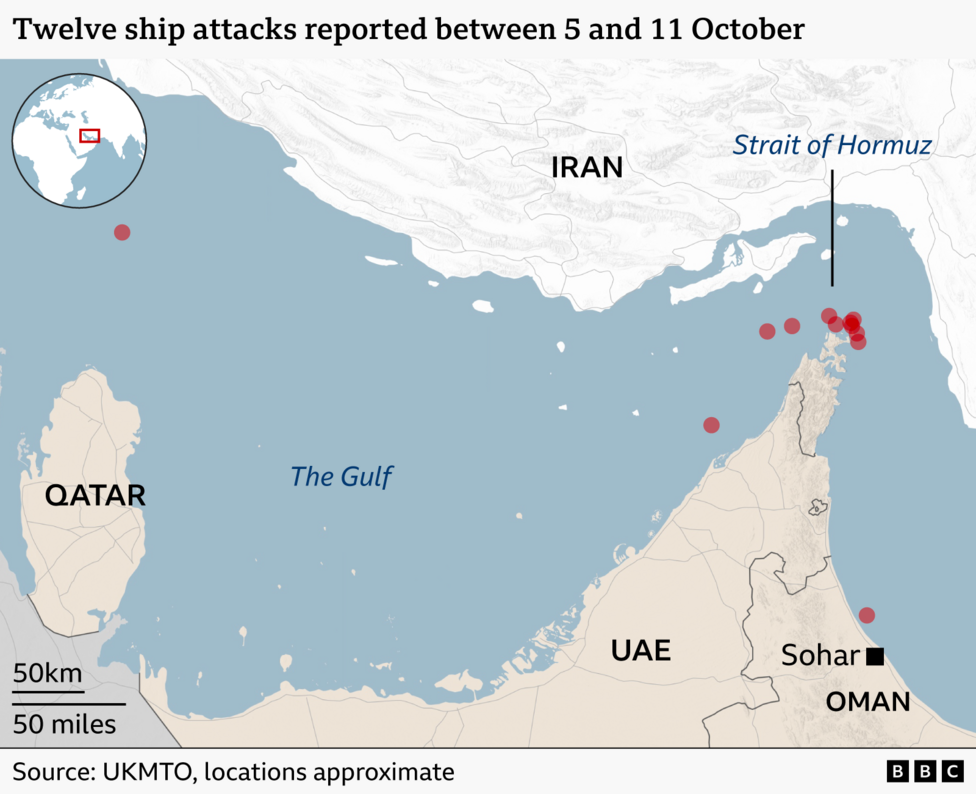
- 12 ships attacked 5–11 October — a record weekly figure according to UKMTO; 6 attacks in a single day (Sunday)
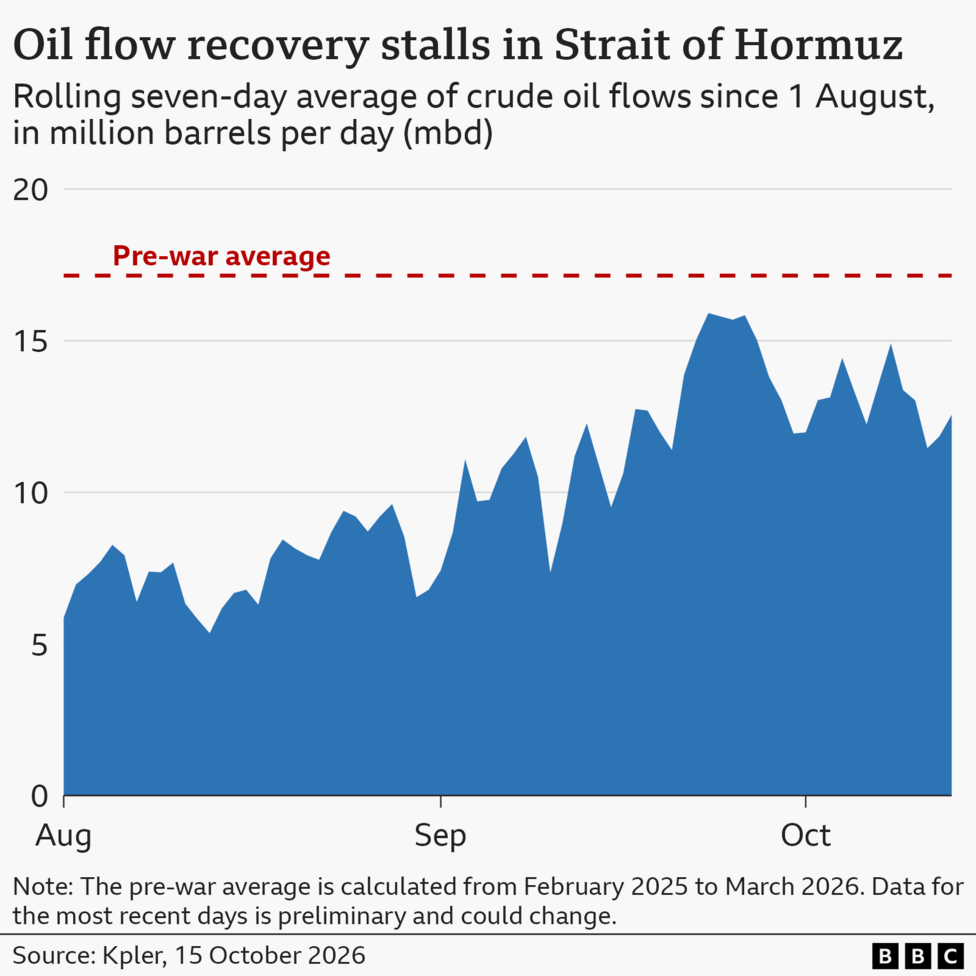
- Oil exports through the strait: 12.6 million bpd on 13 October versus 15 million at the end of September and ~17 million before the war
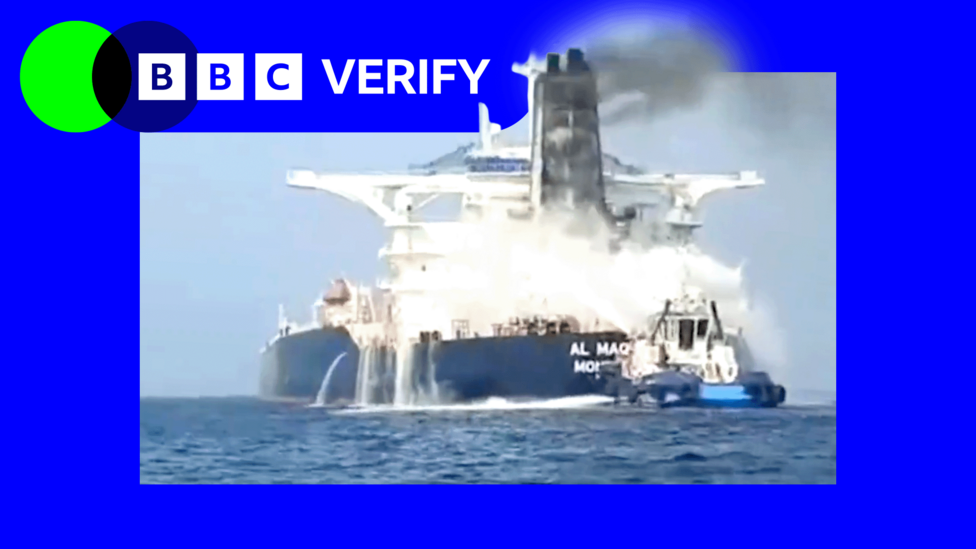
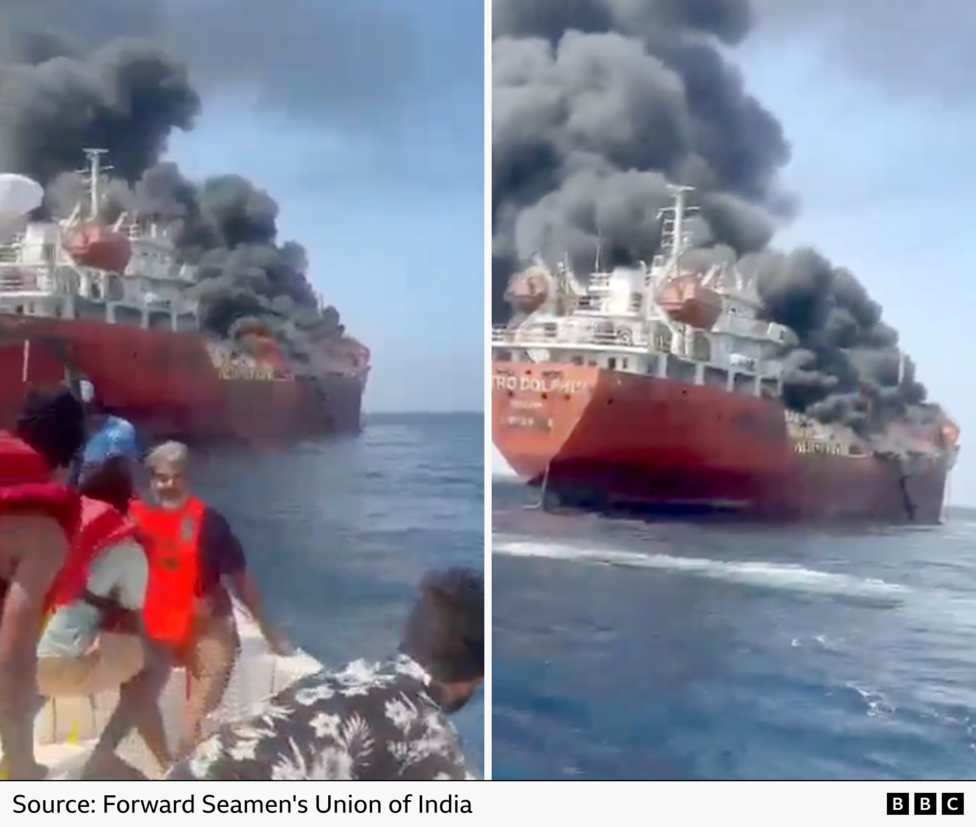
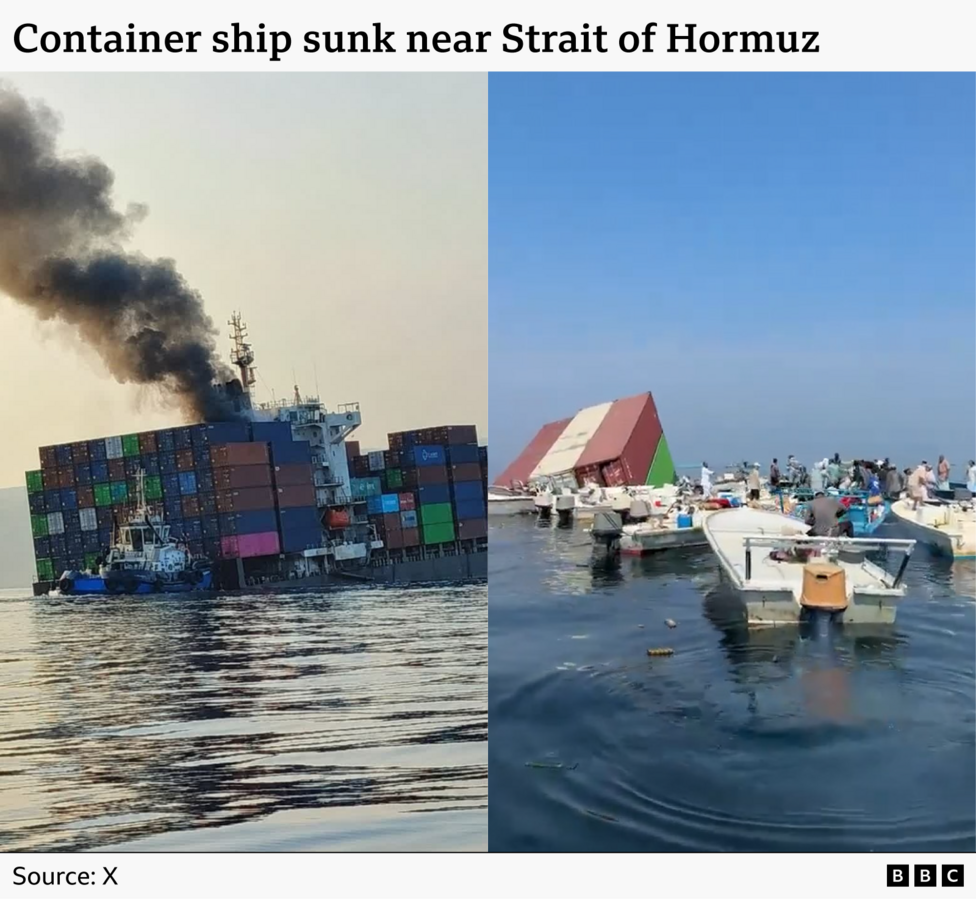
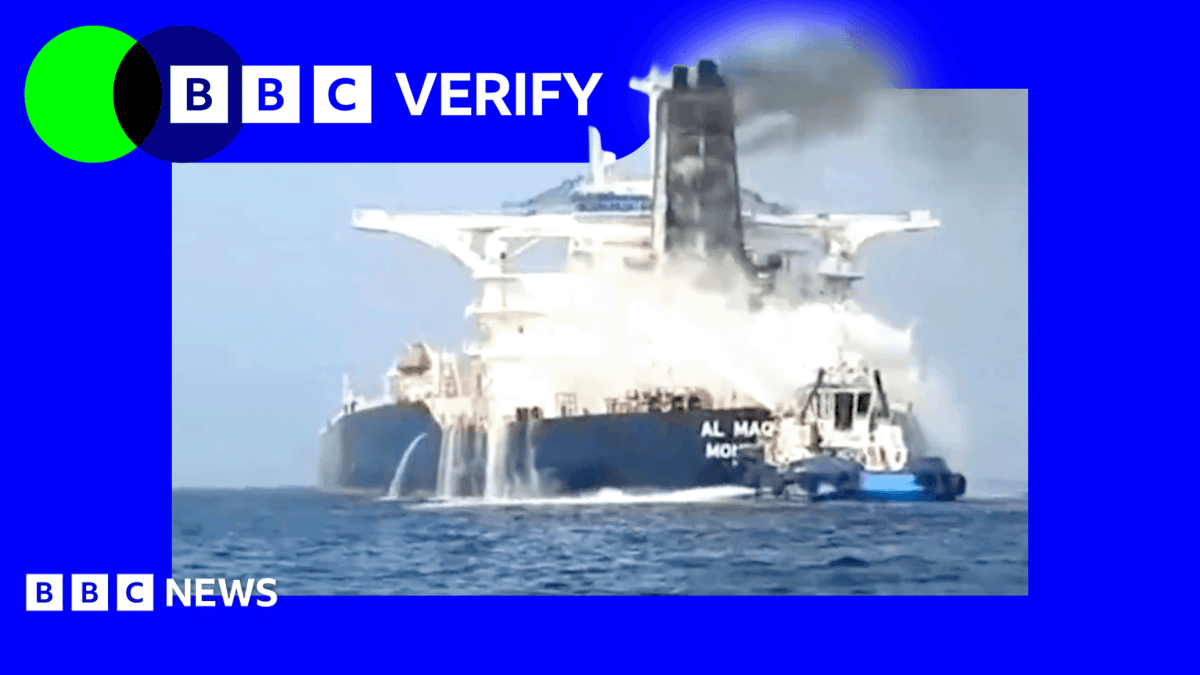
- The Nicaragua-flagged tanker Petro Dolphin was set on fire by a drone off Sohar (Oman): 11 Indian sailors rescued, two missing; the container ship GFS Pride sank on Tuesday, 21 crew members evacuated
Record number of attacks on ships
BBC Verify's analysis of data from the UK maritime trade agency UKMTO showed that the number of reports of attacks on ships in the area of the Strait of Hormuz has reached a record level since the start of the US and Israel war with Iran. Between 5 and 11 October, 12 ships were attacked — more than in any other week; the week before, 10 ships were reported. This past Sunday, according to UKMTO, six ships were attacked at once — the maximum in a single day. This week, at the time of publication, four attacks have been recorded. BBC Verify notes that the timeline is built on the first date in each report and is approximate: some incidents are dated by the day of the attack, some by the day of the report.
Experts: Iran is trying to regain control over the strait
In the view of experts, Tehran is attacking ships to strengthen its control over the waterway, as the American military has increased the number of tankers escorted through the southern part of the strait to evade Iranian strikes. Martin Kelly, CEO of Orbital Risk Intelligence, told BBC Verify that Iran has 'evolved its strategy' and is carrying out 'almost daily attacks, or several attacks each day,' aimed at stopping the passage of ships and deterring the rest. Iran is also expanding the geography of its attacks: according to Vanguard and Kelly, strikes are being carried out off the coasts of the Arabian monarchies of the Persian Gulf and in the Gulf of Oman. The IRGC Navy stated that the strikes will not be 'limited to the Strait of Hormuz' and announced a 'new deployment scheme' in the region, state media report. US Central Command, for its part, published a statement on social media saying that 'commercial traffic continues through the strait under coordinated protection by US forces and regional partners.'
Specific incidents
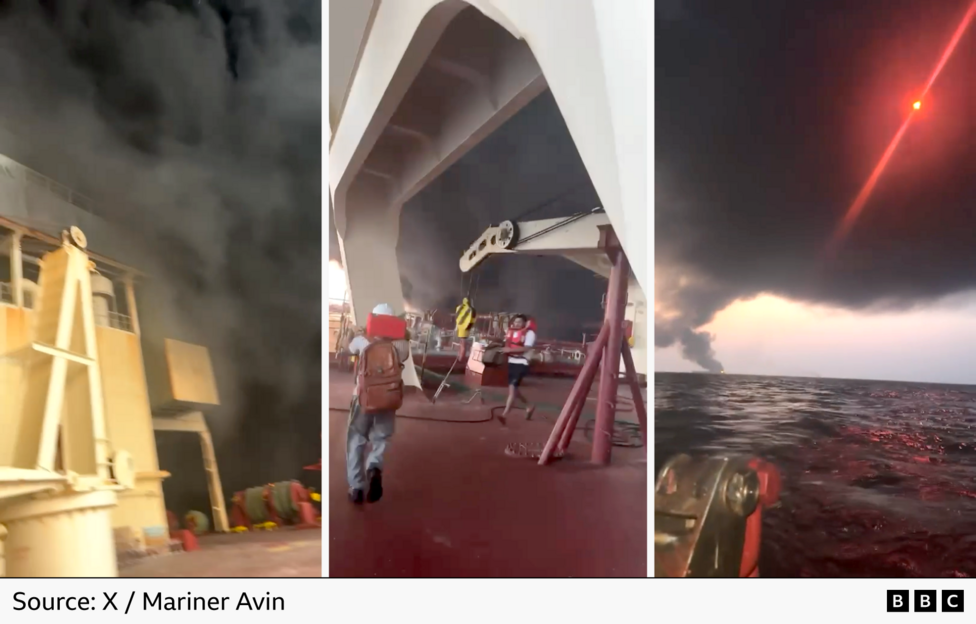
One of the six attacks on Sunday was the Nicaragua-flagged tanker Petro Dolphin, set on fire by a drone near the anchorage of Sohar in Oman, more than 250 km from the strait (Vanguard data). Eleven Indian sailors were rescued, the fate of two remains unknown, the Forward Seamen's Union of India reported. On Tuesday, the container ship GFS Pride sank after being hit by an unidentified projectile in the strait itself; 21 crew members were evacuated. The IRGC published footage which, it claims, shows the same vessel, and stated that it was carrying '2,500 containers of contraband' and was travelling on an 'unauthorized route.' Also, according to Vanguard, on 8 October a tanker was hit by several projectiles north of Qatar, more than 500 km from the strait, with numerous casualties; on 9 October a tanker was attacked off the emirate of Al Jazirah Al Hamra in the UAE — verified footage shows the crew putting on life jackets against a background of black smoke.
Oil supplies are slowing
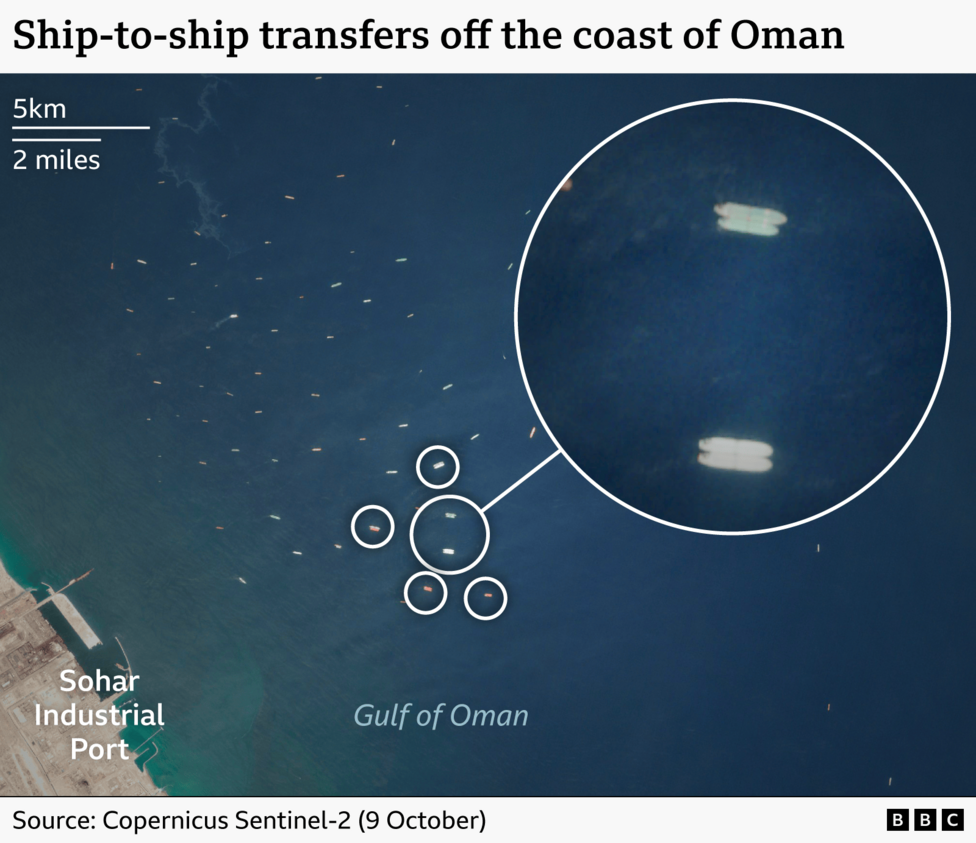
According to Kpler, on 13 October about 12.6 million barrels of oil per day passed through the strait — below the 15 million at the end of September and noticeably below the pre-war level of roughly 17 million. The recovery in supplies observed in September has slowed. US Navy data show that in the first 10 days of October the number of ships receiving assistance in transiting the strait grew by 85% compared with the same period in August. It was these escorted transits that helped return Middle Eastern oil flows to pre-war levels in September; Iranian exports, meanwhile, have been completely halted due to the American blockade of Iranian ports and vessels. Most of the oil from Gulf countries is now transported on a 'shuttle' scheme: tankers load and pass through the strait along the coast of Oman, after which they transfer the cargo to larger tankers in the Gulf of Oman. Iran calls this route 'unauthorized' and demands that ships take an alternative path closer to its own shore.