The key facts
- Burnham proposed devolving DWP powers and called on Swinney to pass some Holyrood powers to local levels
- The Scottish government is preparing a reform: 32 councils would be replaced by six regional and 120–160 community authorities
- Swinney will give an independence speech at the SNP conference on Saturday; the Conservatives criticised the plan
The proposal for 'deeper devolution'
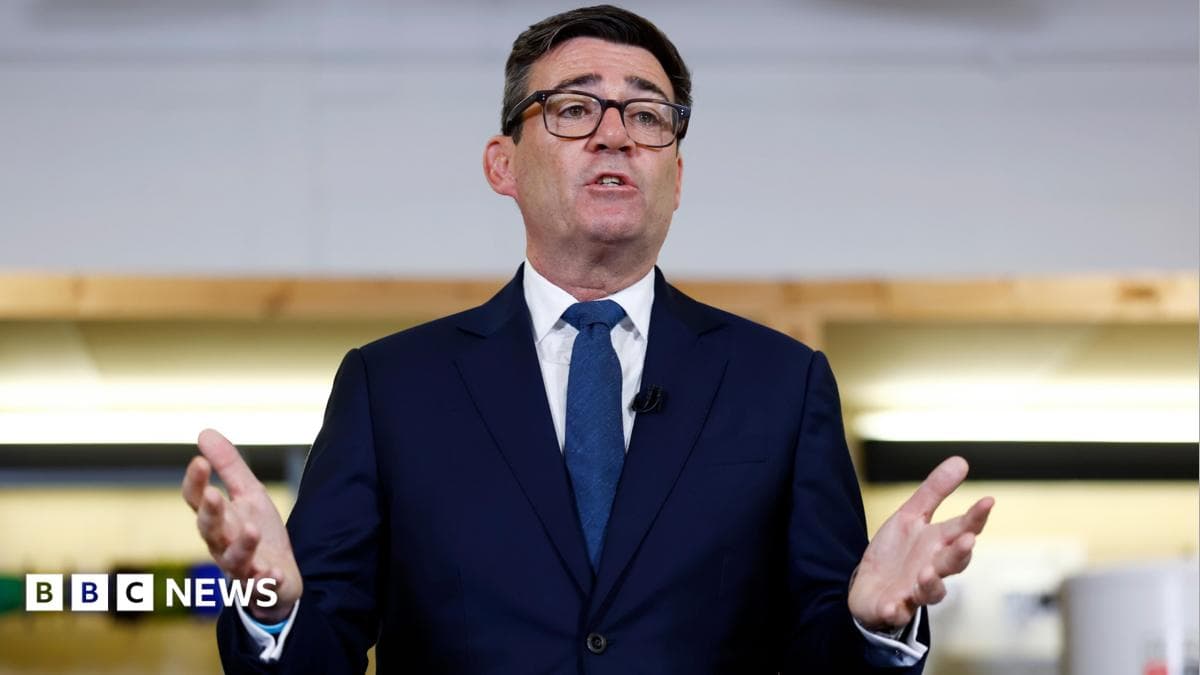
UK Prime Minister Andy Burnham, speaking at an event in Motherwell in North Lanarkshire, proposed that the Scottish government work jointly on handing power 'into the hands' of regions. He said he wants to begin work in the coming months on a new regional economic development agreement, including a proposal to devolve functions of the Department for Work and Pensions (DWP) — a localised employment support model, similar to the English one but adapted by the Scottish parliament. According to him, devolution 'should never have stopped at the doors of the Scottish parliament', which opened in 1999, but should have been 'the beginning of something deeper'. Burnham called Scotland the most devolved country in the UK, but 'one of the most centralised in Europe', and urged First Minister John Swinney to hand some of Holyrood's powers to local levels, noting that local government reform should 'move faster'. He also warned that without quick decisions some Scottish cities risk falling behind the regions of northern England, where regional powers are being expanded.
Reform of Scotland's regional structure
The Scottish government last month presented a plan for a radical restructuring of regional authorities: 32 local councils would be replaced by six regional authorities with powers over economic growth and education, and below them — between 120 and 160 community authorities for matters such as licensing and town centre improvement. This would be the most significant change to Scotland's regional structure since 1996. It is not precisely defined which powers, apart from employment support, will sit at regional level; Burnham apparently expects the Scottish government itself to hand over part of its powers to the regions. At the same time, he made clear he will not impose a model of regional devolution modelled on English metro mayors, but wants to agree a way forward in further discussions, including a meeting with all devolved first ministers at the end of this month.
The constitutional question and reactions
Burnham called for an end to 'tribal politics' between the Scottish and UK governments, noting that he and Swinney 'agree on some issues' but 'do not have to agree on everything'. Asked whether regional devolution would make independence more or less likely, he replied: 'I do not want to be the last prime minister of the United Kingdom', adding that everyone needs to 'move on' from constitutional questions and focus on practical solutions to the cost-of-living crisis. Before Burnham's speech, Swinney said he was interested in 'constructive work' with Westminster and advocates the Scottish parliament having 'as many powers as possible'. SNP minister Stephen Flynn recalled that the party has been seeking expanded devolution since the Smith Commission report of 2014, and said Swinney sent the prime minister a letter on Monday with a list of topics for engagement, in which this proposal was listed at number seven. Swinney is expected to push a renewed independence course in his keynote speech at the SNP conference on Saturday. He earlier welcomed Burnham's words to MPs that a border referendum would be considered for Scotland and Northern Ireland with clear consensus, but Burnham then told Swinney at a meeting in Glasgow that a second Scottish independence referendum remains 'off the table'. Conservative leader Kemi Badenoch criticised the plan, calling it 'more jobs for the boys' and saying Burnham should instead issue new North Sea oil and gas licences, adding that 'devolution is a process, not a solution'.
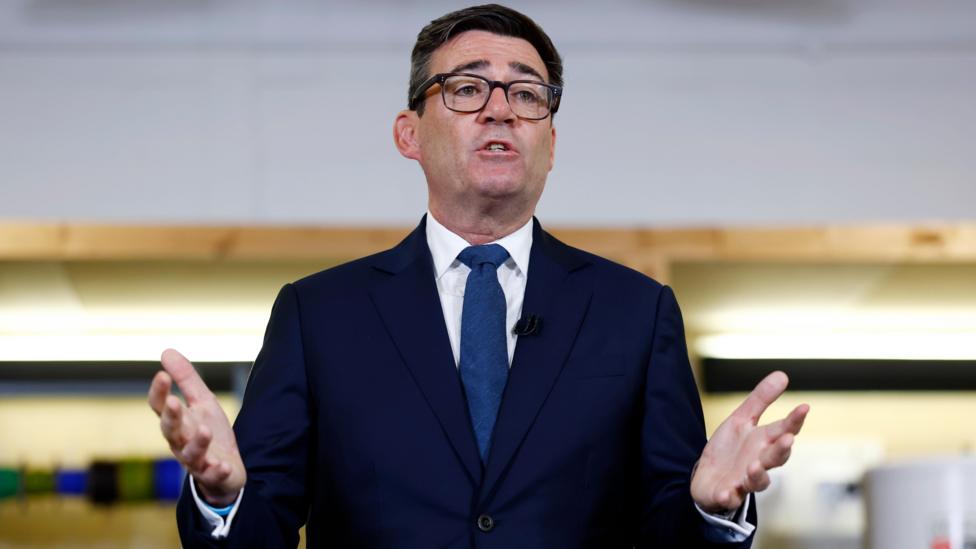 Image source, PA Media
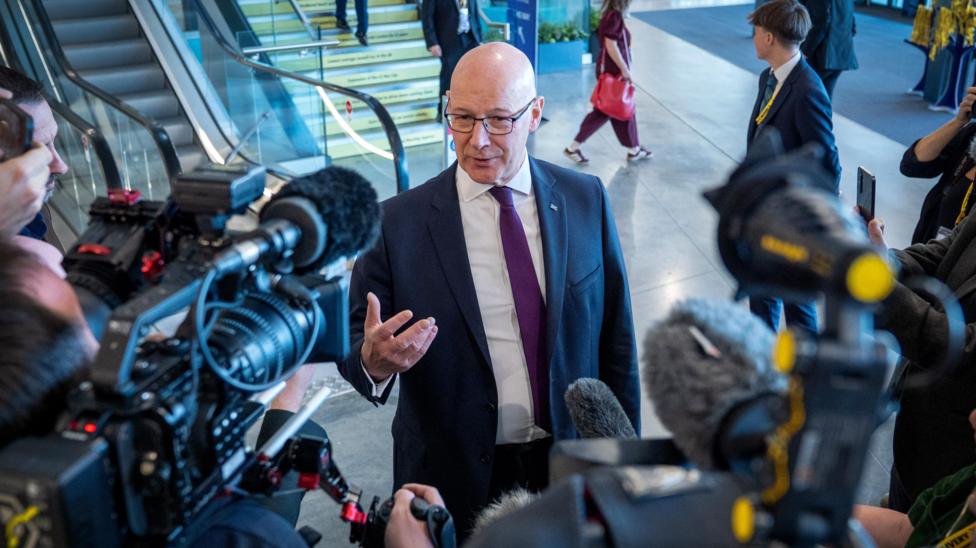 Image source, PA Media
John Swinney denied that too much power was centralised at Holyrood


