The key facts
- France and Germany agreed a package: a −90% CO2 emissions target by 2035 without offsetting the remaining 10%, plus incentives for investment and electric vehicle production in Europe.
- 'Made in Europe' requirements: 70% of components (excluding batteries) must be European-made, 10% of battery content from European sources; Norway, Iceland, Switzerland and the UK may be granted priority status provided they conclude agreements with the EU.
- To enter into force, the deal needs the support of other EU countries and the European Parliament; the EP vote is scheduled for 23 November.
Agreement on the sidelines of the summit in Brussels
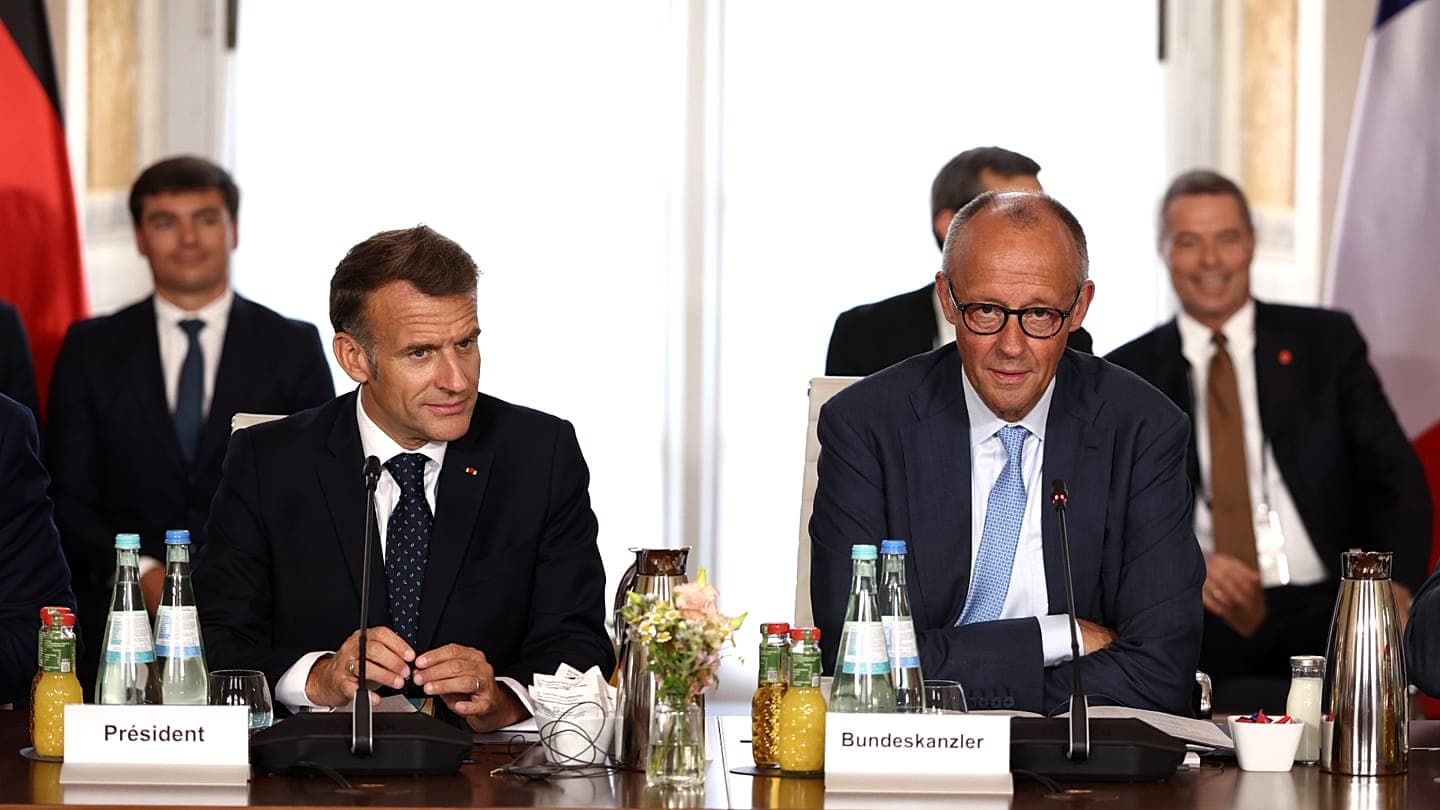
France and Germany on Friday, 16 October 2026, announced that they had reached an agreement on supporting the European automotive industry. The deal was reached on the sidelines of the EU leaders' summit in Brussels. As Deutsche Welle and euronews report, the plan is aimed at reducing CO2 emissions and developing and producing electric vehicles in Europe, and also includes incentives for investment, research and manufacturing. 'Our shared ambition is clear: to successfully transform our automotive industry while preserving climate goals and ensuring that the cars of the future are made in Europe,' the joint statement said.
The essence of the deal: the 2035 rules and 'Made in Europe'
According to euronews, the deal links a softening of the current EU rules, which from 2035 effectively ban the sale of new petrol and diesel cars, with stricter requirements for the European origin of products. Carmakers will have to cut fleet-average CO2 emissions by 90% by 2035 without offsetting the remaining 10% — this differs from the European Commission's original proposal. According to Handelsblatt, cited by Deutsche Welle, the leaders agreed on this in principle. In addition, 70% of a car's components (excluding batteries) must be produced in Europe, and 10% of battery content must come from European sources. A source at the Élysée Palace noted that this creates a European priority and helps avoid turning European plants 'into mere assembly sites'.
Different priorities of Paris and Berlin
The compromise reflects the two countries' shared concern about pressure on European carmakers: high costs, the expensive transition to electric vehicles and growing competition from Chinese companies. At the same time, the parties' priorities differ. Germany, home to Volkswagen, BMW and Mercedes-Benz, sought greater technological flexibility so that manufacturers could still sell some internal combustion engine models and hybrids after 2035. France insisted on a strict European priority in public procurement, limited to the 27 EU countries, as part of discussions on the industrial accelerator bill proposed by the European Commission in March. Under the final agreement, Norway, Iceland, Switzerland and the UK will be able to join the European priority: their products will count as 'Made in Europe' if those countries conclude agreements with the EU on equal access for European companies to public contracts and funding, and rule out their use as a 'workaround'.
Reaction of politicians and the industry
German Chancellor Friedrich Merz called the day of the agreement 'a good day for motorists and for jobs in Germany, France and Europe' and 'an investment signal for industry', noting that the package was agreed 'for the sake of freedom of choice, technological openness and meeting climate goals'. French President Emmanuel Macron expressed the hope that 'the Franco-German dynamic can quickly lead to an agreement with our partners, for the sake of our jobs and our industry'. Volkswagen welcomed the deal as 'a strong signal', seeing in it 'meaningful flexibilities' that will help the industry contribute to climate protection without harming competitiveness. VDA association president Hildegard Müller called the agreement an important step, but noted that on issues key to the industry — jobs and climate — it is insufficient, calling for later localisation of batteries in Europe, better rules for trucks, buses and light commercial vehicles, and a greater focus on renewable fuels and green materials. Lower Saxony Premier Olaf Lies, who also sits on VW's supervisory board, called the agreement 'a strong signal' in support of the industry and job protection.
What comes next and possible obstacles
The Franco-German agreement forms a joint position, but to become law it will need the support of other EU states and the European Parliament. As euronews notes, Merz may face resistance at home: the environment minister from Germany's Social Democratic Party backs a 95% emissions reduction target with the remaining 5% offset through low-carbon steel. Context: the original EU rules required a 100% reduction in average CO2 emissions from new cars from 2035; in December 2025, under pressure from Germany, Italy and carmakers, the European Commission proposed revising them to 90%, leaving room for individual technologies and fuels subject to conditions. The vote on the Commission's proposal in the European Parliament's plenary session in Strasbourg is scheduled for 23 November, after which the EP and EU governments will have to agree on how far to weaken the zero-emissions target, including whether to allow greater flexibility for internal combustion engine cars and hybrids.


