The key facts
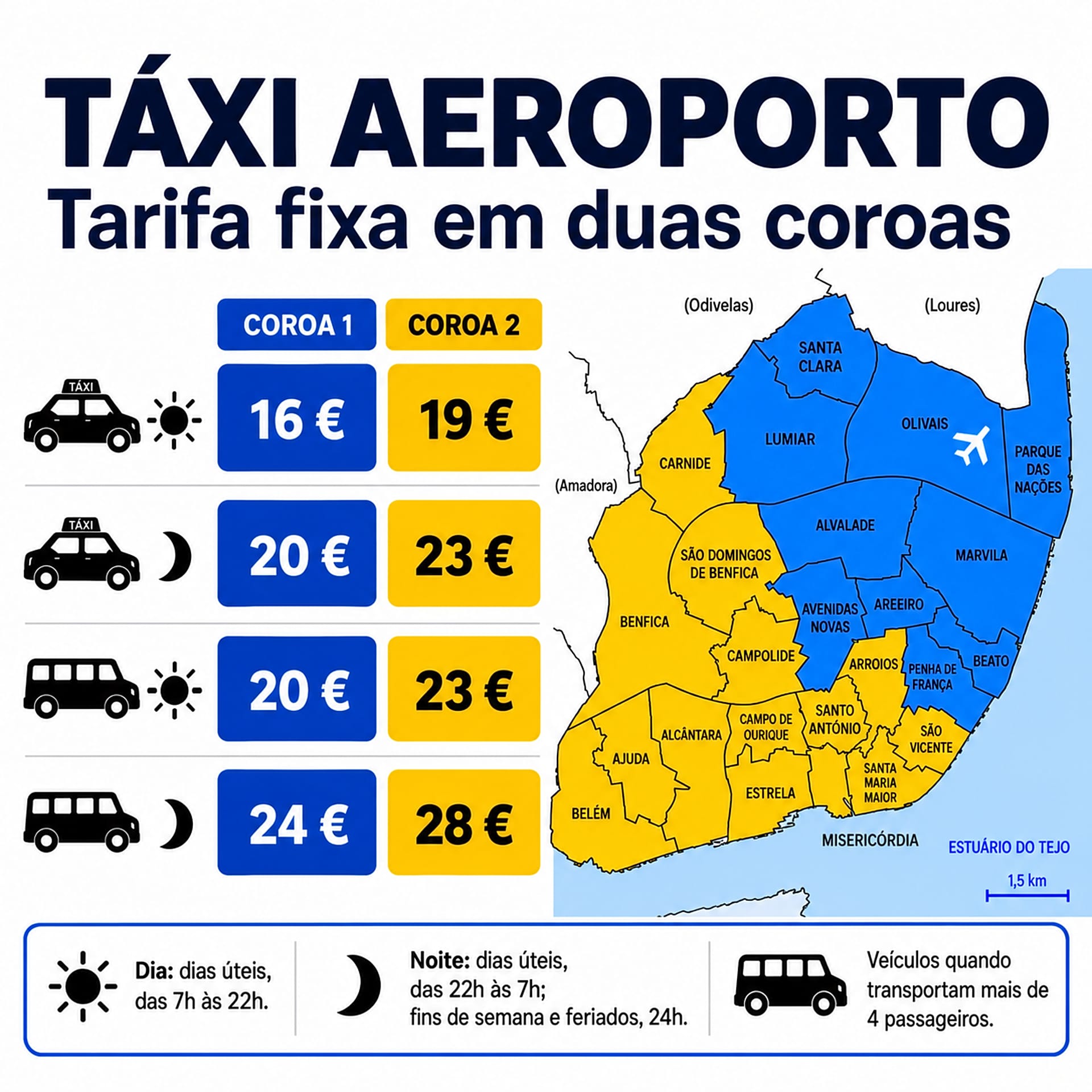
- Fixed fares: zone 1 — €16 daytime / €20 at night, zone 2 — €19 / €23, luggage included; full system operation from November (FPT).
- The protocol was signed by Lisbon city hall, ANA, ATL, FPT and ANTRAL; taxi drivers are banned from refusing rides and must accept cards.
- A PSP inspection in late August found 67 violations among about 100 taxis checked, 32 of them incorrect taximeter installation.
New fares and zones
On Thursday, a fixed-fare mechanism for taxis came into force at Lisbon airport. A trip to 'zone 1' costs €16 during the day (from 7:00 to 22:00) and €20 at night (from 22:00 to 7:00); to 'zone 2' — €19 during the day and €23 at night. The fares apply on weekends and holidays as well, and include luggage — the previous €1.60 fee for suitcases larger than 55×35×20 cm has been abolished. Destinations outside the zones are paid by taximeter. Carlos Silva, chairman of the Portuguese Taxi Federation (FPT), told the Lusa agency that the system will be fully operational from November, and fares for suburbs such as Moscavide, Sacavém and Prior Velho are yet to be set. In his view, it is unfair that a trip to Parque das Nações has a fixed price while a trip to the neighbouring municipality of Loures is charged by the meter.
Background: passenger complaints
The decision was preceded by numerous complaints about inflated prices, fraud and refusals of rides. In August, Josien Neijzen, a Dutchwoman living in Portugal, called the situation a 'tourist trap' in a video on the Facebook page Nations Without Borders, noting that not all taxi drivers are 'crooks', but some agree on a price and drive with the meter off, which is prohibited in Portugal. On Reddit, a passenger said he paid €18.50 for a trip to Rossio with the meter showing €13 — the driver cited a luggage fee and did not accept a card. A Portuguese man described getting out of a taxi after the driver refused to accept a card and gave evasive answers about the price. Users also reported deliberately long routes and demands for cash.
Protocol and additional rules
The protocol on fixed prices, signed in September by Lisbon city hall, the operator ANA – Aeroportos de Portugal, the Lisbon Tourism Association (ATL), FPT and ANTRAL, also provides for other rules: a ban on refusing rides, and mandatory acceptance of vouchers and electronic payments when the terminal is working. In the first phase, the fares apply to all taxi drivers, even those not accredited at the airport rank; accreditation also began on Thursday. Silva believes that clear rules and fixed prices may attract more drivers to the airport rank. Information boards with the fares in the arrivals area are not yet in place.
Social media reaction
Reaction was divided. Many call the fares excessive, pointing to short routes: an Instagram user writes that she usually paid €7.50–10 for a trip to Oriente station in Parque das Nações. Some believe alternative TVDE services will benefit, and accuse the authorities of setting 'tourist prices' and legalising the practice of driving with the meter off. Others, on the contrary, support fixed prices for the sake of transparency, citing the experience of other countries. Comments also mention public transport, although large suitcases and trips with children make that option more difficult.
Police inspection
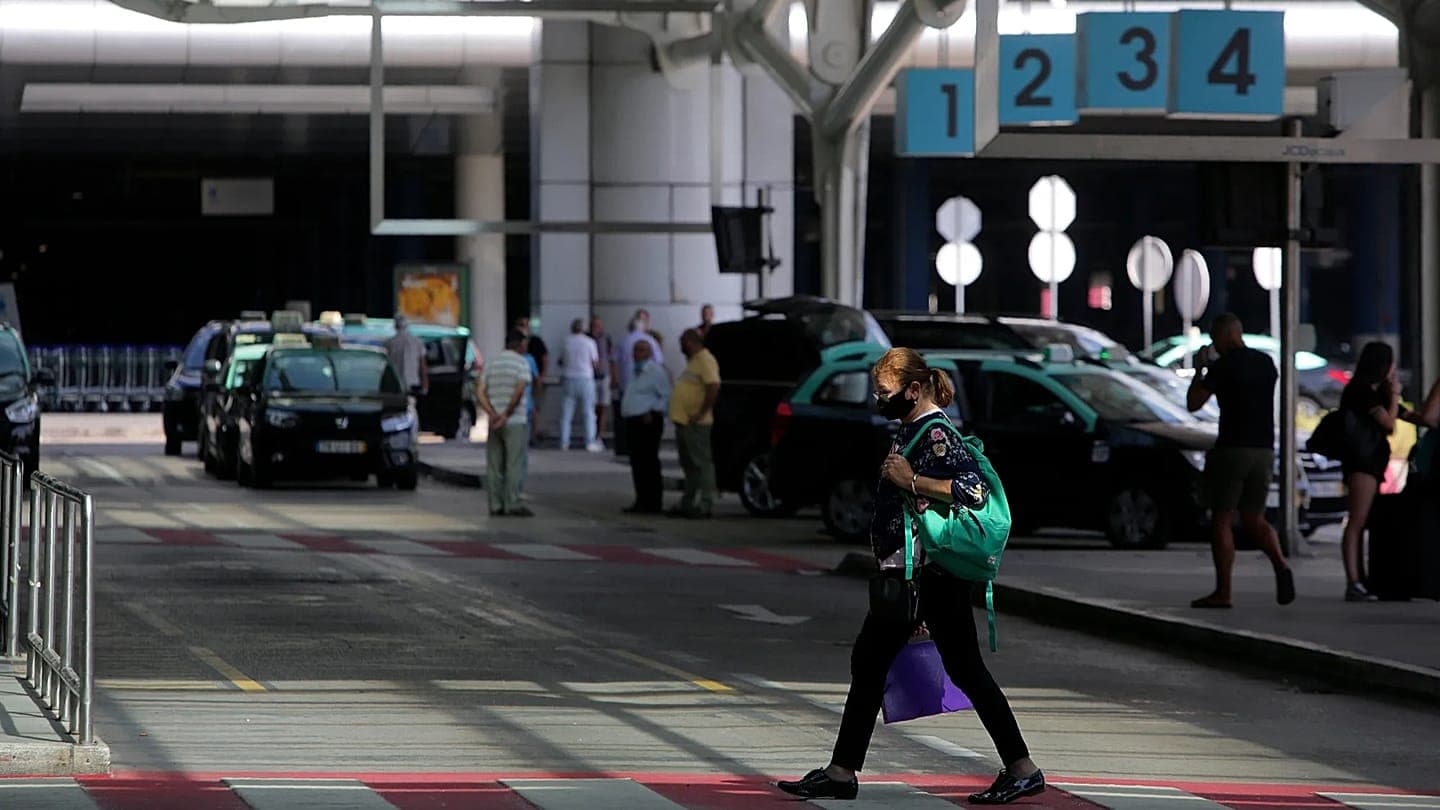
The tightening of measures followed a raid by the Public Security Police (PSP) in the arrivals area of Humberto Delgado airport in late August, where about a hundred taxis were checked and 67 violations found, the Lisbon Metropolitan Command (COMETLIS) reported. Of these, 32 were 'incorrect taximeter installation', 8 — absence of a taxi driver's licence (CMT), 6 each — absence of mandatory documents and expired fire extinguishers, and 3 each — absence of an inspection certificate and the 'group 2' category in the driving licence. Also recorded were two cases of taximeters with expired verification, two of taxis in unsatisfactory condition, and one each for an unfastened seat belt, lack of insurance, drunk driving and parking on a private lot. The police issued two orders to present documents.