The key facts
- Warsh did not signal rate decisions for the October and December meetings; the September hike to 3.75–4% was the first since July 2023.
- He called AI possibly the most significant economic change of his lifetime: in the short term it boosts demand and prices, while a positive supply shock is expected in the medium term.
- Markets put the probability of a December hike at about 90%, and about 30% for October (CME FedWatch); Fed leadership opinions diverge.
Bangkok speech with no rate signals
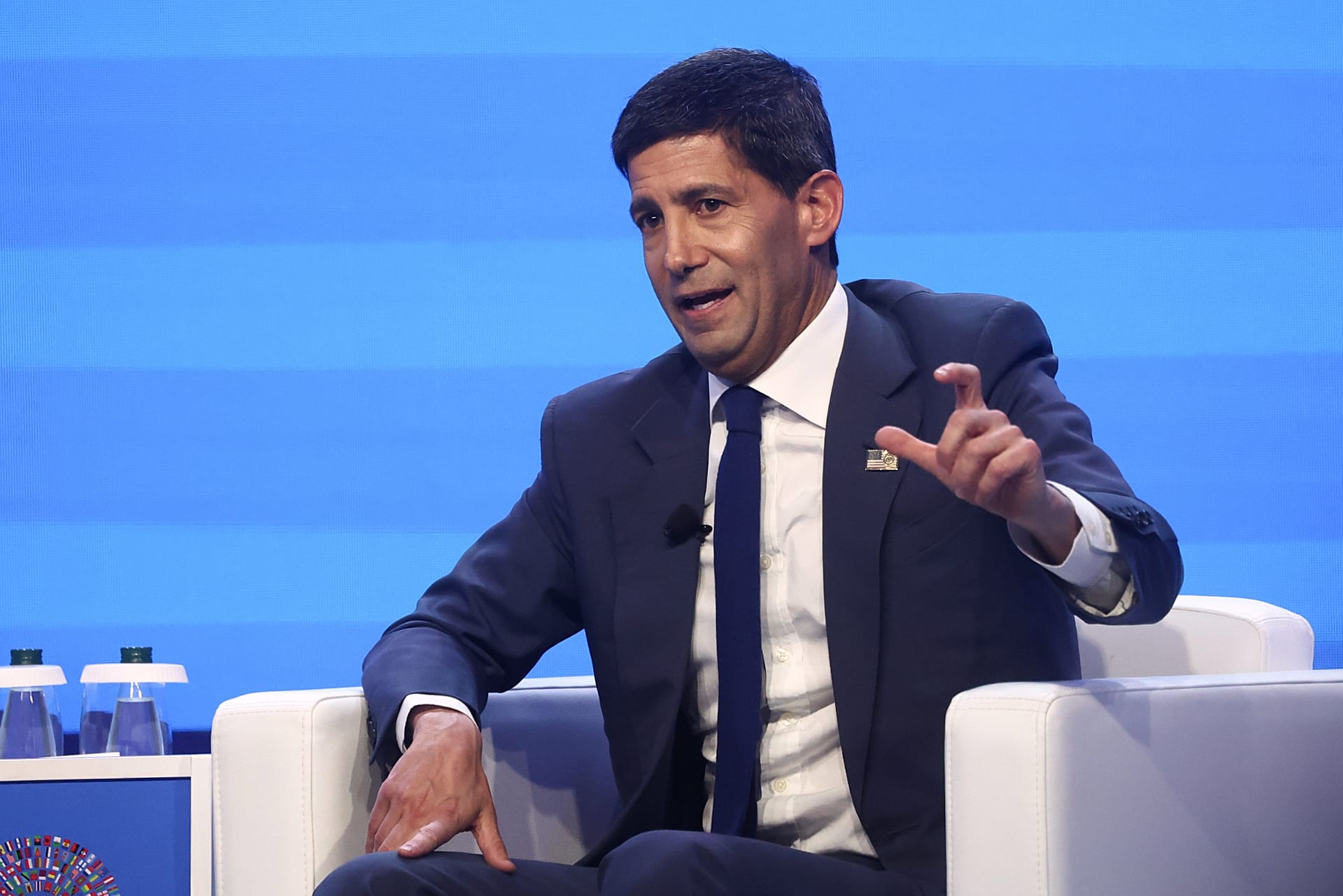
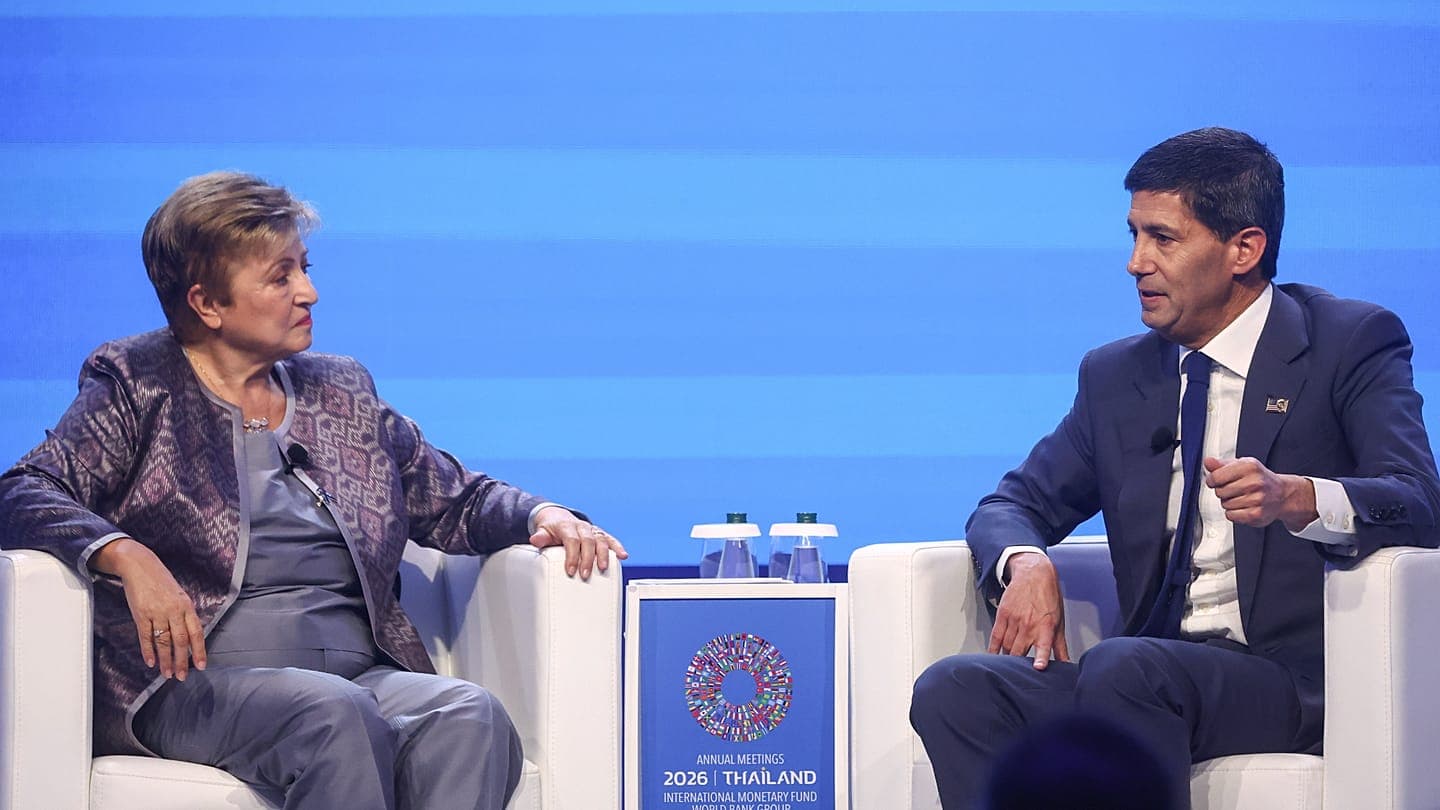
US Federal Reserve Chair Kevin Warsh spoke on Friday, October 16, at the annual IMF and World Bank meetings in Bangkok in a conversation with IMF Managing Director Kristalina Georgieva. He reaffirmed the regulator's commitment to price stability but declined to prejudge the outcome of the remaining meetings this year — in October (the decision is expected on October 28) and December. 'I do not make up my mind ahead of meetings,' Warsh said, noting that since the September meeting the world had 'on the whole evolved in line with' the Fed's expectations. He called his approach part of a 'new chapter' in the regulator's work, promising to give fewer signals about future policy.
Economic resilience and the investment boom
Warsh said the global economy is showing resilience 'that I'm not sure I could have predicted five or six months ago,' despite geopolitical tensions. The US gives him the most optimism: an expanding investment boom that 'is not just about AI' has given the economy 'a powerful tailwind' — a dynamic 'that certainly cannot be observed everywhere in the world.' He linked this to macroeconomic policy and solid microeconomic foundations and called it one of the most significant positive phenomena in the global economy.
Synchronized tightening and inflation
According to Warsh, inflation remains a common challenge, and central banks in recent months have carried out a 'synchronized tightening' of monetary policy, including two rate hikes by the European Central Bank. 'That means there are no free riders,' he said, calling this a positive development. The Fed, where inflation has exceeded the 2% target for more than five years, raised rates by a quarter point to 3.75–4% in September — the first time since July 2023. Energy prices soared after the US and Israel went to war with Iran in late February; this, together with the AI boom, is fueling inflation in many countries. On Tuesday the IMF raised its global growth forecast for 2026 to 3.1%, but warned that risks are skewed toward a slowdown. The yield on 10-year US Treasuries exceeds 5%, French ones about 4.8%. Bank of France Governor François Villeroy de Galhau — no, Emmanuel Moulin — told AFP that rising yields are effectively helping the ECB tighten financial conditions, while ECB President Christine Lagarde previously said France should address the yield problem through fiscal policy.
AI: short-term price boost, medium-term gains
A significant part of the discussion was devoted to artificial intelligence, which Warsh called 'possibly the most significant change' for the US and global economy in his lifetime. He acknowledged that for now the investment frenzy is boosting demand and prices: the minutes of the Fed's September meeting noted that data center construction had raised the cost of chips, computer hardware and electrical components. However, in the medium term he expects a positive supply shock, productivity growth and 'enormous benefits' for the US and the world, though he cautioned that the path will be 'very bumpy' — both in understanding the technology and because 'we don't really know what the market structure will be.' The effects of AI on employment over the next 12–18 months remain uncertain. In his words, AI could also change the very work of central banks: 'Right now we torture data with old-fashioned models. In the near future that will no longer be torture.' The Fed's task force on productivity and employment will hold its first field hearings on November 16 in the San Francisco Bay Area.
Data and disagreements within Fed leadership
US consumer inflation rose to 3.7% in September from 3.4% amid rising fuel prices; core inflation was 2.6%. Wholesale prices rose 6.3% year-on-year — the highest since 2022 — and the economy created only 29,000 jobs in the month. According to CME FedWatch, the probability of an October hike fluctuated this week: it rose from about 22% to 50% after Wednesday's inflation data release, then fell to about 30%. Markets put the chance of a December hike at about 90%, and the minutes of the September meeting showed that a majority of Fed members expect one more hike this year. New York Fed President John Williams told Bloomberg that 'another rate hike may well be appropriate,' but sees no need for further moves in 2027. Board Governor Michelle Bowman, by contrast, said in Bangkok that she does not feel urgency for new measures. AFP notes that markets expect the October meeting to keep rates unchanged, followed by a 25 basis point hike in December.
Political context and the quiet period
The rate decision will be made a few days before the US midterm elections scheduled for November 3. The September hike went against President Donald Trump's demands to lower rates, yet he still supports Warsh, whom he himself nominated as Fed chair in May. Friday's remarks were among the last before the Fed's 'quiet period,' which begins on Saturday and prohibits officials from discussing policy until the meeting concludes. Investors will next hear from Warsh at the press conference after the decision is announced.