The key facts
- 57% of residents of 32 developing landlocked countries cannot afford a healthy diet, and one in six faces hunger — FAO data
- Logistics costs per tonne of imports in such countries are 75% higher than in transit states; for exports — 63%
- Uzbekistan, with a grain harvest of about 9 million tonnes, still plans to import 4.2 million tonnes of wheat and flour in 2026–2027
The scale of the problem
Nearly 57% of residents of 32 developing countries without access to the sea cannot afford a healthy diet, according to data from the Food and Agriculture Organization of the United Nations (FAO). Roughly one in six residents of such countries faces hunger. In these states, home to nearly 600 million people, there are additional obstacles to ensuring food supplies and access to international markets: dependence on transport corridors through neighboring countries makes transportation more expensive for farmers, businesses, and consumers.
The price of geography
A 2025 UN study made it possible to quantify this gap: logistics costs per tonne of imported goods in developing landlocked countries are 75% higher than in transit developing states — coastal countries through which export flows pass. For export deliveries, the difference is 63%. These findings underpinned the discussions at the Global Technical Forum on Food Security, organized in early October by FAO and the Ministry of Agriculture of Uzbekistan in Tashkent.
Transport costs and risks
The impact of geographic location is not limited to the cost of transporting agricultural products: importing food, fertilizers, and fuel becomes more expensive when goods cross additional borders or take longer routes. "Such factors will always hit the poorest countries hardest, because they are the ones importing food, and its cost is rising for them," FAO Chief Economist Máximo Torero told Euronews. For agricultural exporters, delays also carry risks: fresh fruits and vegetables may lose quality or spoil before reaching the buyer, reducing farmers' incomes and increasing losses in supply chains. Torero named climate change and population growth as long-term pressures on food production, citing as examples of risks to international trade disruptions in the Black Sea region and the Strait of Hormuz, as well as drought restricting shipping through the Panama Canal.
Uzbekistan: production and imports
Uzbekistan is one of only two countries in the world, along with Liechtenstein, that are landlocked and entirely surrounded by landlocked states. According to FAO, in 2024 agriculture, forestry, and fishing accounted for about 19% of Uzbekistan's GDP. Despite geographic constraints, the country has significantly reduced the scale of hunger: FAO estimates that the share of undernourished population has remained below 3% over the past decade, compared with roughly 20% in 2000. FAO's July assessment for 2026 forecasts an above-average grain harvest of about 9 million tonnes, including 7.3 million tonnes of wheat. Nevertheless, Uzbekistan's need for imports of wheat and wheat flour in the 2026–2027 marketing year is estimated at 4.2 million tonnes: demand for high-quality wheat, primarily from neighboring Kazakhstan, remains significant. These figures show that even high domestic output does not eliminate the need for reliable cross-border trade.
From landlocked to land-linked
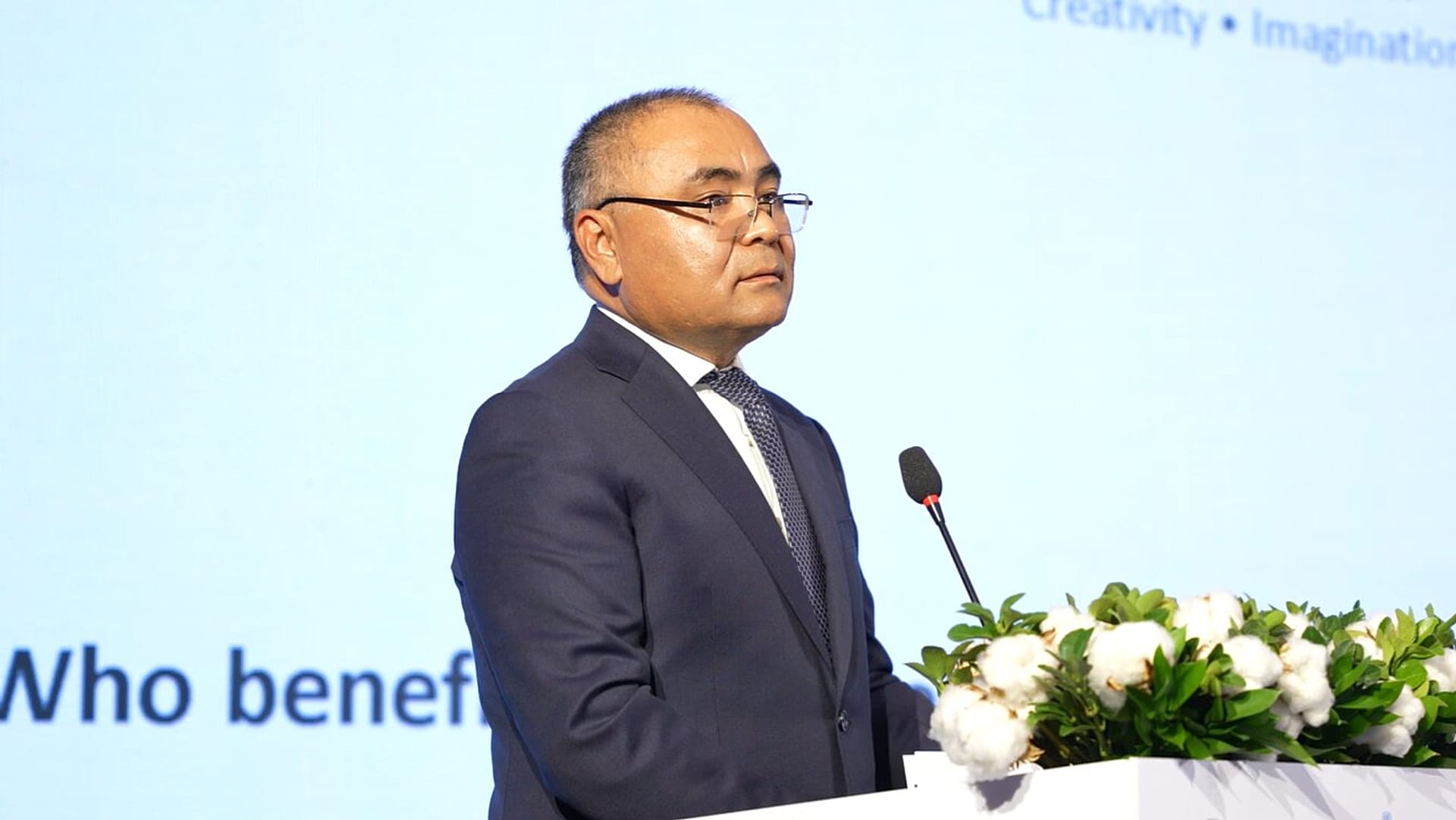
"We are telling the world that we have ceased to be a 'landlocked country' and have become a 'land-linked country'," Uzbekistan's Minister of Agriculture Ibrokhim Abdurakhmonov said in an interview with Euronews. "But such connectivity does not arise by itself. First of all, we need to work together to solve common problems." Transport connectivity is only one part of the task: agriculture across Central Asia depends heavily on irrigation, while a number of countries share limited water resources. "Our common challenges are especially visible in Central Asia. And the water problem comes first here," Abdurakhmonov noted. Uzbekistan is proposing a regional initiative combining natural resource management, agricultural research, and new technologies; the minister also spoke of plans to strengthen knowledge exchange and support the adoption of advanced farming practices. FAO lists water scarcity, land degradation, and climate change among the key challenges facing Uzbek agriculture; the organization's cooperation program with Uzbekistan includes projects in digital farming, biodiversity conservation, and natural resource management.
Food security as part of the bigger picture
Increasing production alone does not guarantee the population access to a healthy diet. Global FAO studies show how strongly processing, transportation, and distribution costs affect final consumer prices, but the ability to buy quality food also depends on household incomes and on the volume of support when prices rise. "I believe that food security is not a standalone goal, but part of a bigger picture," Sabine Machl, the UN Resident Coordinator in Uzbekistan, told Euronews. She emphasized that education, healthcare, social protection systems, and equal opportunities are essential elements of this picture: it is social protection that helps vulnerable families maintain access to food when rising prices erode their incomes.