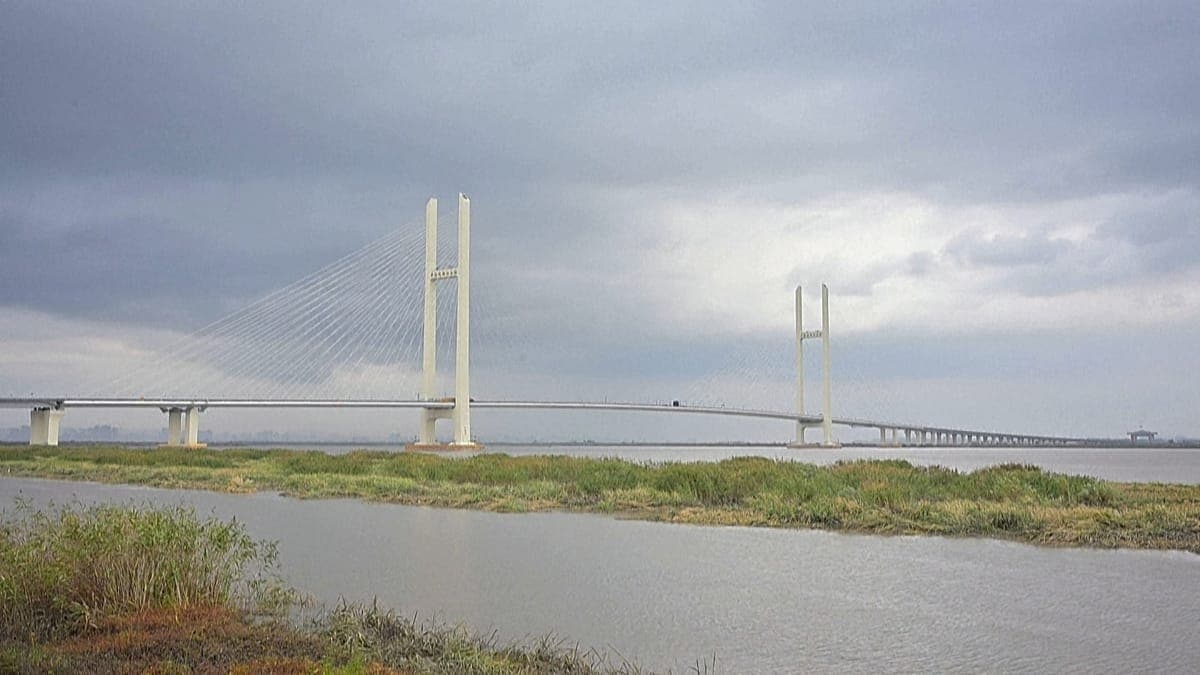
The key facts
- The New Yalu River Bridge (3,026 m, four lanes) opened on October 15, 2026, 12 years after construction was completed.
- The delay was caused by unfinished access roads and customs facilities on the North Korean side; rail service between the countries resumed only in March.
- Expert Lim Eul-chul estimates cargo flow could grow 3–4 times; the opening follows September's launch of the North Korea–Russia bridge.
Opening after a 12-year delay
On October 15, 2026, traffic opened on the four-lane New Yalu River Bridge, 3,026 meters long, connecting the Chinese city of Dandong with Sinuiju in North Korea. Construction was completed back in 2014, but the opening was delayed: according to the South Korean agency Yonhap, access roads and customs facilities had not been completed on the North Korean side. In addition, North Korea closed its borders during the COVID-19 pandemic; rail service between the countries resumed only in March after a six-year break. On the opening day, hundreds of people gathered in Dandong; trucks with flags of the two countries began moving in both directions, and some Korean vehicles were decorated with flowers.
Reactions and statements
Chinese Premier Li Qiang said via video link at the opening ceremony that the bridge symbolizes the friendship between Beijing and Pyongyang, and that relations are "entering a new stage and opening a new chapter." According to him, the opening will strengthen trade and economic cooperation and humanitarian contacts. Residents of Dandong expressed hope for a revival of business; local resident Yu Shuyan said she hopes for an improvement in living standards in North Korea. The South Korean Ministry of Unification said Seoul is "closely monitoring" the situation.
Significance for trade
The new crossing will replace the road-rail Bridge of Sino-Korean Friendship, opened in 1943, which due to its age and narrowness cannot withstand modern loads: heavy cargo had to be transported with particular caution. North Korea expert Lim Eul-chul of Kyungnam University called the opening a "breakthrough" and estimated that cargo flow could grow three to four times, especially in heavy machinery and construction materials. China remains North Korea's largest trading partner: according to data cited by Euronews, about 98% of North Korea's foreign trade last year was with China. However, North Korea has not yet resumed issuing tourist visas to Chinese citizens.
Context: the bridge to Russia and geopolitics
The opening took place about a month after the launch in early September of the first road bridge between North Korea and Russia. According to experts, Chinese officials perceived this with alarm: Kim Jong Un has in recent years bet on Moscow, sending, according to reports, thousands of troops and weapons to support Russia, presumably in exchange for military and economic assistance. According to South Korean estimates, North Korea's economy grew by more than 3% in 2025 for the third consecutive year, which is linked to cooperation with Russia. The human rights group Truth Hounds previously warned that the Russian bridge could become a "direct artery" for transferring North Korean troops and builders to Russia in exchange for technology and resources. Some commentators call the opening of bridges to Russia and China a signal to Washington that Pyongyang intends to sustain its economy on its own. At the same time, Kim Jong Un has recently grown closer to China as well, seeking to improve the economy and form a united front against the United States.