The key facts
- On October 9, Trump announced the suspension of part of the sanctions against Russia and imports of Russian diesel; the Kremlin confirmed the agreement.
- Experts link high prices to the war in Iran and disruptions in the Strait of Hormuz and Bab el-Mandeb, not to a shortage of Russian supplies.
- The promised 2.2 million barrels of diesel do not cover even one day of US demand (~4 million barrels per day).
Trump's deal and expectations of a rapid price decline
On October 9, US President Donald Trump announced on social media a temporary suspension of part of the sanctions against Russia and the start of imports of Russian diesel, writing that diesel prices for Americans and the whole world 'WILL FALL, AT A RECORD PACE, AND FAST!'. Russia confirmed the agreement: on October 13, Kremlin press secretary Dmitry Peskov told the TASS agency that diesel supplies are 'in the interests of Russia, the US and global energy markets'. However, experts surveyed by Deutsche Welle believe the deal is unlikely to lead to a significant price decline.
The causes of high prices — wars and shipping
Samina Sultan, an expert at the Cologne Institute for Economic Research (IW), named the war in Iran and simultaneous shipping disruptions through the Strait of Hormuz and Bab el-Mandeb as the main reason for expensive diesel. According to her, this led to production stoppages and made fuel transport 'more expensive, less reliable and more complicated'. She also noted the geopolitical dimension of the deal: it 'completely intertwines the wars in Ukraine and Iran'. Commerzbank analyst Carsten Fritsch also links the price rise to the wars and sees few ways to eliminate the shortage 'if nothing changes in Ukraine and the Middle East'.
Restored supplies, but not of oil products
There are some improvements: according to the analytics company Kpler, about 13.5 million barrels of crude oil per day are again passing through the Strait of Hormuz. However, volumes of oil products, including diesel, remain far lower — about 677,000 barrels per day versus 3.6 million before the war. Many refineries in the Persian Gulf region are damaged or idle, and 'shadow fleet' transport and insurance remain expensive and risky.
The US is the largest diesel exporter, Russia is in second place
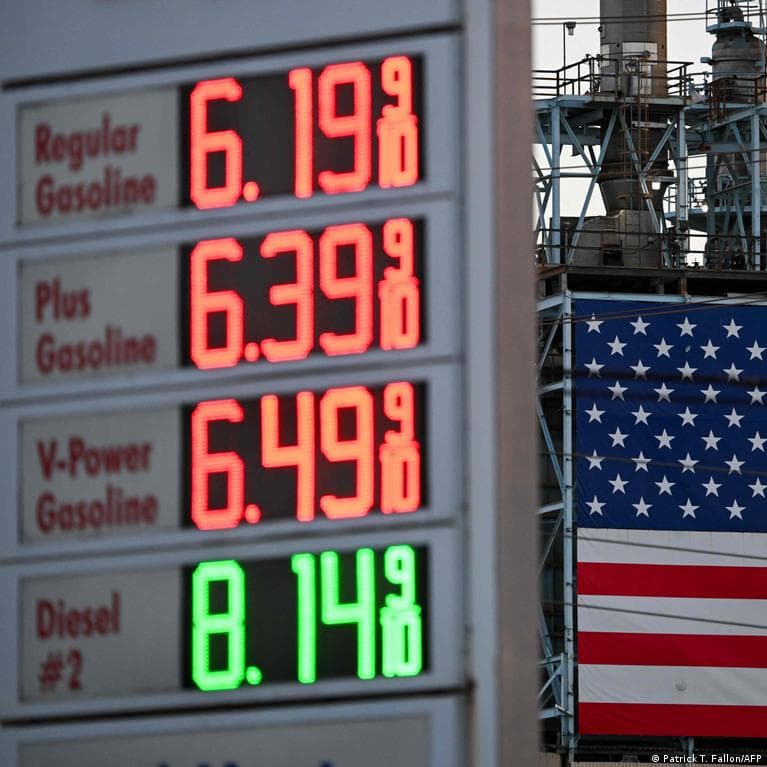
Russia is no longer the world's largest diesel exporter and itself faces a fuel shortage. In 2025, the US exported an average of 1.26 million barrels of diesel per day — about 15.4% of global exports, taking first place. Russia dropped to second place with a share of 9.5%, and that was even before the large-scale Ukrainian drone strikes on its refineries. Diesel prices in the US have risen by about 60% over the past 12 months and stand at $6.30 per gallon ($1.66 or €1.49 per liter), according to the US Energy Information Administration (EIA).
The idea of restricting US diesel exports
Trump also discussed the possibility of restricting US diesel exports, but the idea was abandoned because, according to Sultan, it could raise domestic prices even further: 'The US simply does not have enough diesel storage capacity. Production would have to be cut, and prices would rise again.' ING chief economist Carsten Brzeski noted: 'An export ban merely redistributes the shortage but does not solve it,' adding that world prices would continue to rise and refineries would cut output due to falling margins. Buyers in Latin America and the EU, who since the start of the war in Ukraine have increasingly imported diesel from the US instead of Russia due to sanctions, would be hit especially hard.
The limited effect of the deal
According to calculations by The World Data platform, the promised 2.2 million barrels of Russian diesel do not cover even one day of US demand — about 4 million barrels per day. All the announced volumes, totaling 35.8 million barrels, would be enough for only about nine days of US domestic demand. 'I CANNOT OVERSTATE HOW INSIGNIFICANTLY SMALL THIS IS,' wrote Canadian oil market analyst Rory Johnston on X, adding that Russia, absent strikes on refineries, would export almost 10 times more. About 80% of US diesel imports come from Canada, but given the trade war and Trump's attacks on it, analysts consider a significant increase in Canadian supplies unlikely.


