News

stroke

News about stroke: events, facts and developments on tafs uz.

5 stories

Scientists linked regular tea consumption to a lower stroke risk — but only if the drink isn't too hot

A study of nearly 500,000 residents of China showed that those who drink tea at least three times a week have an 11.2% lower risk of vascular disease and a 36.6% lower risk of ischemic stroke. However, scalding hot tea, on the contrary, was associated with a 16% increase in risk. The authors emphasize that tea is not a panacea and is only part of a healthy lifestyle.

3 min read

Scientists Apply Transformer-Based AI to Assess Stroke Risk from DNA

A team from the University of Technology Sydney has created a transformer-based AI model — the technology underlying ChatGPT — that analyzes genetic variations and assesses the risk of ischemic stroke. The model identified 18 associated variants and, using data from more than 40,000 people, divided participants into risk levels: the high-risk group had a 21% higher risk of a first stroke than the low-risk group.

3 min read

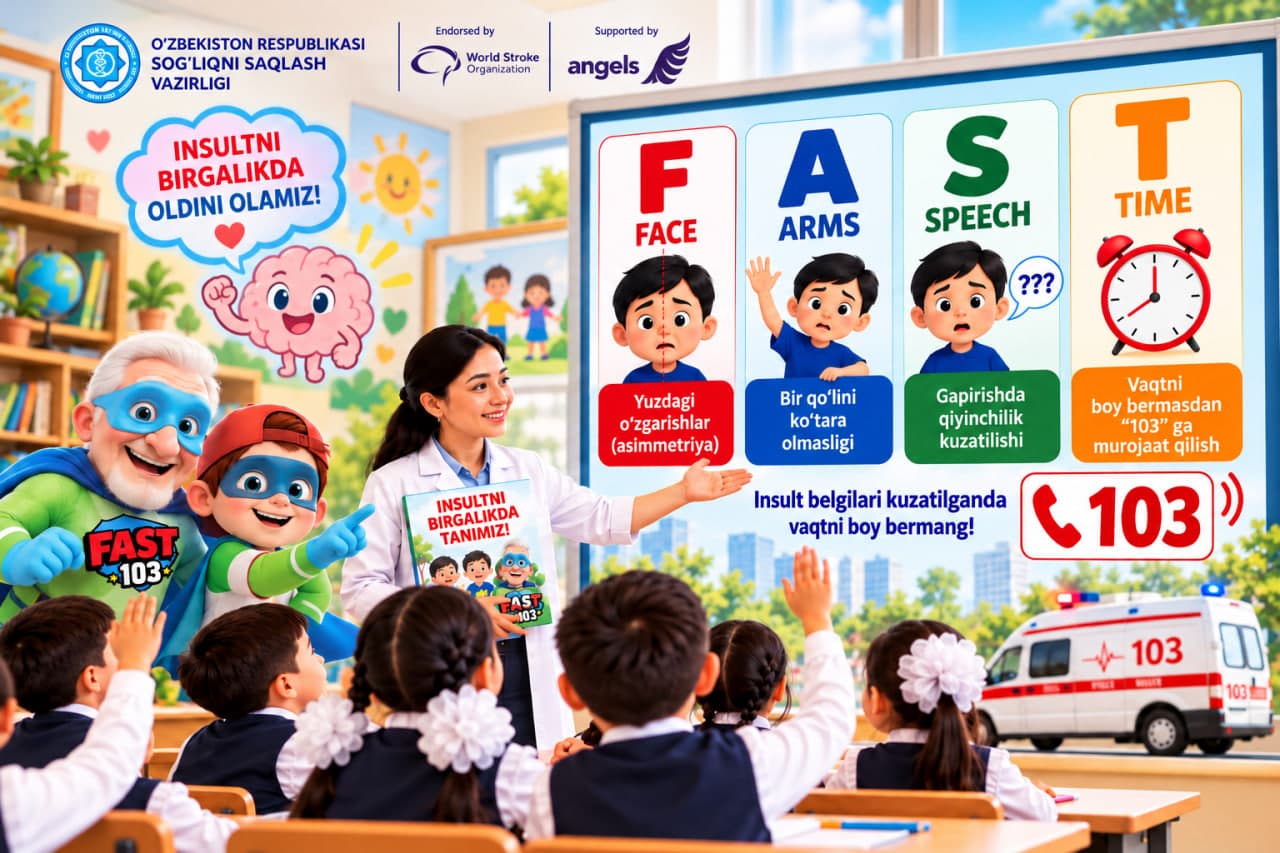
Uzbekistan to Teach 1st–4th Grade Students to Recognize Stroke Signs Through the “FAST — Superheroes” Program

Starting November 1, 2026, schools in Uzbekistan will gradually implement the international “FAST — Superheroes” program, under which 1st–4th grade students will be taught, through games and video materials, to recognize stroke signs and call an ambulance. The first stage will cover 7 schools in Tashkent and 6 schools in Samarkand region. The program is being implemented as part of the national program to combat heart attack and stroke.

2 min read

Climate change threatens brain health of Europeans — neurologists warn of rising strokes and dementia

Neurologist Ulf Kallweit told Euronews at the European Health Forum in Gastein that heat raises stroke risk, disrupts sleep and expands the range of infections affecting the nervous system. Neurological disorders affect roughly one in three people, and their economic burden in 2019 was estimated at €1.5 trillion. Risks are higher for vulnerable groups and residents of disadvantaged areas.

3 min read