The key facts
- Steinmeier arrives in China for the first time in eight years; the visit will last five days and conclude in Beijing with meetings with Xi Jinping, Li Qiang, and Zhao Leji.
- Steinmeier arrives in China for the first time in eight years; the visit will last five days and conclude with meetings in Beijing with Xi Jinping, Li Qiang, and Zhao Leji.
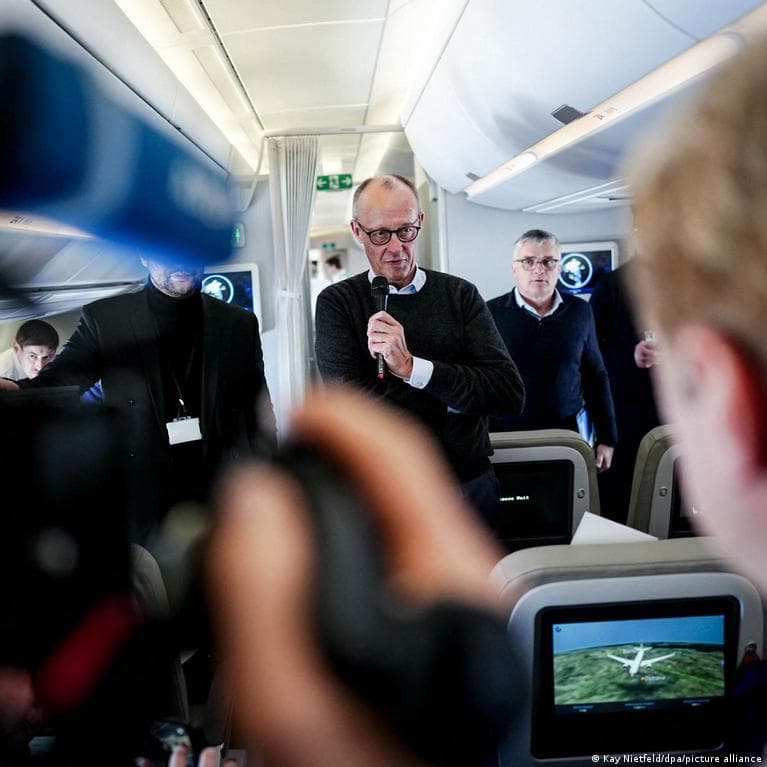
- At the same time, Chancellor Friedrich Merz is visiting Japan, Singapore, and South Korea with business circles — Berlin is coordinating a dual signal to Beijing.
- At the same time, Chancellor Friedrich Merz is visiting Japan, Singapore, and South Korea together with business circles — Berlin is coordinating a dual signal to Beijing.
- The delegation includes MERICS director Mikko Huotari, despite Chinese sanctions against the institute imposed in response to the EU sanctions of 2021.
First visit in eight years
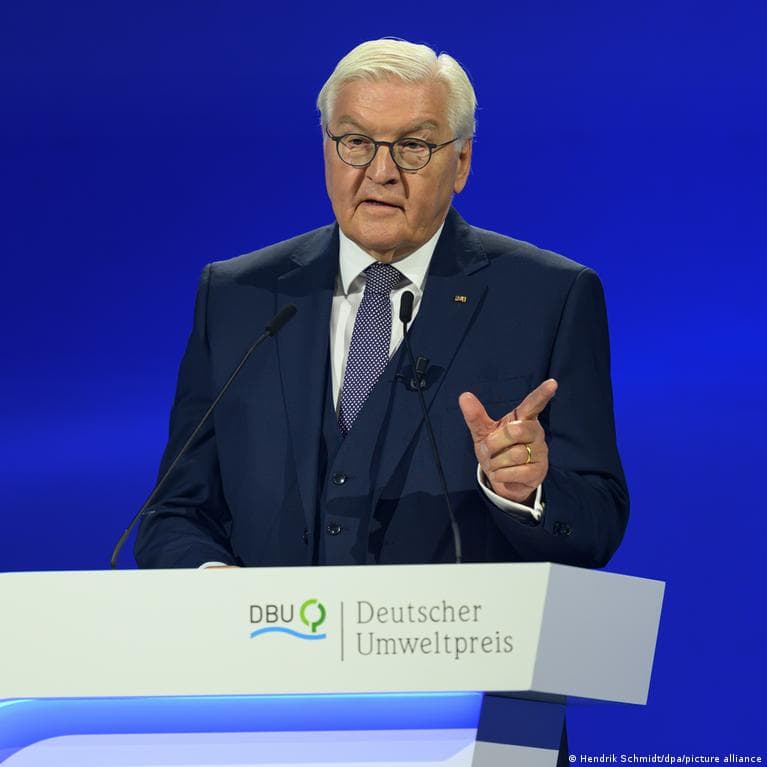
German President Frank-Walter Steinmeier has arrived in China on a state visit — his previous trip to the country took place eight years ago, Deutsche Welle reports. In that time, relations between China and Europe have changed noticeably. The president plans to spend several days in the country, concluding the visit in Beijing with meetings with the PRC leadership. According to the outlet, the visit coincided with the plenum of the Central Committee of the Communist Party of China — a major annual event that foreign guests usually try to avoid when planning trips.
Program and agenda
As reported by the president's office, the focus of the five-day trip is on 'the diverse and complex relations between Germany and China, as well as the challenges associated with them.' In addition to venues for cultural exchange, the program includes a visit to the Volkswagen plant in Hefei. Steinmeier is scheduled to meet with PRC Chairman Xi Jinping, whom he has known for almost two decades, Premier Li Qiang, and Zhao Leji, Chairman of the Standing Committee of the National People's Congress. On Thursday, the president is expected to deliver a speech at Peking University.
Diplomatic balance
The trip takes place against the backdrop of a difficult balance in German-Chinese relations. According to Deutsche Welle, China is one of the most important markets for German automakers, mechanical engineering companies, and the chemical industry, but at the same time China's state overcapacity is putting pressure on European manufacturers, while Germany and Europe depend on Chinese raw materials and technologies. European leaders recently agreed to reduce imports of plug-in hybrids from China. 'That was a concrete step, but it can only be a beginning,' noted Michael Laha, a China expert at the German Council on Foreign Relations (DGAP). Steinmeier previously supported the policy of 'change through trade,' which, according to the outlet, today has almost no supporters left in Germany.
A dual signal: Merz in the Indo-Pacific
At the same time as Steinmeier, Chancellor Friedrich Merz, together with business representatives, is visiting Japan, Singapore, and South Korea. His trip focuses on competitiveness, technological change, defense cooperation, and critical raw materials; the chancellor is visiting companies and taking part in regional economic conferences in Tokyo and Seoul. Laha viewed the parallel trips as a well-coordinated signal to Beijing: the partnership continues, but at the same time steps are being taken to reduce risks, which, in his words, is a difficult balancing act that also allows China to save face.
Human rights and sanctions
Unlike Merz, who is accompanied by a large economic delegation, Steinmeier is accompanied by representatives of culture, politics, and science, including Mikko Huotari, director of the China institute MERICS — despite the sanctions imposed by Beijing against the institute. According to Laha, his participation is a clear signal that Berlin does not approve of the sanctions. Their background: in 2021, the EU imposed sanctions on a number of Chinese party and regional officials and organizations accused of serious human rights violations and the oppression of the Uyghur minority — the first time since the events on Tiananmen Square in 1989. In response, Beijing banned entry and imposed sanctions on European politicians, scientists, and institutions, including MERICS. At the same time, Laha did not expect human rights to play a large role in the trip: Steinmeier is considered a pragmatist in China policy — as head of the Foreign Ministry, he distanced himself from China critic Joschka Fischer and criticized Chancellor Angela Merkel for receiving the Dalai Lama.
Ukraine and international responsibility
On the topic of Ukraine, Steinmeier will likely be more direct and raise the question of China's role in the conflict. 'Beijing is clearly on Moscow's side,' Laha said, adding that in Berlin there is a conviction that China could do more to push Russia toward serious negotiations. The president's office noted that whereas Germany once watched China's rise 'with respect and goodwill,' the focus has now shifted to how the country uses its growing power. Lohse suggested that, by pointing to Russia's use of force against a sovereign state, the president may also hint at Taiwan — as a call for Beijing to take greater responsibility for the regional and international order. The publication describes the trip as the culmination of the Asian focus of Steinmeier's second term, during which he sought close ties with partners in the region and advocated diversification.