The key facts
- Chancellor Merz is accompanied by a delegation of 30 business representatives, including defense and energy companies
- Tensions may arise in Seoul over its policies toward North Korea and Russia
- Merz's visit to the demilitarized zone may be cancelled due to a mine incident
Route and composition of the delegation
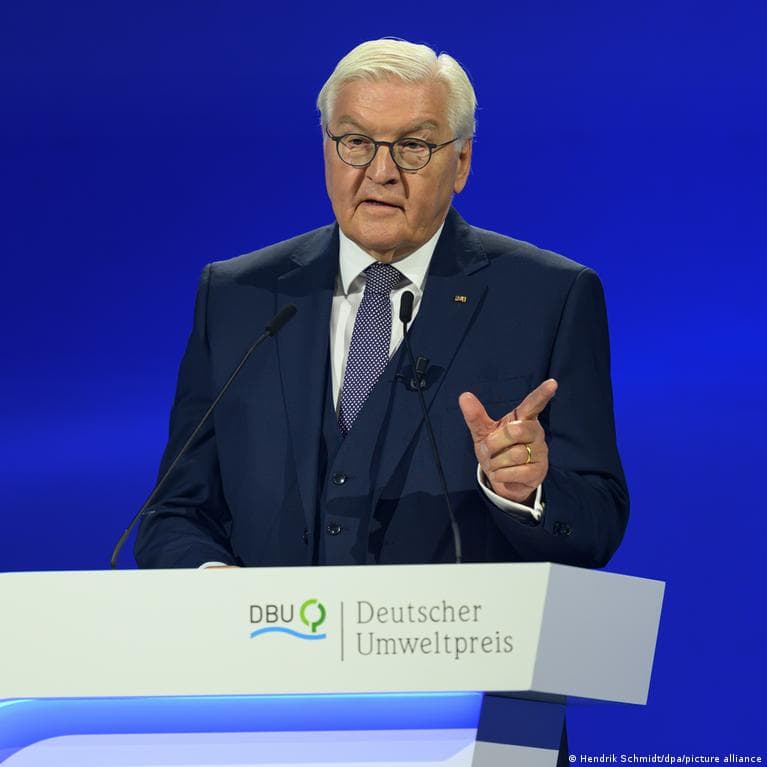
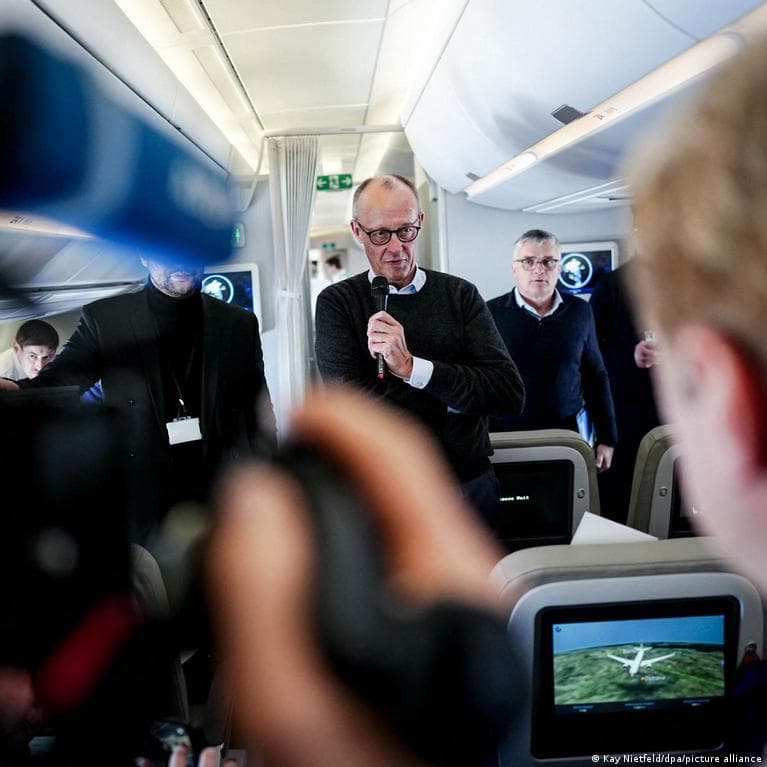
On Monday, German Chancellor Friedrich Merz began a five-day tour of Asia: the first stop was Singapore, followed by planned visits to Japan and South Korea. The Chancellor is accompanied by a delegation of 30 senior business representatives from industries, technology, defense, and energy supply sectors. Simultaneously, German President Frank-Walter Steinmeier is visiting China. Officially, the trips are not linked, but as noted by Deutsche Welle, both aim to strengthen Berlin's economic and security ties amid geopolitical instability threatening global supply chains.
Singapore and Japan: Security and Supply Chains
In Singapore, Merz is scheduled to deliver a major foreign policy speech and meet with Prime Minister Lawrence Wong. On Wednesday, he will arrive in Japan to meet with Prime Minister Sanae Takaichi and participate in the German-Japanese Business Summit. Ben Ascione, an associate professor of politics and international relations at Tokyo's Waseda University, commented to DW that the visit 'will be very warmly received in Tokyo': according to him, Japan has been seeking new security allies and closer trade partners for over a decade, and Takaichi is continuing the course initiated by Shinzo Abe amid rising tensions in the Indo-Pacific region and uncertainty surrounding Donald Trump's second presidency.
Common Threats and Military Presence
China's expansion causes deep concern in Tokyo, especially given Beijing's rapprochement with Russia and North Korea: China and Russia have conducted joint military exercises off Japan's coast, and Beijing insists on Taiwan's reunification with mainland China. Ascione points out that any conflict over Taiwan, disputed islands in the South China Sea, or territorial claims in the region would impact global trade, and thus Germany. In his view, Germany is increasingly aligning with Japan's perception of the threat posed by China, and Japan 'would welcome' the deployment of German military assets in the region — previously, the frigate Bayern became the first German warship to dock in Tokyo in 20 years in May 2021, and in July 2024, German Eurofighters conducted air exercises with Japanese fighters. It is expected that Merz and Takaichi will exchange views on responding to geopolitical threats, including supply chain resilience, protection of strategic industries, and access to rare earth metals, which are largely controlled by China.
Seoul: Potential Frictions and Lessons from Reunification
Next, Merz will travel to South Korea, where he will meet with President Lee Jae-myung and open the 19th Asia-Pacific Conference of German Business, as well as plan to visit the demilitarized zone. Saeme Kim, a research fellow at the Asan Institute, believes security issues will again dominate the negotiations, though the Chancellor may express concern over Seoul's 'course of rapprochement' with North Korea and, indirectly, Russia. According to her, recent discussions involved supplying petroleum products to Russia, although Seoul claims sanctions have not been violated; South Korea is trying to establish communication channels with Pyongyang despite North Korean troops being sent to Ukraine. 'I think many European countries will be irritated by the Lee administration's attempts to improve relations with North Korea and Russia,' DW quoted her as saying. Meanwhile, Kim suggests that Merz could share Germany's 1990 reunification experience, although, as she notes, the two Koreas are still formally at war, and Seoul must deal with a nuclear-seeking power on its border.
Visit to the Demilitarized Zone in Question
Merz's trip to the border may be cancelled due to ongoing tensions after last month, when a North Korean mine injured three South Korean soldiers. Pyongyang accused Seoul of staging the incident. If the visit takes place, the Chancellor will have the opportunity to see North Korea from a distance.