The key facts
- 628 gas stations fail to meet the 125-meter distance requirement from residential buildings — the figures were announced on October 20 at the Legislative Chamber
- A separate sanction was removed from the bill, but liability remains under the general norm
- Under a government resolution of June 18, the facilities are to be relocated in phases to safe zones
Removal of a separate sanction
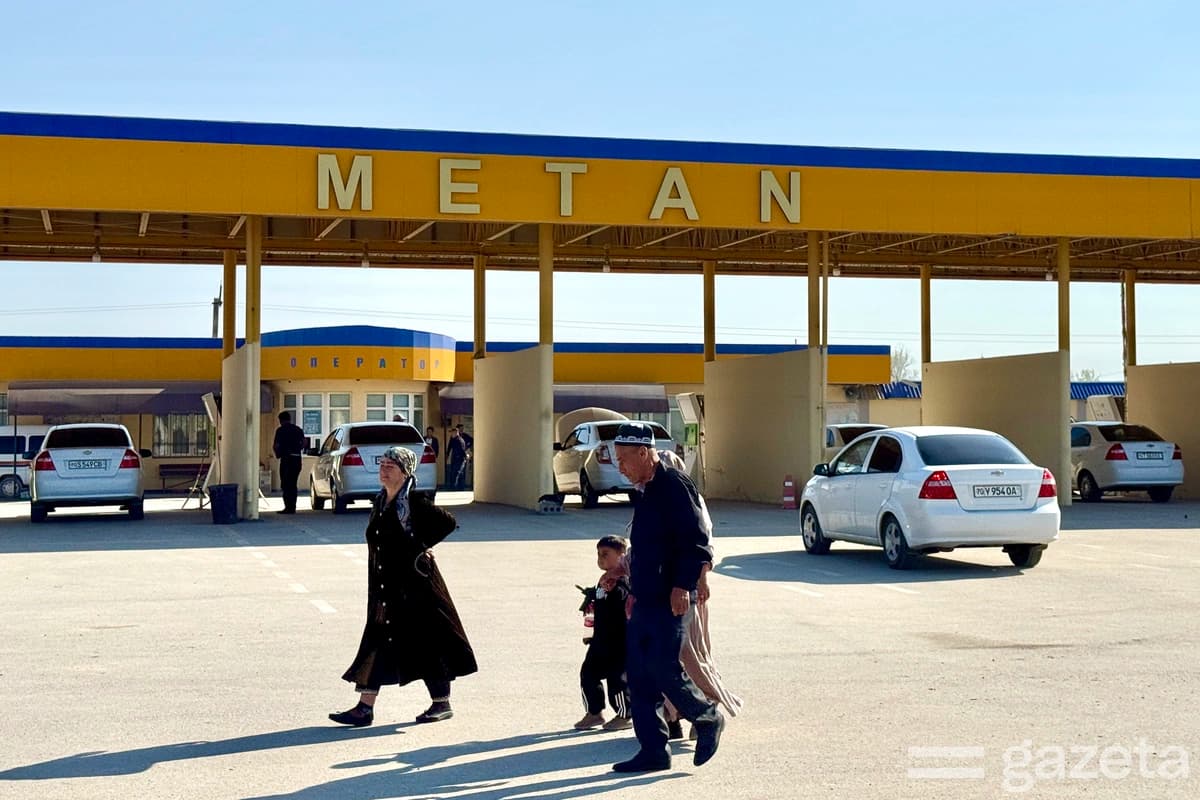
In Uzbekistan, 628 gas stations have been identified that do not meet the requirement of a minimum distance of 125 meters between unloading points for hazardous cargo and residential buildings. This was announced on October 20 at a session of the Legislative Chamber of the Oliy Majlis by Farhod Zayniyev, deputy chairman of the Committee on Entrepreneurship, Competition Development and Industry, and a deputy. The parliamentarians were considering, in the second reading, a bill on improving the industrial safety system, which was approved in the first reading on October 13. While finalizing the document, the deputies removed from it a separate sanction for violating this norm, taking into account corruption risks and the possibility of halting the stations' operations. Zayniyev stressed that this does not mean the abolition of liability: the violation of safe distances is covered by the general norm on liability for violating the rules of loading and unloading hazardous cargo, which is applied not automatically but with regard to the actual circumstances. At the session, it was not specified in which regions the 628 stations are located, what types of fuel they sell, how many of them continue to operate, and when the violations were identified.
Current requirements
According to paragraph 83 of the rules for the transportation of hazardous cargo by road, approved by government resolution No. 35 of February 16, 2011, places for loading, unloading and transloading hazardous cargo, as well as vehicle parking areas, must be located no closer than 125 meters from residential buildings, production facilities and warehouses. The minimum distance from main roads is 50 meters, and vehicles waiting to be loaded or unloaded must be no closer than 25 meters from the relevant sites. The norm applies only to places of operations with hazardous cargo.
Plan for relocating stations
Zayniyev also reported that the phased relocation of gas stations that fail to meet safety requirements is provided for by a separate resolution of the Cabinet of Ministers of June 18, 2026, 'On measures to prevent accidents and incidents at fuel filling stations and gas filling facilities and to eliminate factors threatening human life' (No. 315). According to the document, the Council of Ministers of Karakalpakstan, regional authorities and the khokimiyat of Tashkent, together with the relevant agencies, were to form by September 1 a registry of gas stations that pose a threat to people's life and health or do not meet public, fire, industrial and environmental safety requirements, as well as urban planning norms. Based on this list, the authorities must develop measures for the phased relocation of such facilities to safe zones. The resolution provides for the preservation of the entrepreneur's rights to the previous land plot when relocating a station, and automobile gas filling compressor stations relocated to safe locations receive the exclusive opportunity to obtain technical conditions for connection to gas networks. Funding for the relevant activities is provided in the programs for the development of social and production infrastructure of the territories for subsequent years.
Inspection results
The need to strengthen control over gas station safety was previously explained by the results of a nationwide survey. According to the government resolution of June 18, the inspections covered a total of 6,196 facilities: stations selling gasoline, diesel fuel, liquefied and compressed gas, as well as facilities for refilling household gas cylinders. A total of 46,737 violations and shortcomings were identified, including 25,341 in the field of industrial and technical safety, 7,949 in fire safety, 7,875 in compliance with technological processes, 3,354 in technical regulation and 2,218 in construction. On-site, 7,166 shortcomings were eliminated, and the operations of 464 gas stations were temporarily suspended. From September 1, 2026, a phased restriction is to begin on the use of installations operating under excess pressure whose service life has expired or whose production date is unknown; these measures are planned to be completed by January 1, 2030. In addition, from January 1, 2027, the shutdown is envisaged of gas stations that use hazardous production facilities without specialists holding the necessary certificates and permits. After the violations are eliminated, their operations are to resume automatically in the established procedure.
Accidents at gas stations
The issue of gas station safety has been raised repeatedly after major incidents. On July 16, 2025, an explosion and fire occurred at a gas filling station in the Kukdala district of the Kashkadarya region. Initially, the Ministry of Emergency Situations reported four deaths. Later, on October 13, 2026, First Deputy Minister of Justice Mahmud Istamov, citing court documents, stated that 9 people died and another 20 were injured as a result of the tragedy. According to him, media reports about the incident noted that documents on compliance with safe distance requirements, the availability of the necessary protective equipment and the conduct of technical inspections may have been falsified. To prevent such cases, the industrial safety bill provides for criminal liability for violations that caused harm to people's life and health, increased administrative fines, and separate liability for knowingly false expert conclusions. In preparation for the second reading, the possibility of exemption from criminal liability for causing moderate or grievous bodily harm was also envisaged — provided there is reconciliation with the victim, admission of guilt and compensation for damages. In cases involving deaths, such a possibility is not granted. On October 20, the Legislative Chamber approved the bill in the second and third readings.