The key facts
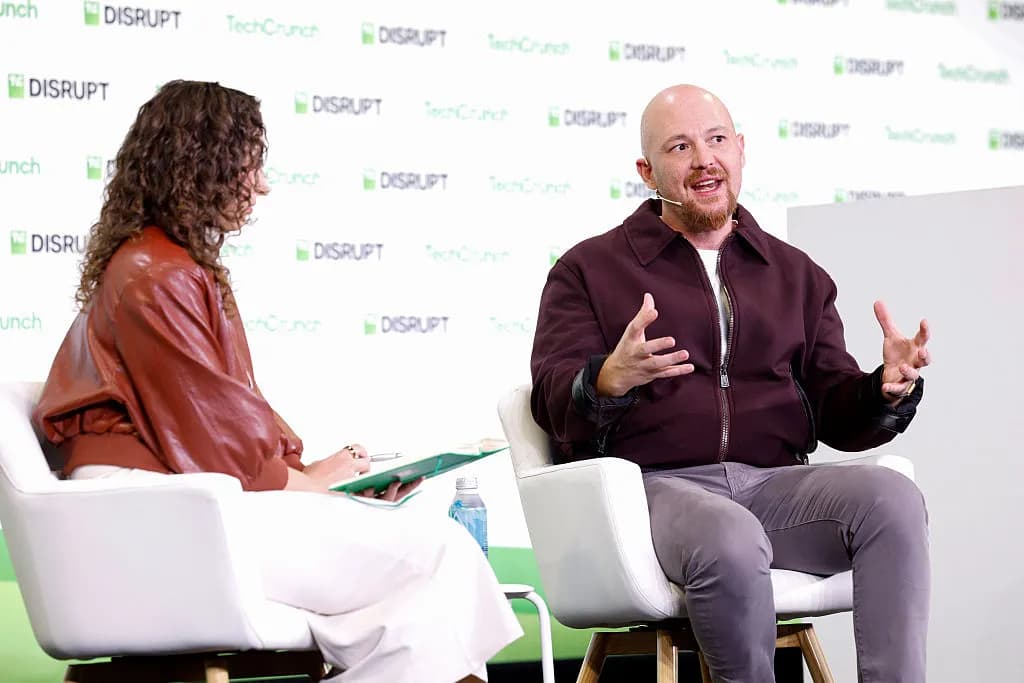
- Amjad Masad presented the idea of a 'self-driving company' at TechCrunch Disrupt on October 16, 2026, in San Francisco.
- At Replit, AI agents handle the initial triage of support requests, while a human makes the decision and can deploy an agent to ship a patch with one click.
- According to Masad, agents are not taking away work but changing its content: more time goes into choosing tasks, discussions, and architecture.
The vision of a 'self-driving company'
Replit CEO and co-founder Amjad Masad spoke at the TechCrunch Disrupt conference in San Francisco on Thursday, October 16, 2026, and shared how, in his view, work will change in the AI era. He used the term 'self-driving company' not in reference to robotaxi makers: the point is that agents will take over a significant share of routine tasks, and people's value will shift toward judgment and taste. Masad noted that over the past year work has changed — primarily for those in the audience — but a significant part of America and the world does not yet know about the coming changes, and for many they will come as a surprise.
Replit's own experience
The Replit team analyzed how AI has affected their own work, especially after AI agents became noticeably more reliable around the beginning of this year. 'Our company has completely changed how we work, and the closest analogy is a
The support example
Masad illustrated the shift with the example of support: incoming requests are first handled by an agent that performs initial triage, examining GitHub issues, the codebase, and Linear tickets. By the time a request reaches a human, that person already has all the additional information needed to decide on next steps. If an employee decides to send a patch with a fix, the agent can be deployed with one click. 'It becomes a full cycle where agents did most of the work, but at the center is human judgment, and we don't think that will disappear anytime soon. Human judgment is needed; taste is needed,' Masad explained.
How the content of work is changing
According to Masad, agents are not taking work away from people but changing what people do. 'We spend much more time figuring out what to work on. I walk around the company and see more discussions, more work at the whiteboard. We spend more time on architecture, on how to build products,' he said. In his view, the idea of a 'self-driving company' is an attempt to make sense of what the AI transformation means for the future of work.
A positive message
Masad added that in conversations with other businesses, the discussion is more often about how AI can make people more productive and happier at work — the latter because agents make work less boring and more creative. 'Silicon Valley does not project a positive vision of the world, and we hope to offer one,' he concluded.