The key facts
- There are about 12,250 data centers worldwide, up from roughly 8,000 in 2021; 4,767 of them are in the US.
- There are about 12,250 data centres worldwide, up from roughly 8,000 in 2021; 4,767 of them are in the US.
- 16 US states have proposed laws to ban or temporarily block new facilities.
- The tech industry is expected to spend a combined $765 billion on AI infrastructure in 2026, and more than $1 trillion the following year.
- In 2026, the tech industry is expected to spend a combined $765 billion on AI infrastructure, and more than $1 trillion the following year.
Rapid growth and mounting resistance
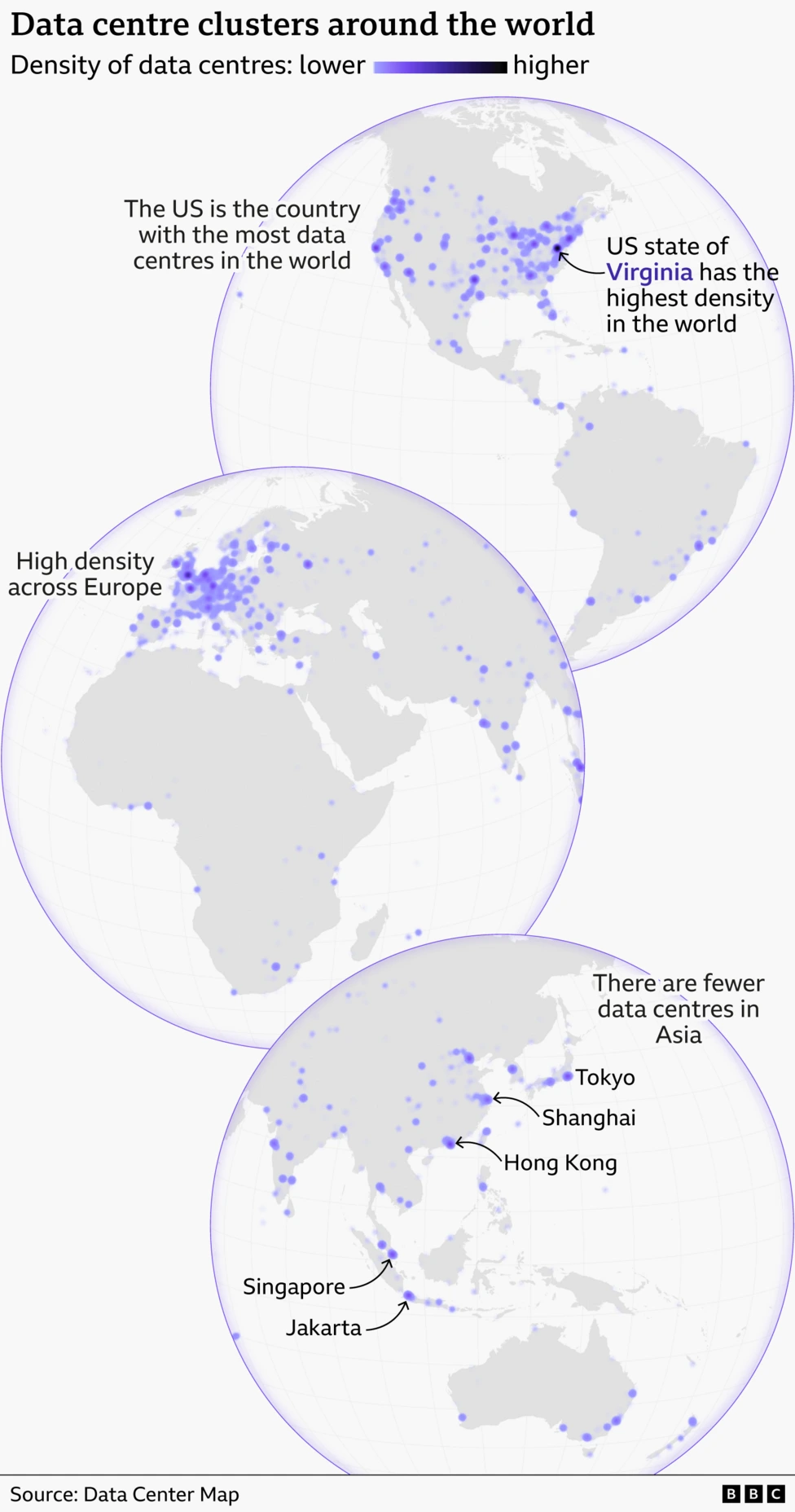
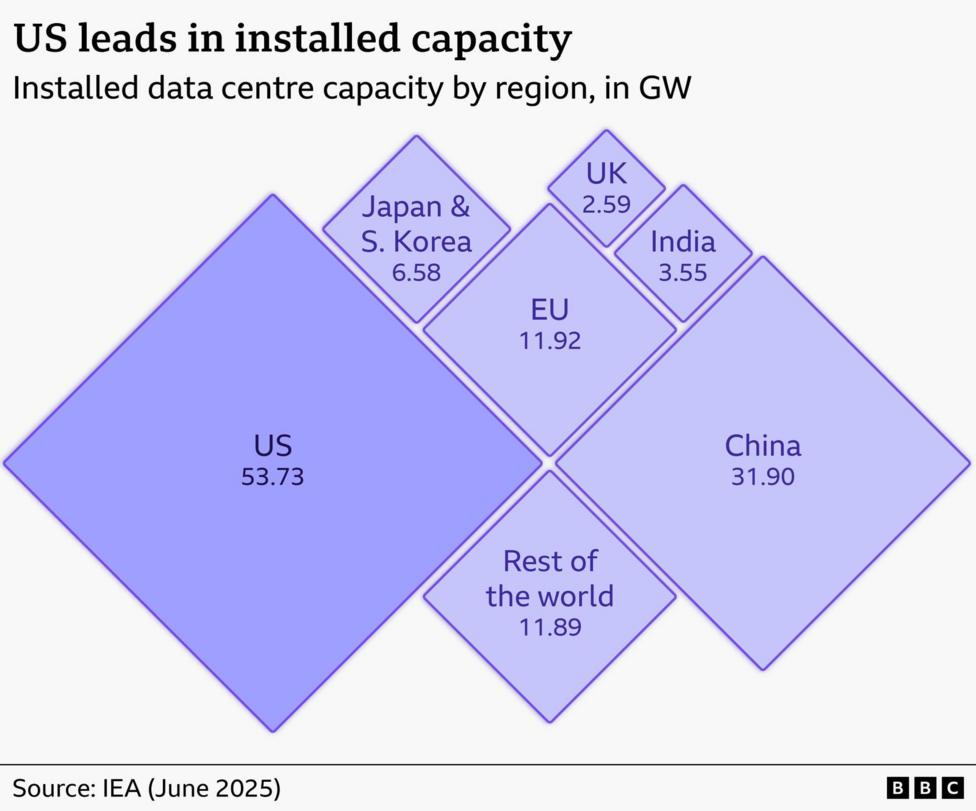
Data centers — giant warehouse-like buildings that support virtually all online activity: from search and email to online banking. They underpin the artificial intelligence boom, housing the chips and servers behind services like ChatGPT and Claude, BBC News reports. According to Data Center Map, there are currently about 12,250 operational and soon-to-launch facilities worldwide — a sharp increase compared with roughly 8,000 in operation in 2021. The largest number is in the United States — 4,767 — followed by Europe, where the United Kingdom and Germany lead. In terms of actual capacity, the US lead is even greater, China ranks second, and Europe lags far behind; some analysts warn that Europe risks missing out on the economic benefits of the AI boom.
Scale and resource demands
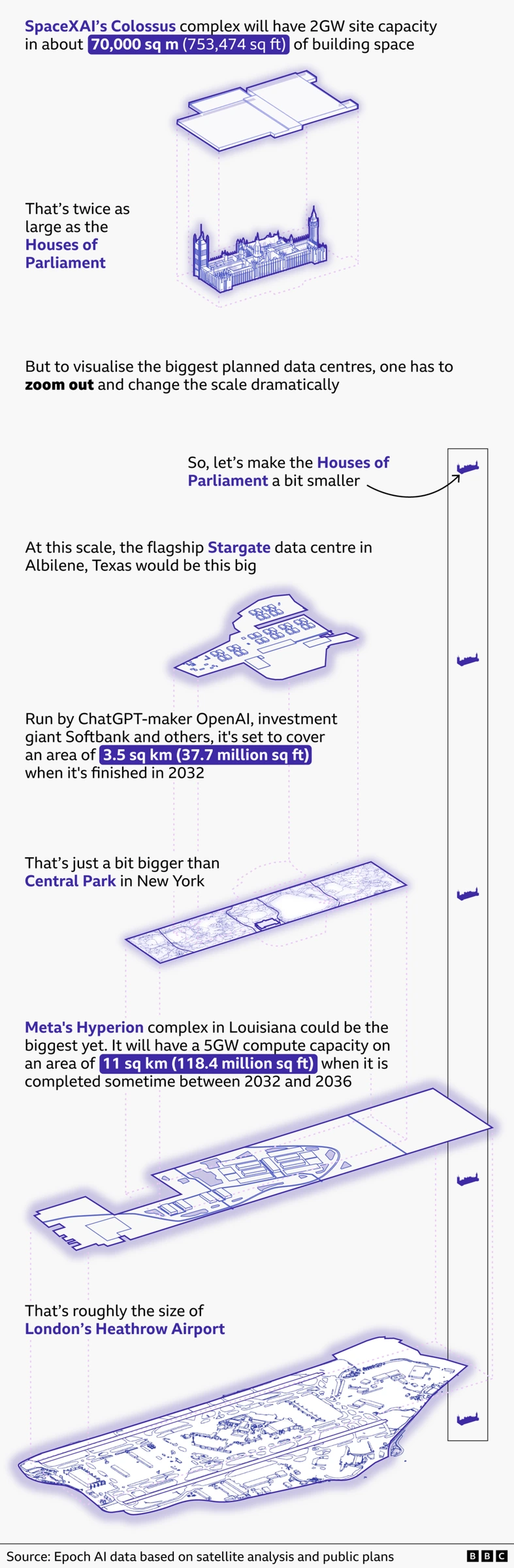
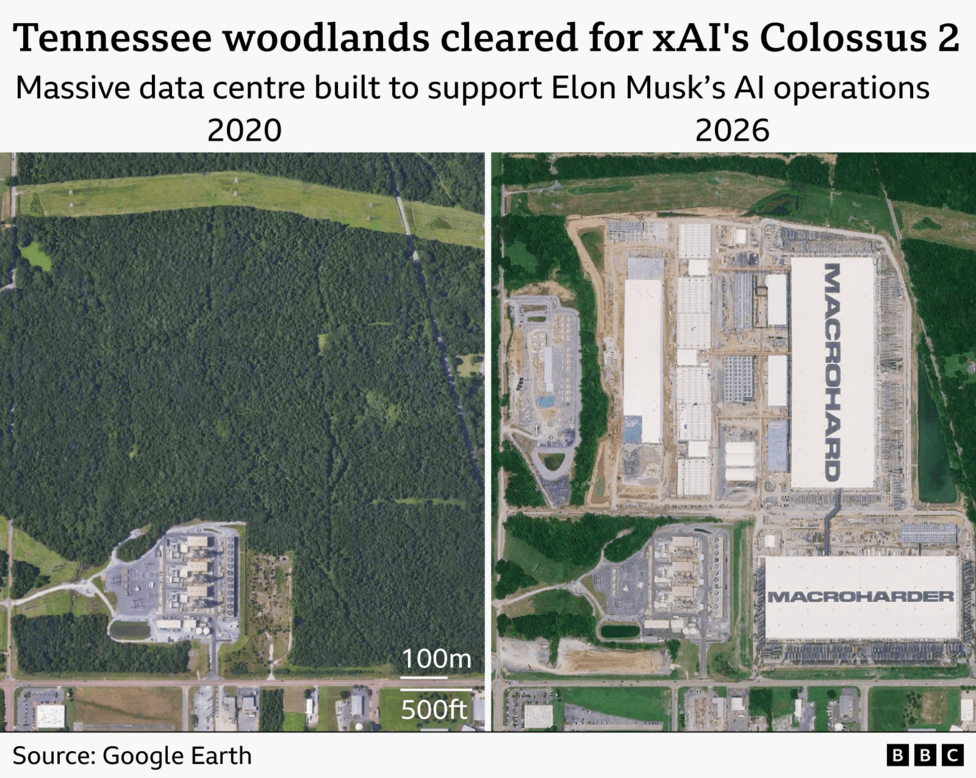
Facilities vary greatly in size: from installations that fit in a garden shed, to vast campuses. The largest operating data center, according to widely cited reports, is China Telecom's facility in Hohhot (Inner Mongolia), covering about one million square meters — roughly 140 football pitches to FIFA standards. Even larger sites are under construction: for example, Colossus 2 will house hundreds of thousands of advanced Nvidia chips and will be used to train xAI founder Elon Musk's chatbot Grok; the site will be powered by 41 methane gas turbines. Activists claim the turbines could 'significantly increase' local air pollution, while local regulators say air quality standards will be met.
Electricity, water and protests
By some estimates, the world's data centers consume more electricity than the whole of France. Experts note that facilities can use significant volumes of water for cooling, which can lead to water shortages. The growth in energy appetite, analysis shows, raises carbon emissions and strains local grids, which, some fear, could push energy prices up; there are also noise complaints and concerns about land taken up. In the US, 16 states have proposed laws to ban or temporarily block new facilities, and the issue could become a key topic in the 3 November midterm elections. Both Republicans and Democrats oppose construction, putting them at odds with President Donald Trump, who called the resistance a 'sick conspiracy'. Protests against data centers are also recorded outside the US — in Mexico, France, Indonesia and the United Kingdom.
Arguments on both sides and alternatives
Supporters call data centers critically important for national security and AI development, as well as beneficial for the economy: they attract investment, generate tax revenue and construction jobs. A report by the Brookings Center confirms local job creation, but on a smaller scale than industry representatives claim; hyperscale facilities by Amazon and Microsoft have a greater effect than 'colocation' centers that rent out space to remote tenants. Meanwhile, the industry is forecast to spend a combined $765 billion on AI infrastructure in 2026, and more than $1 trillion the following year. Among the alternatives being discussed are placing data centers in space or on the Moon using solar power, as well as moving part of AI processing onto hardware inside computers and smartphones.
Why it matters
The conflict over data centers affects every internet user — these are the facilities that keep online services running — as well as residents of the areas where sites are built and the power grids bearing the growing load. In practical terms, this means that in 16 US states the fate of new projects may already be decided through legislation, and the outcome of the 3 November elections could affect the pace of further construction. It remains unknown exactly how the tension between the needs of the AI industry and local restrictions will be resolved.