The key facts
- RAF will for the first time equip Chinook and A400M aircraft for firefighting on request from fire services of all four nations
- £45 million for firefighter equipment and £25 million for peatland restoration in 2027–2029
- 1,350 wildfires in England and Wales in 2026 — an all-time high; summer was the hottest on record according to the Met Office
Military Aircraft for Firefighting
UK Prime Minister Andy Burnham will announce the deployment of military aircraft and helicopters to fight wildfires at the country's first-ever 'wildfire resilience summit', which will take place on Friday. Civilian fire services of all four nations will be able to request support from Royal Air Force Chinook helicopters and A400M aircraft to tackle blazes on difficult terrain — remote moorlands and steep slopes. Burnham said the measures are necessary because 'people cannot be subjected to another summer like this'. Defence Secretary Wes Streeting noted that this is the first time Chinooks and four-engine A400Ms are being equipped for firefighting; over the summer, some areas were left without air support. Chinook crews have already helped fight fires in Cyprus, and in the UK they practised collecting and dropping water with firefighting buckets in Portland Harbour.
Funding and Prevention
In addition to military aircraft, the government will allocate £45 million for specialist protective equipment for firefighters — lighter than the current gear, which is designed for building fires and not intended for prolonged wear. Also announced is a £25 million programme running from April 2027 to April 2029 to restore dried-out peatlands in England so they serve as natural firebreaks, along with financial support for farmers to protect land, for example by digging ponds. According to a briefing ahead of the summit, the government will consider stricter local restrictions or bans on products to prevent fires being lit during high-risk periods — following the temporary ban on disposable barbecues.
Record Summer and Parliament's Response
The record summer of 2026 prompted the summit. According to the National Fire Chiefs Council, 1,350 wildfires were recorded in England and Wales — an all-time high, more than 300 more than last year and more than 1,000 more than in 2024. Records were also set in 2022 and 2025, and the Climate Change Committee warns the risk will grow in the coming decades. According to the Met Office, the summer of 2026 was the hottest on record in the UK, and research showed that human influence on the climate made such heat 130 times more likely. Earlier this month, MPs on the Environment, Food and Rural Affairs Committee pointed to weaknesses in the country's preparedness: access to aerial resources, water supply during major incidents, and coordination at national level. The existing system for obtaining air support, in their view, 'is no longer fit for purpose'.
Summit and New Initiatives
At the summit, Burnham will meet with fire service chiefs, local leaders and representatives of technology companies. The creation of an 'AI wildfire unit' will be announced, bringing together universities, tech firms and officials from the Cobra committee, as well as fire forecasts from the Met Office and an action plan for England. In August, the government convened Cobra before sending an emergency alert to millions of phones in England and Wales, which drew criticism from some. Burnham recalled the August fire in the West Midlands that destroyed 19 homes: 'I stood in Stourbridge and watched families lose everything. I will never forget it. Our firefighters were heroes that day, but heroes should not fight with their hands tied behind their backs.' Environment Secretary Dame Angela Eagle said this summer's fires showed 'the urgent need to adapt to a changing climate', adding that 'nature is our greatest ally in preventing fires'. Other major incidents this year included Dunwich Heath and RSPB Minsmere in Suffolk, the Cairngorms, Hampshire and Holme Fen in Cambridgeshire.
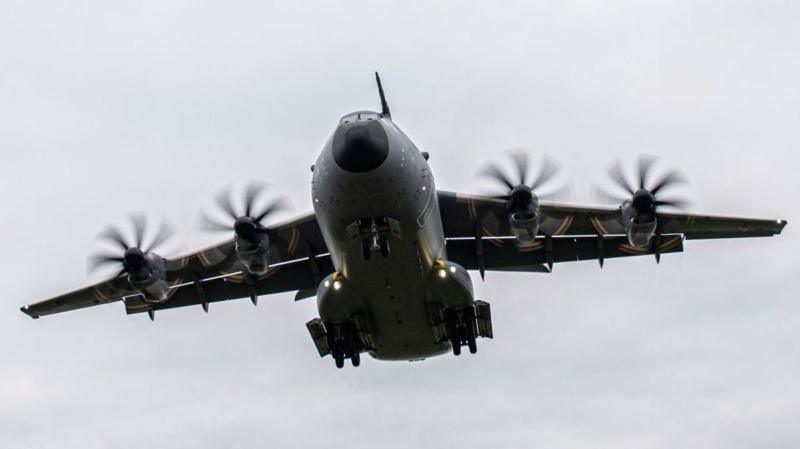 Image source, NurPhoto/Getty Images
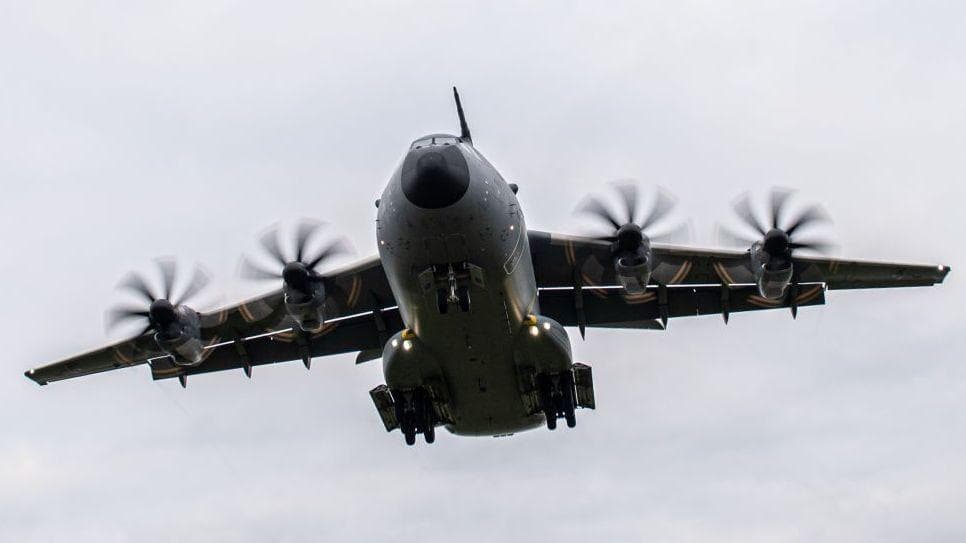
RAF A400M planes will be able to fight wildfires if fire crews request them
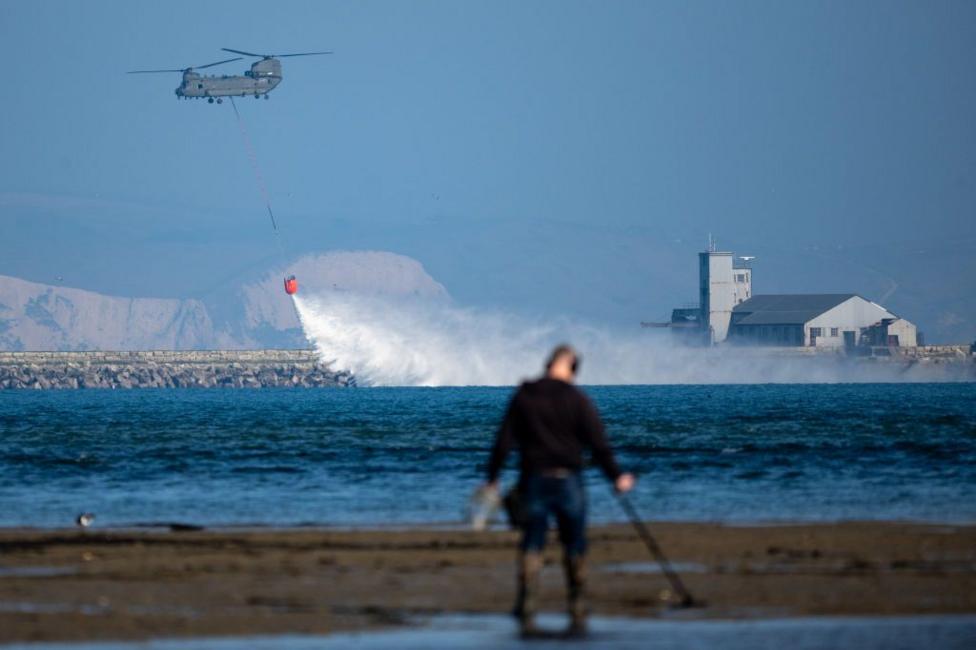 Image source, Getty Images
Chinooks have practised picking up and dropping water from firefighting buckets in Portland harbour, UK
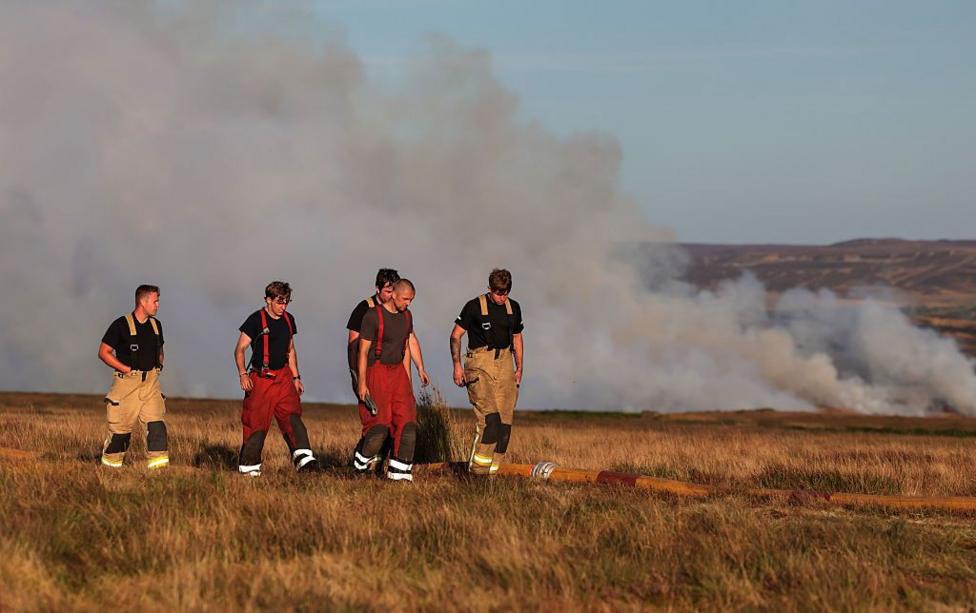 Image source, Getty Images
Firefighters tackled wildfires across the UK over the summer, including here in Ebbw Vale, Wales