The key facts
- The Commonhold and Leasehold Reform Bill will ban most new leasehold flats in England and Wales
- Ground rent is to be capped at £250 a year, dropping to a symbolic 'peppercorn' after 40 years
- The freeholders' association estimates potential investment losses at £18.7bn; the question of compensation remains unresolved
What is proposed to change
The UK government is preparing a bill that will ban the construction of most new leasehold flats in England and Wales. It is to be replaced by the commonhold system, under which residents collectively own and manage the building — a model already standard in Australia, New Zealand, the USA, Canada and most of continental Europe. Housing Minister Matthew Pennycook called the current system 'an anachronism in the twenty-first century' that 'poisons lives'. The reform follows Labour's 2024 election manifesto, which promised to 'end the feudal system of leasehold'; details were promised later.
What changes for existing leasehold owners
In addition to the ban on new flats, the Commonhold and Leasehold Reform Bill provides for capping ground rent — the annual payment to the landowner — at £250, which after 40 years will fall to a symbolic 'peppercorn' level, effectively zero. According to the government, the document will also make it easier to convert existing buildings to commonhold, abolish the forfeiture mechanism under which a person can lose their home over small debts, increase transparency of service charges and limit estate charges. Pennycook said the reform would give existing leasehold owners 'more rights and protections' and 'simple and effective routes out'.
Contradictions and unresolved questions
Freeholders criticise the reform: the Residential Freehold Association, representing the largest landowners, said that '£18.7bn of investment could be instantly wiped out', calling the policy unfair and harmful to investment markets. Campaigners broadly welcome the reform but point to the main problem: converting already existing buildings to commonhold is significantly harder, and millions of current leasehold owners may be left behind. Giles Grover of the End Our Cladding Scandal campaign, which began work after the Grenfell Tower tragedy, warns of the risk of a 'two-tier system' for buyers of new and old housing. Questions of how existing owners will move to commonhold and whether freeholders will receive compensation remain unresolved.
Why the system is criticised
The essence of the problem is illustrated by the story of Fozia Malik from Oldham: her ground rent will rise from £150 to £300 in January, and service charges exceed £4,000 a year against the backdrop of fire safety problems. The managing company links the high charges to uncontrolled costs and expensive insurance due to fire safety issues. Malik, who grew up in Pakistan, expected that buying a flat also meant a share in the land, as in most countries of the world — but in England most flats are sold on leasehold terms: the buyer receives the right of use for a term, while the building and land remain the property of the freeholder. Over two years, more than 1,000 leasehold owners have contacted the BBC with complaints about the system; Malik herself describes living in such a flat as 'a continuous torture chamber' and says she would never buy leasehold property again.
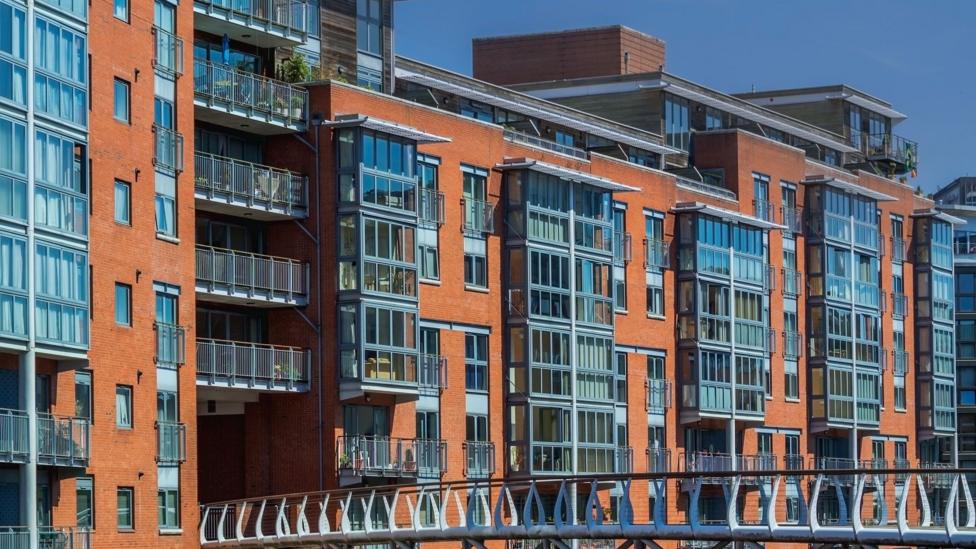 Image source, Getty Images
 Image source, Fozia Malik
Fozia Malik says she would
 Image source, Giles Grover
Giles Grover, from the campaign group End Our Cladding Scandal, says there is a risk the proposed changes will create a two-tier system