The key facts
- The Sejm rejected the no-confidence motion: 242 against 200, with no abstentions
- At least 231 votes and the simultaneous election of a new prime minister were required for the government's fall
- The opposition led by Morawiecki proposed a transitional government headed by Marek Jurek
How the vote went
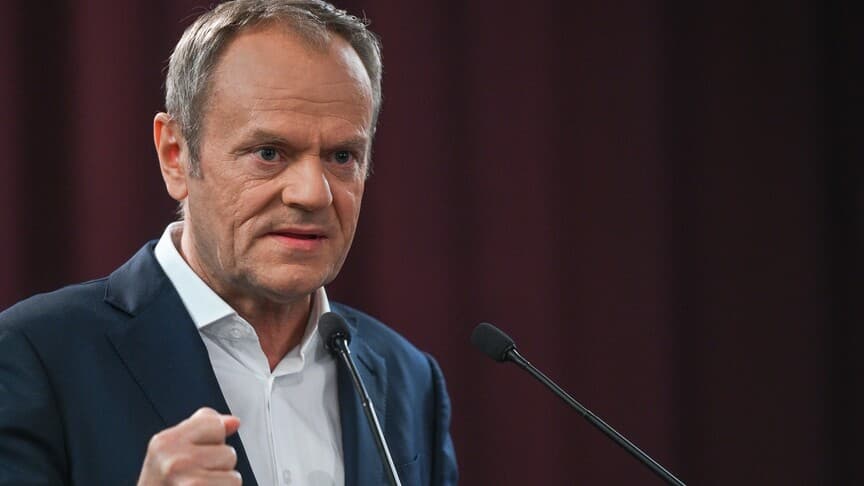
Prime Minister Donald Tusk's coalition government survived a parliamentary no-confidence vote on Tuesday. The lower house of the Sejm rejected the opposition-sponsored resolution by 242 votes to 200, with no abstentions. Under Poland's constitution, a constructive no-confidence motion requires at least 231 votes in the 460-seat Sejm and the simultaneous election of a new head of government. The initiative was put forward by the parliamentary group Rozwoj Plus ('Development Plus'), led by former prime minister Mateusz Morawiecki; it proposed former Sejm speaker Marek Jurek as head of an interim cabinet.
The arguments of both sides
Morawiecki accused Tusk's administration of undermining democratic institutions, primarily through recent actions around the Constitutional Tribunal, around which a long-running dispute has persisted over the legitimacy of judicial appointments and political control of the institution. According to him, the conflict surrounding the tribunal distracts attention from growing economic and social problems, and he called for an end to the political dominance of the two main camps, describing Jurek as a figure capable of leading a transitional government and reducing tensions. Lawmakers from the ruling coalition rejected the accusations, defending economic results, infrastructure investment and defense spending. Tusk himself called the opposition initiative a political spectacle and criticized Morawiecki's statements on inflation, the rule of law and the government's integrity.
Context
The vote took place after weeks of escalating tensions around the Constitutional Tribunal, where rival political camps contest the legitimacy of judicial appointments and control over the institution. The government, which came to power in December 2023, retains its mandate until the parliamentary elections scheduled for the autumn of 2027, but the constitutional standoff continues to dominate Polish politics.