The key facts
- The road section of the bridge collapsed into the sea; rail traffic resumed on Tuesday afternoon
- The SBU confirmed a seven-phase operation; FP-5 Flamingo, R-360 Neptun missiles and drones were used
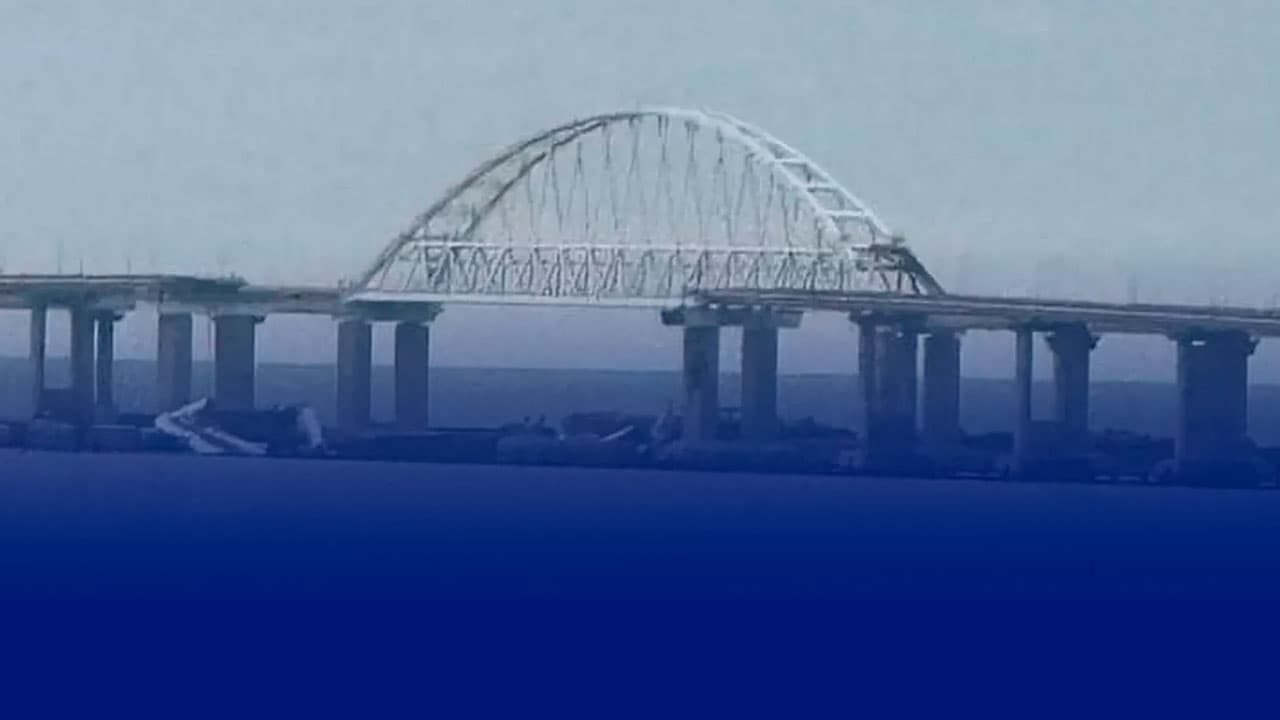
- The 120-meter-wide navigation channel is blocked by debris — traffic between the Black Sea and the Sea of Azov is cut off
What happened
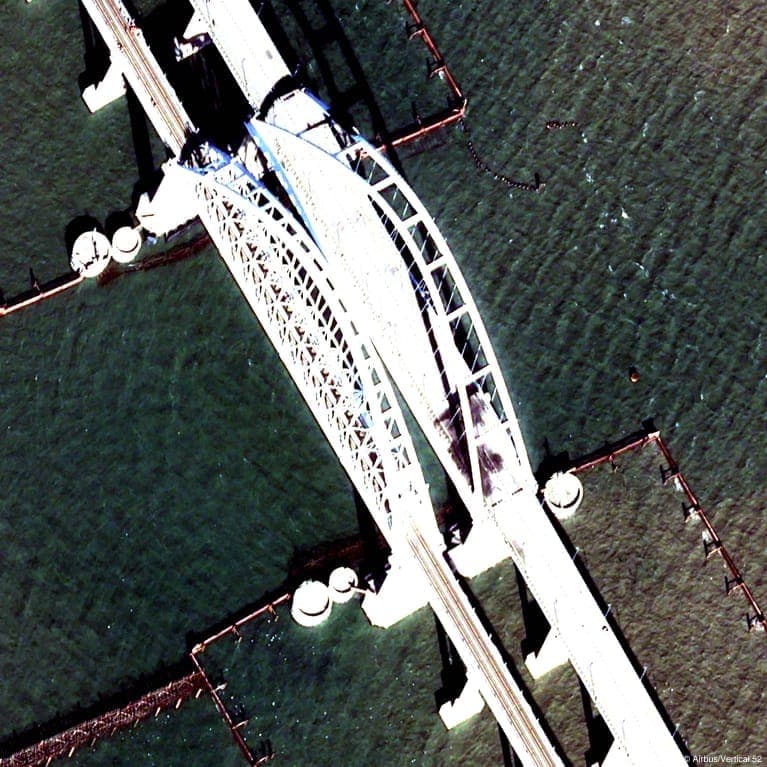
On the night of November 17, 2026, Ukrainian drones and missiles struck the Crimean Bridge, which connects Crimea, annexed from Ukraine, with Russia's Krasnodar Krai. According to DW, the bridge's road section collapsed into the sea. The Russian-installed governor of Crimea, Sergei Aksyonov, said that road traffic across the bridge was halted; rail service resumed as early as Tuesday afternoon. Russia's Transport Ministry announced a 'temporary suspension' of both road and rail traffic, and Russian authorities opened a criminal case on 'terrorism.' The SBU confirmed the attack only after that statement.
How the operation was prepared
The SBU said on its Telegram channel that the operation lasted about a month and consisted of seven phases: first, the SBU and the armed forces 'systematically neutralized' Russian air defenses in the region, after which the strike on the bridge began. According to Ukrainian data, Ukrainian-made weapons were used — drones as well as FP-5 Flamingo and R-360 Neptun missiles. The Times, citing Ukrainian military sources, reported that the attack took place without using SpaceX's Starlink satellite network; this has not yet been confirmed. Some Russian military bloggers claim the attack was carried out with the support of Ukraine's Western allies or using their equipment — Ukraine does not confirm this.
Consequences for shipping and logistics
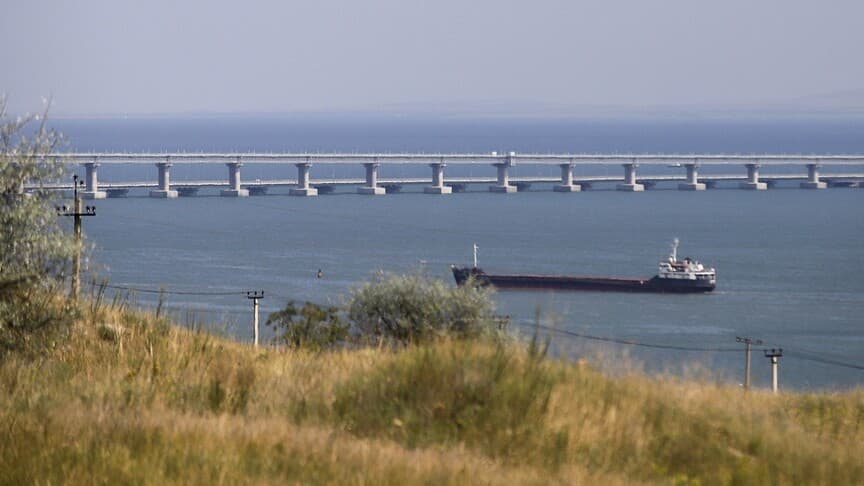
The navigation channel of the Kerch Strait is completely blocked by debris, notes the Telegram channel 'Krymsky Veter,' which also points to damage to the railway span and questions the Russian authorities' decision to resume train service. Mykhailo Honchar, an expert at the Ukrainian center 'Strategy XXI,' recalls that the navigation channel is only 120 meters wide, and the depth of the strait is three to five meters. According to him, it is now impossible for river-sea vessels to leave the Sea of Azov, the Don and the Volga, as well as for boats and small ships of the Black Sea Fleet and the Caspian Flotilla to leave Novorossiysk.
Military significance and reconstruction timeline
Many pro-Russian Telegram channels claim the bridge plays no important role in supplying the Russian army; the 'deputy president of the Republic of Crimea' Olga Kulaeva called it 'a purely civilian structure.' Ukrainian military expert Oleksandr Kovalenko of the 'Information Resistance' group thinks otherwise: Russia has no other land link capable of replacing the bridge, and the damage to the bridge will create supply problems for Russian troops. He also does not rule out a reduction in strikes from occupied Crimea against the rest of Ukraine, since Iskander-M, Zircon and Oniks missiles, guided missiles and glide bombs are delivered via the bridge. Putin's press secretary Dmitry Peskov promised to restore the bridge 'even better than before.' However, Andriy Koretsky of the Kyiv University of Transport estimated the reconstruction timeline at one and a half to three years, noting that, in his view, the Russians will not be allowed to calmly build a new arch near the Ukrainian border. Pro-Russian Z-bloggers agree: the Rybar channel writes that even installing a ready-made arch under current conditions is a difficult task, since Ukraine's Armed Forces are now capable of hitting floating cranes and repair crews.
Context and reaction
This is the first attack on the 19-kilometer bridge in a year and a half. Previously, the bridge, which Moscow considers one of its most prestigious projects, was attacked several times since 2022: the best-known strike was the explosion of a truck carrying explosives in October 2022, and the last one before the current attack was in June 2025, when the SBU reported blowing up an underwater support. Ukrainian President Volodymyr Zelensky called the strike a response to Russian attacks: 'Russia attacks our infrastructure every day, especially bridges in Zaporizhzhia, Dnipro, Kyiv and Odesa region. We are restoring our infrastructure, but we are also reminding Russia that war always returns to where it began.' According to Kovalenko's assessment, the strike was a serious blow to Putin's reputation and came at a sensitive moment — before his meeting with Xi Jinping and Donald Trump in Shenzhen.