
The key facts
- The $5.8 billion project was launched in Aqaba by Prince Faisal bin Hussein in place of King Abdullah
- The desalination plant will supply 300 million cubic meters of water to Amman, with completion expected by the end of 2030
- The 30-year concession was transferred in 2025 to a consortium controlled by France's Meridiam
Project launch in Aqaba
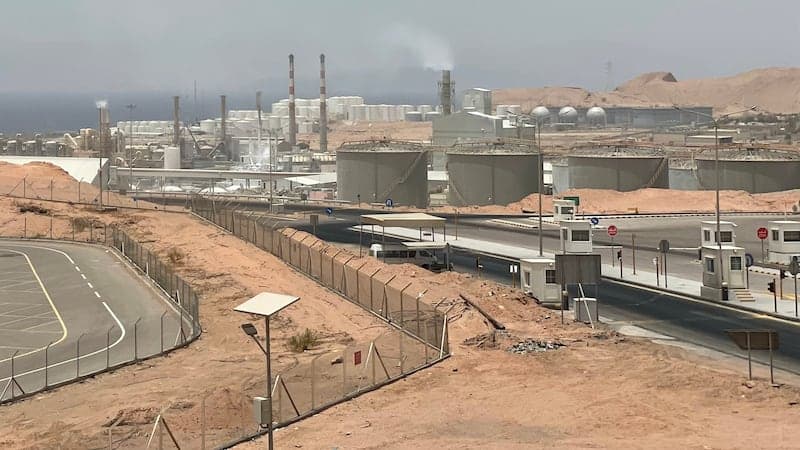
In Jordan's port city of Aqaba, a $5.8 billion water desalination project was ceremonially launched. The ceremony was conducted by Prince Faisal bin Hussein, the younger brother of King Abdullah, who was originally supposed to lay the first stone himself. No official explanation was given for the substitution; a source familiar with the preparations linked it to bad weather at Amman airport, which delayed the arrival of some Western guests. According to the state agency Petra, the prince acted as the king's representative, and Prime Minister Jafar Hassan attended the ceremony. The agency called the plant 'one of the most prominent strategic projects of the kingdom.'
What the project entails
The desalination plant and associated infrastructure will be able to deliver 300 million cubic meters of water to Amman. In 2025, the government transferred the project as a 30-year concession to a consortium of predominantly French origin controlled by the French company Meridiam. Completion is expected by the end of 2030; it will then become one of the kingdom's largest infrastructure projects since the US-funded East Ghor Canal of the 1950s. The water will be delivered via a 450 km pipeline running parallel to the line from the Disi aquifer near the border with Saudi Arabia. The Disi project itself, worth $1.1 billion and financed mainly by the US and Europe, supplies 100 million cubic meters per year but covers only one-seventh of the country's municipal demand.
Water crisis and financing context
Jordan has faced water shortages for decades: most households receive water only once a week, annual water consumption is about 1 billion cubic meters, mostly for agriculture, and the per capita figure — about 100 cubic meters per year — is among the lowest in the world. Average rainfall of about 100 mm per year is also among the lowest on the planet. The authorities are fighting water theft, especially in tribal areas outside major cities, where illegal wells are common; Western donors demanded that this fight be intensified before financing for the Aqaba project was completed. The financing was secured against the backdrop of deteriorating relations with Israel, which remains a major water supplier to the kingdom: according to Jordanian officials, the 2021 agreement to supply 50 million cubic meters per year expired and was not renewed, as a result of which Israeli water exports were halved. Under the 1994 peace treaty, Israel still supplies Jordan with 50 million cubic meters of water. Officials warn that the new project will ease, but not solve, the country's water problems.
Aqaba as an economic growth point
Aqaba, Jordan's only port, is the center of the country's efforts to attract investment and revive an economy that, according to the publication, has been stagnant for the past 15 years. The port's geopolitical significance has grown since Jordan was included in regional plans to find alternative routes for transporting goods, primarily oil and gas, bypassing the Strait of Hormuz: the plans envisage bypassing the waterway via land corridors through Jordanian and Syrian territory.