
The key facts
- The hair of 18-year-old Busra Bayir got caught in a kart's engine; about a third of her scalp was torn off
- Seven-hour microsurgical operation in Diyarbakir: about 90% of the tissue took
- Doctors remind: helmets, tied-up hair and closed clothing reduce the risk
The Accident and the Surgery
About four months ago, 18-year-old Busra Bayir was riding a go-kart at an entertainment center in Mardin province in southeastern Turkey. The hair tie in her hair came undone, her hair got caught in the kart's engine, and within seconds roughly a third of her scalp was torn off. This was reported by the Anadolu agency citing doctors and the victim herself.
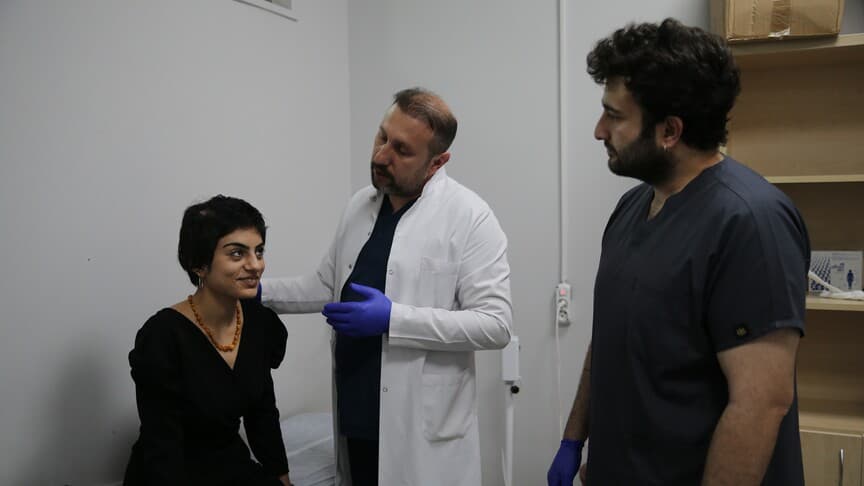
After emergency care in Mardin, she was transferred to the hospital of the medical faculty of Dicle University in Diyarbakir, where surgeons spent about seven hours performing microsurgical replantation of the tissue. For the surgeon
Sercan Erbatur, the operation was, in his words, a rare case: 'These are complex operations with a risk of death.' Bayir spent 12 days in intensive care and another 11 days in the ward before being discharged. According to the doctors, about 90% of the transplanted tissue with hair coverage took, and she does not currently need an additional operation.
A Rare but Known Injury
The mechanism of the injury is unusual but not unique: similar cases, in which long hair got caught in exposed kart engines, have been described in the medical literature for decades. Karting safety standards explicitly account for this danger: European requirements for rental karts provide for protection of rotating parts against hair, scarves and loose clothing getting wound in, and Karting Australia requires drivers with hair below shoulder length to take protective measures. Erbatur noted that helmets, properly tied-up hair and suitable clothing significantly reduce the risk, adding: 'Unfortunately, cases where hair or scarves get caught in a kart do happen, and such accidents sometimes end fatally.'
Recovery and a Warning
Bayir herself says that the accident changed her life instantly, and the recovery was difficult not only physically but also psychologically and socially. She hopes her experience will serve as a warning both to go-kart operators and to visitors: 'I want people to know what I went through, so that precautions are taken and such accidents do not happen again.'