The key facts
- The US Commerce and Justice Departments confirmed a criminal investigation into Singapore's Megaspeed over suspected circumvention of chip export restrictions
- The investigation began in 2024; in May 2025 Commerce requested sales records from Nvidia, after which the company placed Megaspeed on its internal 'stop list'
- China's Foreign Ministry called the US actions 'economic coercion' and pledged to protect the interests of Chinese companies
Official Confirmation of the Investigation
The US Departments of Commerce and Justice on Monday confirmed they are conducting a criminal investigation into Singapore-based cloud company Megaspeed on suspicion of violating semiconductor export controls. In a joint statement, issued, as it says, 'to lay out the facts and rebut inaccurate information in public reporting,' the agencies pledged to 'apply the full force of the law' against Megaspeed if criminal violations are proven.
Timeline of the Case
According to the official timeline, the Commerce Department began its investigation in 2024 after detecting suspicious activity related to the resale (diversion) of chips, and in May 2025 requested sales records from Nvidia. In June, Nvidia placed Megaspeed on its internal 'no sell' list, and agents of the Bureau of Industry and Security (BIS), which is responsible for US export controls, conducted an on-site end-use check in Singapore together with local law enforcement and questioned then-top executive Alice Huang. The Justice Department then took over the criminal investigation.
Defense of Lutnick and Internal Disagreements
The statement also defended Commerce Secretary Howard Lutnick, who had been criticized by lawmakers and Treasury Secretary Scott Bessent for delays in adding Megaspeed to the official export blacklist. The agencies credited Lutnick and Attorney General Todd Blanche with the investigation, noting that under the Trump administration charges have been brought against 17 defendants in six semiconductor-related cases involving 'billions of dollars,' and monetary penalties for export control violations have increased 18-fold compared with the previous administration. Earlier the same day, President Donald Trump defended Lutnick's cautious approach ahead of a visit to Beijing and said he does not intend to replace him, acknowledging disagreements within his team: 'One wants to be friends with China, and one wants to make a break with China,' he said, adding that 'you shouldn't insult China right before a visit.'
Beijing's Reaction
Chinese Foreign Ministry spokesperson Guo Jiakun criticized the US actions, saying that Washington 'stretches the concept of national security and abuses export control measures,' interferes with China's normal trade and technology cooperation with other countries, and 'unjustifiably suppresses the development of China's high-tech industries.' He characterized this as 'a typical act of economic coercion and long-arm jurisdiction,' said such steps 'harm the legitimate rights and interests of Chinese companies and destabilize global industrial and supply chains,' and pledged that Beijing 'will take the necessary measures to firmly safeguard its legitimate rights and interests.'
Context Around Nvidia
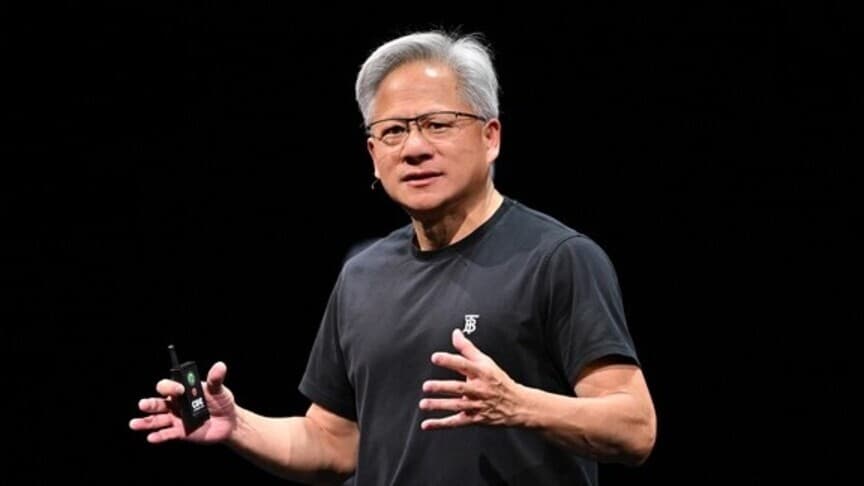
The investigation unfolds against the backdrop of a leadership crisis at Nvidia: last week longtime company head Jensen Huang resigned — following publications about his connection with Alice Huang, whom US intelligence officials suspect of spying for China. Thus, Huang, who figures in the case, is connected both to the export control investigation and to the resignation of Nvidia's head; however, no confirmed conclusions about her role in either episode have yet been made public: the intelligence suspicions and the results of the criminal investigation have not been publicly disclosed.