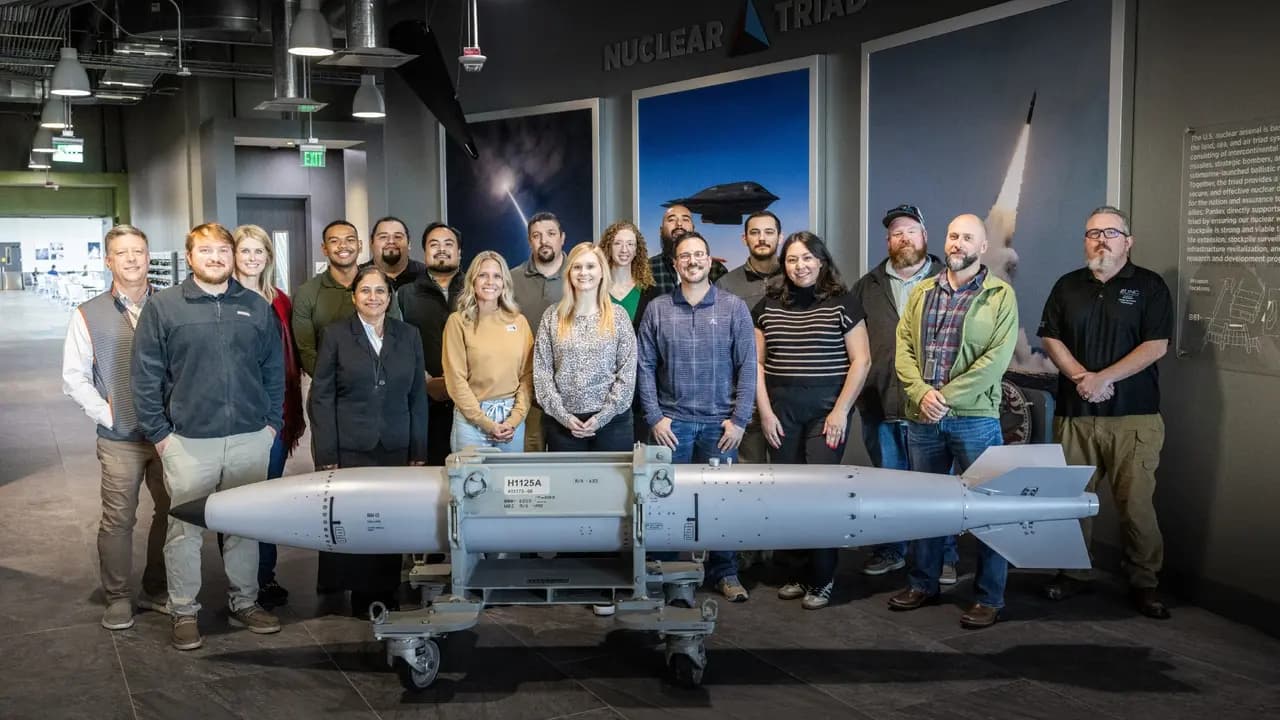
The key facts
- The Pantex plant has begun delivering upgraded B61-13 nuclear bombs to the US Air Force
- The yield of one bomb is about 360 kilotons, 24 times greater than the Hiroshima 'Little Boy'
- The first unit was assembled in May 2025, almost a year ahead of the set deadline; about 50 munitions are expected
Deliveries of the B61-13 have begun
The American Pantex plant has begun delivering upgraded gravity nuclear bombs B61-13 to the US Air Force. This was reported by Hans Kristensen, director of the Nuclear Information Project at the Federation of American Scientists, whose message was cited by Daryo.uz.
Yield and characteristics
The explosive yield of one bomb is about 360 kilotons in TNT equivalent — 24 times more than the atomic bomb 'Little Boy' dropped on Hiroshima on August 6, 1945. The munition can be dropped from an altitude of up to 7.5 km, after which it glides autonomously toward a designated target; a key feature is the control system in the tail section. The main task of the B61-13 in the event of a nuclear conflict is to strike heavily fortified targets.
Timeline and place in the arsenal
Engineers assembled the first B61-13 unit in May 2025 — almost a year ahead of the deadline originally set by the US government. Strategic bombers will be equipped with the new munitions. According to expert estimates, about 50 new munitions will be adopted; they will replace outdated bombs with lower yield and targeting accuracy. American military officials note that the new munitions will not affect the total number of nuclear air-dropped bombs in the arsenal.
Official position
US Secretary of Energy Chris Wright stated in 2025: 'The creation of the B61-13 has demonstrated the United States' ability to respond promptly to global security threats. Modernizing the American nuclear arsenal is crucial for implementing President Donald Trump's approach of