The key facts
- Minister Kacır announced plans to increase solar and wind energy capacity from 43 to 175 GW by 2040
- Renewable sources account for 62% of Turkey's installed electricity generation capacity
- According to the minister, about 90% of AI investments come from just two countries, deepening global inequality
Statement at the climate conference
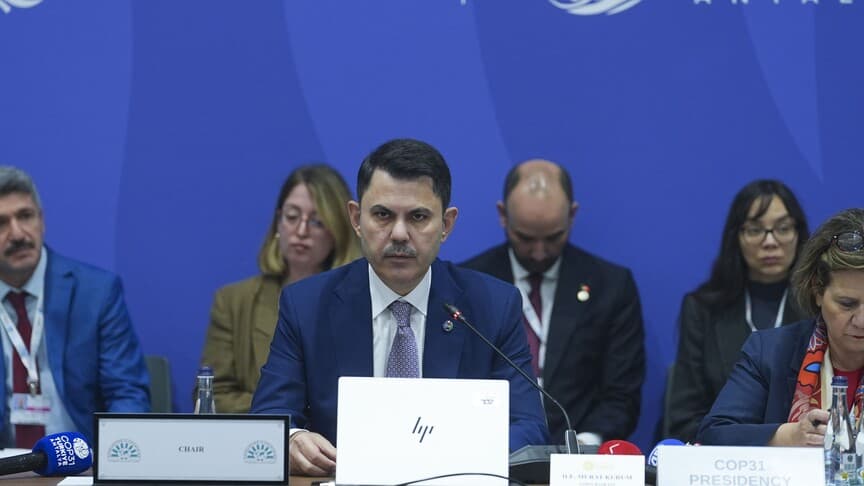
Turkey intends to develop 'green' infrastructure in order to use artificial intelligence in the most environmentally friendly way possible. This was announced by Turkey's Minister of Industry and Technology Mehmet Fatih Kacır on the sidelines of the 31st UN Climate Change Conference (COP31), currently taking place in Antalya.
Energy base for data centers
The minister explained that the mass adoption of AI requires data centers and supercomputers that consume enormous amounts of electricity, so countries need to support their digital infrastructure with renewable energy. According to him, renewables already account for 62% of Turkey's installed electricity generation capacity. 'We have 43 gigawatts of capacity in solar and wind energy; we will increase it to 175 gigawatts by 2040,' Kacır said, adding that the country also plans to create 140 gigawatt-hours of energy storage capacity.
Startup support and global inequality
According to Kacır, the ministry is launching acceleration programs to support 'green' technology startups and develop local climate solutions. He also noted that about 90% of all AI investments are made by just two countries, which, in his view, threatens to deepen global inequality: 'We must develop joint initiatives for our common future and leave no one behind.'
Financing and goals
Kacır stated that global financing raised during the COP31 summit will accelerate Turkey's plans for digital and 'green' transformation and strengthen the country's position among developing states. According to him, these goals are linked to the National Technology Initiative and the 'Turkish Century' program. The announced plans so far remain the minister's declarations: no decisions made, funding sources, or timelines for specific programs were reported in his remarks, apart from the target of 175 GW by 2040.