The key facts
- Singapore officially assumed the ASEAN chairmanship for 2027 — the year of the association's 60th anniversary
- Chairmanship theme: 'Deeper Integration, Wider Partnerships'
- ASEAN adopted a declaration on critical minerals for regional resilience
Handover of the chairmanship in Manila
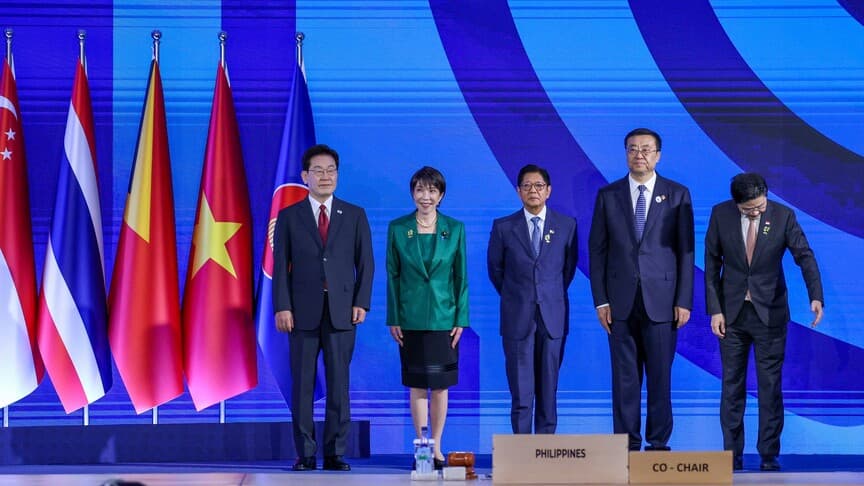
Singapore officially assumed the ASEAN chairmanship at the closing ceremony of the three-day 49th summit of the association's leaders, held in Manila. The chairman's gavel was handed over by the outgoing chairman — Philippine President Ferdinand Marcos Jr.. Singapore will lead the 11-member bloc in 2027, which will be an anniversary year marking ASEAN's 60th; after that, the chairmanship will pass to Thailand in 2028.
Singapore's priorities
According to Anadolu, Singapore's Prime Minister Lawrence Wong announced the theme of the chairmanship — 'Deeper Integration, Wider Partnerships.' In his words, the association must strengthen ties in finance, digital technology and energy, while also building closer relations with partners beyond the region. 'Deeper integration, because we can do much more to realise ASEAN's full potential. Wider partnerships, because ASEAN must remain open and outward-looking,' Wong said. He also called for additional steps toward a single regional market, where businesses could operate across borders more seamlessly and people would have more opportunities to work and invest.
Declaration on critical minerals
During the summit, the association adopted the declaration 'ASEAN Critical Minerals for Regional Resilience and Sustainable Growth.' In it, the bloc recognised the sovereign rights of member states over their natural resources, the diversity of national circumstances, the differing roles of countries as producers, consumers or both in critical minerals value chains, as well as their economic priorities. According to the text of the declaration, member states have a strategic opportunity 'to extract greater value from their mineral resources by strengthening regional capabilities across the entire value chain — from responsible and sustainable exploration and extraction to processing and refining.' ASEAN, founded in 1967, unites 11 states: Brunei, Cambodia, Indonesia, Laos, Malaysia, Myanmar, the Philippines, Singapore, Thailand, Vietnam and Timor-Leste.